
I thought it fairer to judge this book on the uniqueness of its plot premise rather than for the writing and story structure, which leave much to be desired.
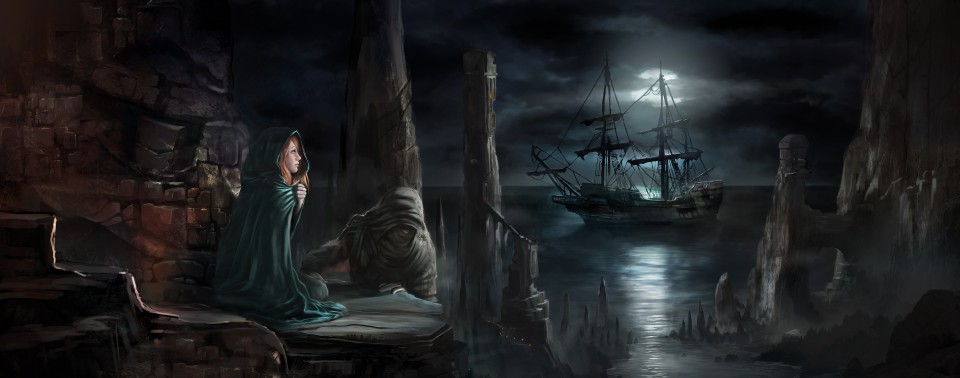
To begin with the good impressions first, let’s look at the main character: Raphael, the Prince of Lily (in this world, the Floral Realms are each named after a flower), a royal trapped in a castle whose mysterious magic is too strong and whose origin is unknown, though it’s suspected it might be the ancient magic of the now-presumed extinct fairies. In the castle tower sleeps Prince Casimir, one of six princely friends in this series, each with their own fairy tale to star in. He is under a curse and plays the role of a male Sleeping Beauty. Loyally, Raphael keeps watch over the slumbering prince and takes care of him after the other princes have departed.
But Raphael is also unjustly and undeservedly cursed (sounds like Disney, doesn’t it?). Thanks to a witch he offended long ago simply by coming between her and her overambitious plans for her daughter, he is now known as The Beast, an invincible assassin with supernatural strength and lethality, plagued by a Moon-influenced irresistible bloodlust that drives him to kill indiscriminately and on the witch’s orders, who manipulates him like a puppet in her designs for the Floral Realms. Raphael can’t escape the witch’s power, and to make matters worse, his days are numbered because his rose is about to lose its last petal (yes, just like in Disney) after he refused to carry out yet another high-profile assassination for the witch Seraphine.
One day, during a snowstorm, a young witch arrives at the castle. Mira is being pursued by wolves (yes, again just like in Disney), and the beasts manage to seriously wound her in the leg before Raphael rescues her and takes her inside the castle. There, she takes refuge in the great library (yes, Disney again) and spends her time searching the books for a cure for her leg.
That’s about all the Disney elements you will find in this book, because otherwise the animated film and this book are nothing alike. And that’s for the best, because this is a very original plot unlike anything I’ve seen before. Have I read any Beauty and the Beast retellings that were queer? Yes, a few, because there aren’t many. Have I read a Beauty and the Beast retelling that was both queer and gender-bent? Not that I recall. That drew me in and that’s why I’m calling this original as plots for this tale go.
Whilst recovering in the castle, Mira gradually finds out hidden things about the prince, the sleeping friend, and the wicked witch behind the curse, all whilst grappling with the painful memories of a lost love she can’t seem to get over. This last point will help her find a solution to Raphael’s curse, though. I don’t want to reveal how she manages to do this, it’s a huge spoiler, but I will say that it was a very unique solution and makes perfect sense within the context of how magic works in this world.
There’s really not much to discuss about the plot of Sorrow for Thorns, and part of it is because this book is quite short, hedging more towards a novelette than a novella. And it is in this brevity that its greatest flaw lies, for Mira and Raphael are given little room to breathe. Almost half the novella consists of flashbacks to Mira’s past and conversations about Raphael’s past are interspersed throughout, with very little of the present shown. Needless to say, we see almost nothing of the world they inhabit, although in this case it’s justified because, due to plot needs like that the curse prevents Raphael and Casimir from leaving the castle, it’s a “closed-door” style story. And since this novella is the third in the Floral Realms series, we must assume the other books offer a wider view into the world and its lore that we are missing here because those are more “open-door.” Even só, I do think it doesn’t quite meet its Gaslamp classification with só little outside seen, it fits the Closed-Door Gothic category better because of the environment and atmosphere, the emotional connections and relationships.
With such an interesting pair of main characters, this story deserved to be a full novel. Or at least a longer novella. A novella is too restrictive a format for the potential of this plot, forcing the author to omit much and summarise even more, to include flashbacks and “as you know, Bob” moments more than I would have liked. We needed to see more of Mira and Raphael interacting in the present, dealing with the castle and Casimir, and discussing their respective challenges as a witch and a cursed prince. Interweaving timelines and jumping from one to the other each chapter isn’t a good narrative technique for this plot, but at least the author didn’t omit explaining how Mira can do what she does, and how Raphael ended up cursed even if hurriedly.
Sometimes, the problem is having too little plot and stretching it out like chewing gum for more time and space than it can handle, making it bloated and chaffy; and other times the problem is that the plot concept is so good it should be stretched into a fat book. Sorrow for Thorns is an example of the latter. I felt it fed me só little I was still hungry, still wanting to know many things, like I was served the potato chips and the Coke but was only allowed to take a bite of the burger.
A real shame. because Kel E. Fox had good ideas for her Beauty & Beast retelling. I think that perhaps the author needed more brainstorming sessions with beta-readers and an editor to reshape the story’s structure for the better. It’s a tragic story, but with a touch of sweetness, with a very tragic Beast who deserved more of a story, and a likable witch who also deserved more of a story.

I’m very curious about the tidbits I’ve been thrown *side eyes* I might read this on a whim if I can find it.
I do love Gothic settings and not always a Gaslamp fan, so that’s not a take away for me, but I think I would be disappointed in it feeling rushed. (That was a little how I felt about the Rumplestiltskin by Miles.) But it’s not a deal breaker for me.
I’m curious though–when you say queer, how so? I might’ve missed something while reading. (Is one of the mcs transgender?)
You would have to take your editor hat off and hang it on a perch at the door to read this one. 😀 But I do think you might like this, always taking that into account. It’s a great concept but very flawed execution.
As for the queer part . . . spoiler! It’s revealed in the first chapter, but even so it informs the entire book, so I’m hesitant to explain this in public.
Ah. So if I’m feeling generous and just want a sweet tooth read that’s not sweet at all. Gotcha. XD I’ll keep that in mind and add it to a “guilty pleasure” list.
Okay, I understand. I won’t push you for it. If I remember, I’ll ask you about it later.
Sure! Methinks your Guilty list will be growing fat from titles you see me review here. 😛
It usually does, haha 😛