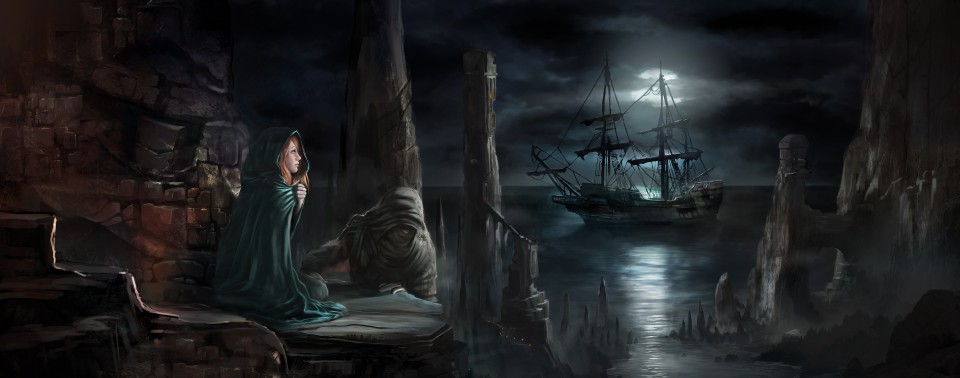

“If I loved you less, I might be able to talk about it more,”
—Henry Knightley, Esq., 1815 / Marquise, godmother-in-training, 2026.
I’ve had this problem for a couple of years now: every time I find a book that resonates with me completely and unconditionally earns all the stars, I’m at a loss for words. Last year, which was my worst year in decades in terms of reading, I still had two books like that which I loved so much I couldn’t write about them in the verbose way you’re used to read from me. And now this! The third book in two years that has left me speechless.
How exactly are you going to explain to everyone, some of whom will have tastes completely opposite to yours, why a story has resonated with you so deeply? It’s like trying to explain all the ingredients and their flavours and textures as you’re eating your favourite dish. You can do it, yes, but it detracts from the enjoyment, from the simple happiness of eating something you love.
Sometimes you just want to enjoy, bask in the sensations, and let it all go.
For me, this happens very rarely. I’m a very critical reader, which is why I can count this book as the third of its kind in two years. But I’m going to try to review this book as best I can.
Yes, Your Serpentine Excellency is another Dragon and Maiden story, in which the maiden is a spinster who can teleport from one place to another and the dragon is a fortune teller for the mafia. What a joke, right? Now that I think about it, I believe the first sweet spot this book touched on was the theme, because I’ve loved Dragon and Maiden stories since long before I started seriously reviewing books. I even own a collection of illustrations of dragons and knights fighting called “Dragonslaying is for Dreamers.”
Let’s start with the theme, then. This Dragon/Maiden story doesn’t have the typical medievalish setting; instead, it’s more like the late Victorian period where magic exists (but it’s not High Fantasy, it reads more like Austen/Heyer with fantasy) and where magical creatures and citizens born with magic must register with the Crown to perform military or civil service. You can imagine the situation Joanna and His Serpentine Excellency find themselves in, because neither of them wants to serve the Crown.
And it’s because neither of them wants it that this pair gets caught up in countless adventures thanks to the Crown Prince, the Crown inspectors, the Crown’s magical agents, the Church, the three organised crime syndicates that dominate the realm, the dragon’s wealthy clients, and Joanna’s meddlesome brothers, cousins, niece, aunt, and two cats.
It’s a city dragon story, not a country dragon story. What’s the difference? The city slicker dragon eats Beef Wellington, the country bumpkin dragon would rather eat Wellington.
All these situations are convoluted and comical. Which brings me to my second point: the humour here resonates with me. And that’s not usually the case, as I’ve said before: humorous literature usually just doesn’t do it for me. That’s why I ended up disliking Georgette Heyer and why Jane Austen’s most humorous books are the ones I like least. “British humour” has peculiarities that many people enjoy, which are diluted when someone from outside tries to imitate it. It’s as if the most relevant details get lost in the cultural shift. It’s a bit complicated to explain, but American authors who imitate the absurdist style of English jokes when writing Regency/Victorian fantasy generally make the mistake of forcing the joke (as happens with T. Kingfisher) and end up being irritatingly goofy, because American humour tends to walk in that direction.
This doesn’t happen with Stradling. Somehow, she managed to use absurdism in a way that fits perfectly with the pseudo-European world he created. And I liked it because this humour flows naturally; the situations are funny because that’s how the scenes develop, they don’t appear out of nowhere to make you laugh. Like the world itself, it doesn’t have to be explained, no “please laugh.” And that’s how this surprises you with hilarious scenes, like the one that had me laughing for nearly half an hour, and I had to put the book down for a bit to laugh heartily. It’s been so long since I laughed like that over a book scene, a too long time.
I know you’re going to ask me which scene made me laugh for half an hour, but I’m not going to tell. Partly because it would be a bit of a “please laugh” plea, but mostly because humour varies, and you might not find that scene as funny as I did. And of course, also because I don’t want to intellectualise it but just enjoy it.
The third point would be the world itself. As it’s based on a real place, it’s a “prefabricated” mould, so to speak, a type of world that all readers of Austen, Heyer, and the Regency Romances will recognise (although Westbridge is NOT real England but an alternate world), and that’s precisely why the author doesn’t need to explain the worldbuilding and magic system; you can already guess them, and everything from the social system to the customs is pre-understood. This doesn’t mean the author doesn’t contribute to the worldbuilding with her own stuff; it’s just that since the framework is already established and she prefers to reveal the world by moving the characters around, it’s a more subtle worldbuilding to notice. Is it predictable? Oh, yes. Does it matter? Oh, no.
At least, not to me. Predictability doesn’t always spell doom for a story; it depends a lot on the execution. Kate Stradling once said that her books are “handcrafted using the finest tropes,” and I can understand the point of her saying that: the trick is not in avoiding tropes but in how you handle these tropes. I saw what would happen with the dragon and what it was rather early; I’ve read so many stories about dragons & maidens & knights, and almost nothing can surprise me anymore. And I emphasise “almost,” because this novel did have a surprise for me, related to what made me laugh for half an hour.
And speaking of finest tropes, we come to the fourth and final point: is there any Beauty and the Beast theme here? In short, yes. Firstly, because stories about dragons and maidens usually fall into two main tropes: either the knight rescues the maiden and keeps her, or the dragon takes her and keeps her. What kind of dragon it will be depends on the author, and in this case, I prefer that you see for yourselves what kind His Serpentine Excellency is. And secondly, because apart from the dragon and maiden motif, there are several of the same elements as in the fairy tale, except for sacrificing the maiden to the dragon/giving Beauty over to Beast. Point in Stradling’s favour.
And here I bow out, seeing that I did have something to say after all.

I always love hearing when you have something to say 😛
That said, I love what you tapped on about “the trick is not in avoiding tropes but in how you handle these tropes”. I think this is something people misunderstand with the rise of literature that is tropes-only focused and marketed. It’s not that tropes are bad. Like archetypes, they exist for a reason–because people like them–but written or executed badly/unnaturally/without proper development is what often ruins the tropes and our perceptions of them.
Hehehe, for all my complaining that I have ‘nothing’ to say, I end up talking people’s ears off. 😛
Ah, yes, exactly! Reminds me of the old fights over at the ASOIAF when some fans claimed GRRM didn’t do tropes and that was why he was superior and other fans would reply that he did, in fact, use plenty of tropes, subverted and not. People just forget that subverted tropes are still tropes, they become such when enough writers start using them.
Nothing new under the sun. Everything is in the execution… I’m glad Kate Stradling embraces her beloved tropes and doesn’t apologise for them. I aspire to be like that with my fave B&B tropes too. 🙂
Listen, I feel like that’s always the case when you love it a book. It’s just hard to articulate sometimes or want to have to defend it to other people.
I am glad to hear that you felt Stradling did that well. I have to agree though that anymore it’s all about execution. And trying not to just overuse what’s popular in a way that feels unnatural within the story (looking at you, Nine-Tails).
That one was quite the letdown, eh? 🙂
You ever read a book and just go “if I had done it, it would be so much better” because the base of the thing is great it just got too many voices in the author’s head for what it should be? Yeah.
Yeah, I understand that. Felt that as a beta and editor.
Haha, same XD
I’ve been eyeing Stradling for a while, but never thought her previous books looked to my taste. This one might just be, though! And it sounds greatly amusing.
It is! But definitely also a mood read. Ideal for when you’re feeling like you want a good laugh or two.