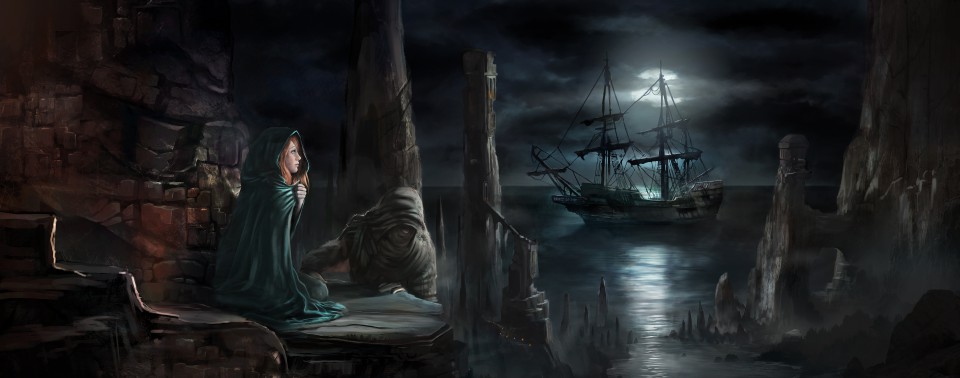

Hello. My name is Marquise. You killed my favourite fairy tale. Prepare to die.

Well . . . Prepare to be roasted gently over a pumpkin-spice flame, which is more than this book did for my expectations. I was promised “Shrek,” “The Princess Bride” and a sprinkling of “Beauty and the Beast.” What I got was a cosy farm romance with one orc, one rooster, and a princess who will not leave, which is a fine premise for a book. It is just not the book on the cover.
To be fair, it is often funny, and I did finish it. But it’s also very flawed, and the flaws aren’t subtle. Here is the soft-landing version by parts, with teeth.
THE PITCH VERSUS THE PRODUCT
“Shrek” gave us an ogre, a swamp, and a fairy tale world that never stopped winking at itself. “The Princess Bride” gave us a framing device, sword fights, Miracle Max, and dialogue you could quote at parties. The Pumpkin Bride gives us an orc that bakes, a rooster, and a lot of banter. The banter is decent. But I searched the text for the word “inconceivable” and found it zero times, which is the most honest thing about the marketing.
The fairy tale satire is thin. We get a riddle-sprite and a handful of orc jokes, and then the book settles into chores, which is the real genre: “Beauty and the Beast,” minus the part where the Beast is a mystery, plus a laundry schedule.
VILLAIN, MEET CARDBOARD
Prince Crispin is blond, vain and evil, and he wants you to know all three. Why did he curse Bram? Because, in his own words, “I refuse to be outshone.” How does Marigold learn his master plan? By standing at a hidden door whilst he narrates it, start to finish, to his man-at-arms: the sprites will kill her brothers, she will be shipped to the seaside, and he will “boot the peasants who live atop that fortune.” Subtle, he is not. A moustache is the only thing missing, and I am fairly sure it was cut for budget.
The ending doesn’t improve him. He’s exposed when the sprite he controls simply tells everyone, and then his sister turns up just in time to haul him back to consult the High Council about the legitimacy of his regency. Kevin, his henchman, gets beaten with a rock and a pig and is forgotten. Bess, who may or may not have been a spy, wanders off toward a Leshy’s patch and the book never looks back.
THE CURSE THAT COMES AND GOES
The central plot premise is a good one in theory: if Bram reveals his name, past or family, whoever hears it dies. So he must stay silent whilst the woman he loves lives in his cottage. That should be agonizing, right? Instead, the rules wobble like a drunk on a trebuchet. Asked where he learnt about mushrooms, he says “During guard training,” and in the next breath, “My home kingdom.” Asked whether orcs get knighted, he says “I was knighted in Thornwick.” Nobody drops dead. The curse apparently has a very specific allergy, and it’s not to what he keeps saying.
Marigold, who beats Crispin at chess and is sold to us as the clever one, takes the better part of the book to notice this. He answers her private childhood phrase, “It’s my everlasting pleasure,” and when she goes cold, his defence is “Read it in a book.” And she accepts this uncritically. She also says “I’m incapable of deception” in the same story where she drugs her chaperone’s tisane and spends weeks answering to “Meg.” Dramatic irony is a spice, not the whole meal.
THE MOST RELAXED DOOM IN FICTION
Marigold flees because her brothers are about to be torn apart by mountain sprites and the wedding is days away. Gripping! Then we spend a lot of the book on the cider press, laundry, the pottage lesson, the bath, the pumpkin carving, and the secret birthday cake. The wedding is “scheduled for next weekend” in one chapter, and about two weeks later, “Next weekend was to have been her wedding day.” Either the calendar is cursed too, or the brothers are very patient corpses-to-be.
Nobody uses the obvious tools, either. She can shrink pumpkins, and herself, and her cat. Everyone worries about getting her safely to Mareval. It never seems to occur to anyone that a princess who fits in a pocket might not need a guide.
THE SOLUTION IS A SPEECH
The curse breaks when Marigold climbs the Lantern Oak and recites the sprite’s rhyme, which asks for what true love does, not what it swears, and then delivers what is essentially a toast. The sprite, who is supposed to be the menace, caves with “you had me at ‘rich in repair.’” Meanwhile the sprite’s own leash, his true name, is conveniently supplied by a child that saw him dancing at a fairy ring. Add Fuzzle the cat finding the key note, a sister arriving at the exact right minute and a pig recruited as a combatant, and the happy ending is held up entirely by coincidence.
Marigold sums the plot up herself, mid-climb, as “class-system oppression. Typical girl-meets-boy story.” The book knows. I just wish it had written the more interesting story.
SAINTS PRESERVE US
Then there’s the prose. Both lead characters think and speak in the same voice, and a lot of that voice is “Saints.” I ran a word count so you don’t have to:
| Word / phrase | Appearances (approx.) |
| “Saints” (as exclamation) | 63 |
| “Blood and bones” | 13 |
| “Shite” | 19 |
| “Hmph” | 17 |
| “Grunt” (any form) | 31 |
| “Inconceivable” | 0 |
| “Shrek” | 0 |
Add the faux-medieval world’s taste for the modern: lingo like “Easy peasy,” “Okay,” a man striking a match, and a princess wishing she had studied Machiavelli and Caesar’s Gallic Wars in a peninsula of five invented kingdoms. And the typos. Bram becomes “Sir Bran Duncan.” A kiss goes wrong with “He hissed her forehead.” In the final vow, Marigold declares her love for “Sir Bram Duncan, also known as Jask Bone-breaker,” which is either a typo or the most inventive wrong name ever spoken at the finale.
There are also dangling threads: the faint crown that flickers over young Bastien’s head and what it means, and what became of Bess. Chekhov’s pumpkin is still lying in the field.
AH, BUT THERE’S STUFF THAT WORKS
in fairness, there are a few things that are done well, such as:
- The jokes that land, land. “Wisdom often chased Kevin, but he was faster” is excellent. “Obviously, Bram travelled with poets” made me laugh out loud, and “Cheater MacCheaterpants” earns its place. Or maybe it’s just that my pain threshold regarding dad jokes and memes is superlatively high.
- Marigold has a voice, and what a loud voice it is. Her laundry rants, her fierce appetite for pie and “Hope is a choice” give her more personality than most romance leads get.
- Bram’s farm life is specific and charming. The named animals, Barnaby the rooster who crows at all hours, and the jack-o’-lantern scene are the best the book has to offer.
- Bram being jealous of himself. It is a smart use of the premise, and the grief scenes have real control.
In conclusion, The Pumpkin Bride is a funny, flawed autumn read that is far better at being a cosy orc romance than at being what it advertises. If you want the satire of “Shrek” or the wit of “The Princess Bride,” go home. If you want baking, banter and a very large green man who bakes, grab a blanket, and maybe a drinking game for every “Saints.”
Iñigo would be disappointed. I am disappointed. But I will probably read the sequel.
