All fairy tale lovers have a fairy tale as a nemesis, and so do authors of fairy tale retellings.
Kate Stradling’s nemesis must be the Grimms’ fairy tale “King Thrushbeard.” I say that half-jokingly because she’s already done three retellings of it to date. And when an author returns to the same fairy tale again and again, it’s for one of two reasons: either they like it very much, or it bothers them very much.
Which of the two applies to Kate’s case? You’ll have to read the interview I did with her and draw your own conclusions.
I myself have a few fairy tales as my nemeses, amongst them “King Thrushbeard.” I have a theory about why it’s such a difficult tale for retellers to crack: the trap it sets is the temptation to whitewash two of its three morally grey main characters. The original fairy tale works precisely because all three—the king, the princess, and Thrushbeard—are at fault, all three are unlikable, and the redemption at the end is imperfect but earned. Strip that moral complexity away to make a romance more palatable to the modern readership, and the whole structure collapses.
Stradling fell into this trap twice before, in my opinion, finally sidestepping it in her second attempt, Thrushbeard, the retelling I’m going to focus on in this review.
A TALE IN THREE ATTEMPTS

The three retellings are, in order of publication: Maid and Minstrel, Thrushbeard, and The Beggar Prince, which are a novella, a novelette, and a short novel respectively. Whilst this review and rating are for Thrushbeard specifically, I want to address the other two briefly for comparative purposes, because understanding where they go wrong is key to appreciating why this one works.
Maid and Minstrel is my least favourite of the three, and the first of Kate’s books I’ve disliked and rated low (something painful to do to a favourite author). The problem isn’t merely that it retells a distasteful fairy tale, but that it makes it worse in trying to “redeem” its couple. The haughty princess, here a duke’s daughter, is made even more unpleasant, whilst the duke’s behaviour is so cartoonish as to be entirely unbelievable. In the fairy tale, the king’s rage at his daughter is at least understandable in view of her own behaviour, and you don’t have to agree with his punitive action to follow the logic of it. Here, the duke is simply villainous because the plot needs him to be. There’s no plausibility, no layer.
In the fairy tale, all three characters are morally grey and all three bear responsibility. But in Maid and Minstrel, only the duke is a villain. Not morally grey, plain villain. Rosalind is a blameless victim of her father’s odious decisions, and Philip a well-intentioned deceiver with only noble motives; and since the girl is already infatuated with him before the punishment begins, there’s nothing for her to learn, and no real redemption arc for anyone. The whitewashing is total.
The Beggar Prince was written for a multi-author collection of fairy tale retellings told from the prince’s POV, and is better written than the first. Telling the story from Thrushbeard’s side is actually one of the few times this narrative inversion works well, though I believe it works better still when the king’s side is also brought to account, since fairness demands all three parties be heard. Unfortunately, this book doesn’t escape the whitewashing either, and it introduces a new problem that deserves its own discussion.
In The Beggar Prince, the reason Princess Leonie is so mean, rude, and verbally abusive to the people around her (including her own father, who she insults), is that she has “face blindness,” a neurological inability to recognise faces. She hides it, no one knows she has it, and the narrative uses it as an explanation for her cruelty.
Since disability rep is something retellings often do so very badly that I feel compelled to point it out, I want to be frank about why this is a problem. A disability or neurodivergence can explain behaviours that are unfamiliar or “strange” to neurotypical people, and this is legitimate representation. But disability isn’t a justification for cruelty, and it isn’t a narrative get-out-of-gaol free card for a character’s bad behaviour. Leonie isn’t being involuntarily strange; she is being deliberately unkind, and the book frames her disability as the reason we should forgive that. That’s not sensitive disability representation, that’s using a condition as a plot device to avoid holding a character accountable.
What makes it worse is that the face blindness as depicted doesn’t work the way the condition actually does, as there’s additional aspects to the condition that aren’t shown. Leonie essentially behaves like someone with extreme myopia who, unwilling to admit she needs eyeglasses, mocks the blurry and figures faces she can barely see. The other characters find her rudeness “enchanting.” Thorben, the king, is so good-hearted he’s a doormat, unable to refuse a forced marriage that wouldn’t even be legally valid by default, and simply takes her to his kingdom supposedly to get an annulment, falls in love along the way, and tolerates her unchanged ways as does her kind new family.
She doesn’t really change, so there can be no redemption. The whitewashing of the princess is achieved through a mechanism that does a disservice both to the original tale’s moral structure and to readers with a health condition, whether different or the same Leonie is supposed to have.
I’d implore authors to think carefully about this. Female characters deserve complexity and moral ambiguity, including the right to do wrong and face consequences. Removing that responsibility under the guise of sensitivity is what feminist theory calls “benevolent sexism,” and it doesn’t serve anyone.
THIRD SECOND TIME IS THE CHARM
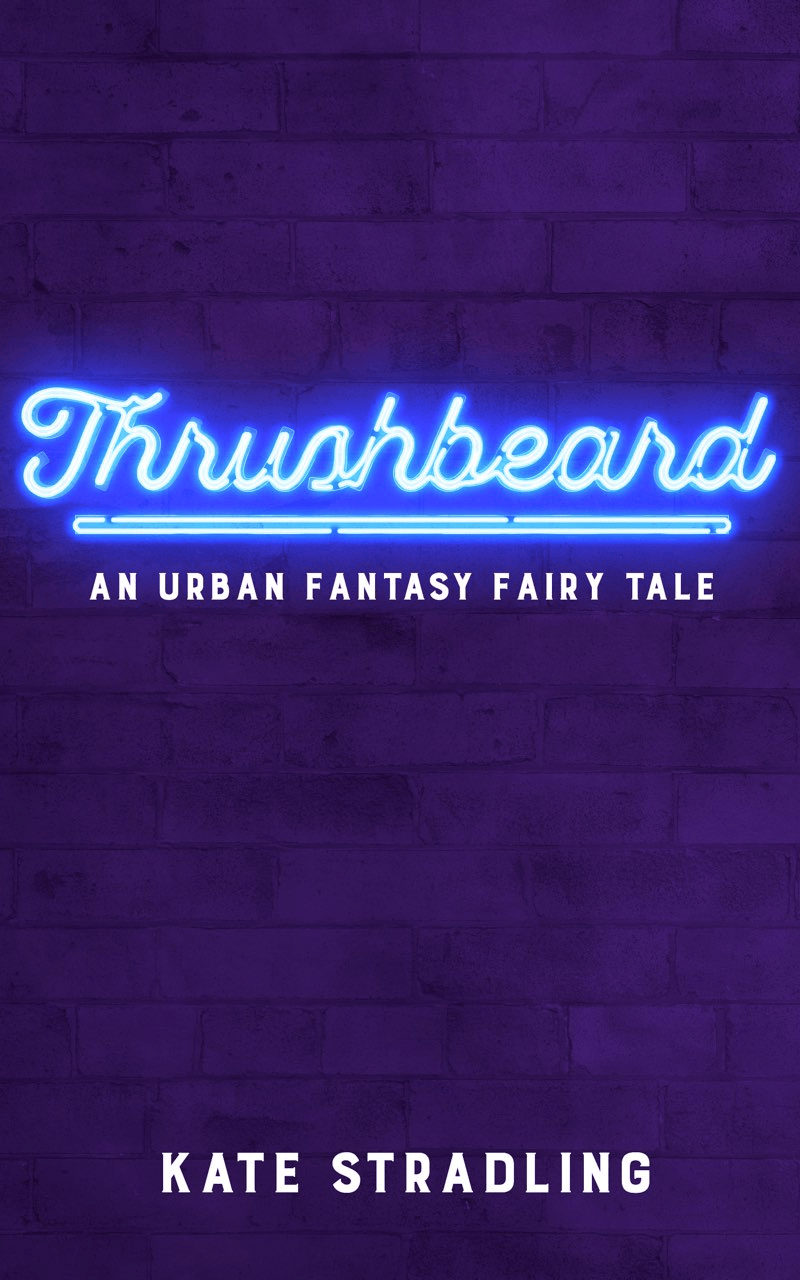
Perhaps the solution was always to change the setting entirely. Moving the tale to the Fae Realm (or in this case, an Urban Fantasy version of Arizona) gives the story a moral framework that doesn’t require forcing modern sensibilities onto an old-timey setting, and it gives Stradling room to reinvent the tale’s central mechanics without betraying its spirit.
In this second retelling, the Fae live amongst humans, glamourised and obsessed with perfection. They work in technology, curate flawless appearances, and are biologically unable to unsee a flaw once it’s been pointed out to them:
“You can’t help but point out flaws, and we fae can’t help but see those flaws forever after.”
Enter Anna, daughter of a man whose wealth was built on a bargain with the Fae of the kind involving firstborns, that isn’t explained much in-world. The bargain’s terms force Anna to marry a Fae suitor to satisfy her father’s debt, or both she and her father will die. Note that the bargain is coercive, and Anna has no initial say in its terms. That’s a tension the story doesn’t fully resolve, because she trades one kind of captivity for another when her eventual employer’s accepts her counter-offer. But crucially, it’s a tension the narrative at least earns, because the counter-offer is Anna’s choice, made with open eyes, between two bad options. That’s a meaningful distinction from a forced marriage, and the storyline highlights it.
What Anna does with her sharp tongue before that counter-offer is the real catalyst: she rejects the Fae suitors by remarking on the tiniest of flaws their glamours somehow fail to conceal, not fully realising what she’s setting in motion. One of the Fae suitors doesn’t allow her to dismiss him like the others but finds her caustic tongue amusing, and seeing she can’t win she offers to be his servant rather than a wife. She must work for him as a “faultfinder” (a delightful irony, ha!) to pay off the debt.
And so Anna cycles through a series of jobs under his command: quality control officer at a factory, hotel maid, retail saleswoman, corporate gofer at Thrushbeard’s conglomerate headquarters; none of which go well because she can’t control her tongue. What she gains through these experiences isn’t humiliation imposed from above but genuine, messy, outside-world discomfort. She earns her self-awareness the hard way, and it feels natural rather than punitive.
Her Fae boss is a nosy, humorously meddlesome bloke that enjoys making her sweat for fun, but he’s also someone she quietly comes to see clearly. His inner character emerges sideways, through the things he doesn’t say and the way the dynamic shifts between them. There’s a vulnerability in him that’s only visible because Anna is a faultfinder by nature and notices what others are too dazzled by perfection to see. This exchange captures it well:
His golden stare bored into me. “Is that how humans survive without going insane? You see imperfections and choose to embrace them?”
“It depends. If we care about someone, their flaws can be precious, part of the fabric that makes them uniquely them; if we dislike them, though, their flaws can amplify that dislike.”
“Is this your way of telling me you care about me?”
It’s the right kind of deflection: funny, a little dangerous, and doing real emotional work underneath the banter.
To recap, what does this version get right that the other two don’t? In my opinion, it comes down to four things:
- The setting is different and employs a different morality: modern, so no need to slap contemporary values onto an archaic framework.
- There is no forced or arranged marriage. Anna chooses, within constraints, and the story honours that distinction.
- The relationship between the protagonists is one of equals, even if he is technically her employer under the bargain’s terms. She works to pay off a debt, not to be humiliated into gratitude.
- Anna’s father is a weak-willed man, not a straight villain, which is far more believable and interesting.
Anna and Reinier are quite engaging characters. Their dynamic is funny, warm, and believable. And most importantly, this is the only “King Thrushbeard” retelling I’ve read that preserves the original tale’s insistence that the princess did wrong, and lets her reckon with it honestly, without excusing her or punishing her grotesquely.
Which means Thrushbeard should’ve been the full novel, not The Beggar Prince. It’s a shame that the best of the three retellings is the shortest one.
What does it mean for me that I liked a retelling of one of my most hated fairy tales? It’s a miracle, and a singular one. I genuinely don’t plan to seek out or review any more “King Thrushbeard” retellings, as I said in a review of another recent retelling. I read Thrushbeard back in 2023 when it was first published, but didn’t review it at the time, and had to revisit it when the interview with Kate Stradling reminded me of it. It was well worth the reread.

This actually sounds like a fun story? I read/DNF’d Beggar Prince when I went through some ARCs from that MAS, but (clearly) wasn’t impressed. I actually didn’t read any of her other work until I started her newest book at your recomendation because I thought I wouldn’t like it based on reading Beggar Prince.
Her Thrushbeard retellings are her worst work to be introduced to her, in my opinion, so I can understand why you judged her by that book.
I do think you’d like this novelette, it’s short and reads quickly. But I can’t guarantee you won’t want more. 😉
I mean, when a story is good that’s usually how it goes. I think it’s permafree for her as an author, so I’ll download it and maybe I’ll read it during a plane flight since it’s shorter.
Hope you like it! It’s a fun read, and I really wish it had been made into a novel for the multi-author retellings. But maybe Kate thought there wasn’t more to it?
Sometimes, stories do get ruined by making them longer. Honestly, this story is good as is anyway, you can tell Kate worked on it very thoughtfully. She said in the interview that she wasn’t happy with her first Thrushbeard, so the second was better as a result. No idea why the 3rd turned out like it did, though.
Perhaps not. Or perhaps the MAS rules were a little more stringent and she couldn’t. I’m not sure. But either way, I usually find that shorter stories are ones I wish there were more of, haha.
I couldn’t say either, having only been exposed to the third one, but here’s to hoping if she continues with the Thrushbeard tales that they get better than that one. 😛
Haha, I do hope you try her other retellings. She’s very good, one of my favourites.