• Home
  • Reread
    • AGOT
    • ACOK
    • ASOS
    • AFFC
  • Rethink
    • Female Influences I
    • Female Influences II
    • Male Influences I
    • Male Influences II
    • Beauty and the Beast project
    • Mini-projects
    • Standalone Essays & Posts
  • GOT Analysis
  • Rereading Sandor
    • AGOT
    • ACOK
    • ASOS
    • AFFC
  • The Winds of Winter
  • Illustrating Westeros
  • Submissions
  • About us
  • Contact

PAWN TO PLAYER

~ A Rethinking Sansa Stark Resource

PAWN TO PLAYER

Author Archives: brashcandie

Interested in being featured at PTP? Submit to us!

23 Sunday Aug 2015

Posted by brashcandie in PTP TWOW

≈ Comments Off on Interested in being featured at PTP? Submit to us!

Tags

pawn to player, sansa stark, submissions

As part of a new initiative by Pawn to Player, we’re inviting submissions for essays or write-ups on Sansa Stark and characters central to her arc and development. Pawn to Player was built on the power of collaborative effort, and we wish to continue this tradition at the website, sourcing constructive and original content on Sansa that will help to expand the knowledge and appreciation for her experiences and where her journey is headed in the novels.

If you’re interested in contributing an essay to be featured here, we’d love to hear from you. Each piece will be carefully considered for its overall value, and feedback will be promptly provided. Please, see the submissions tab in the main menu for the basic guidelines. We look forward to expanding the PTP resources with your participation!


How many children did Scarlett O’Hara burn?

10 Wednesday Jun 2015

Posted by brashcandie in Game of Thrones

≈ 20 Comments

Tags

dance of dragons, episode 9, miodrag zarkovic, review, season 5

A review of “The Dance of Dragons,” the ninth episode of the fifth season of “Game of Thrones”

by Miodrag Zarković

In case there was anyone left unconvinced that “Game of Thrones” is the most unfaithful adaptation ever, the penultimate episode of the fifth season definitely cleared any doubts. After realizing there are no more human characters or animals or beasts they haven’t already changed beyond recognition, David Benioff and Dan Weiss, the two showrunners, finally turned to the deities in said episode. So now we have book R’hllor, that exists in the “A Song of Ice and Fire” series by George R. R. Martin, and TV R’hllor, that operates in a somewhat different manner.

And it’s only fair. What makes the gods so special? Why should they be spared from Benioff and Weiss’ famous creativity?

On first impression, the new R’hllor isn’t too unlike TV Meryn Trant, in that they share this penchant for young girls. And both got what they wanted in this episode, though not before some trouble, of course, because this is “Game of Thrones” after all: nothing is easy in this world, not even for seasoned knights and supernatural forces.

Poor Meryn had to sit through what was arguably the most shocking sequence Benioff and Weiss treated their audience to: a multitude of prostitutes parading onscreen without a single sight of nudity. TV R’hllor, on the other hand, was forced to wait until TV Ramsay, channeling Chuck Norris, set the supplies of TV Stannis Baratheon’s army ablaze, and only then his demand could ultimately be met with.

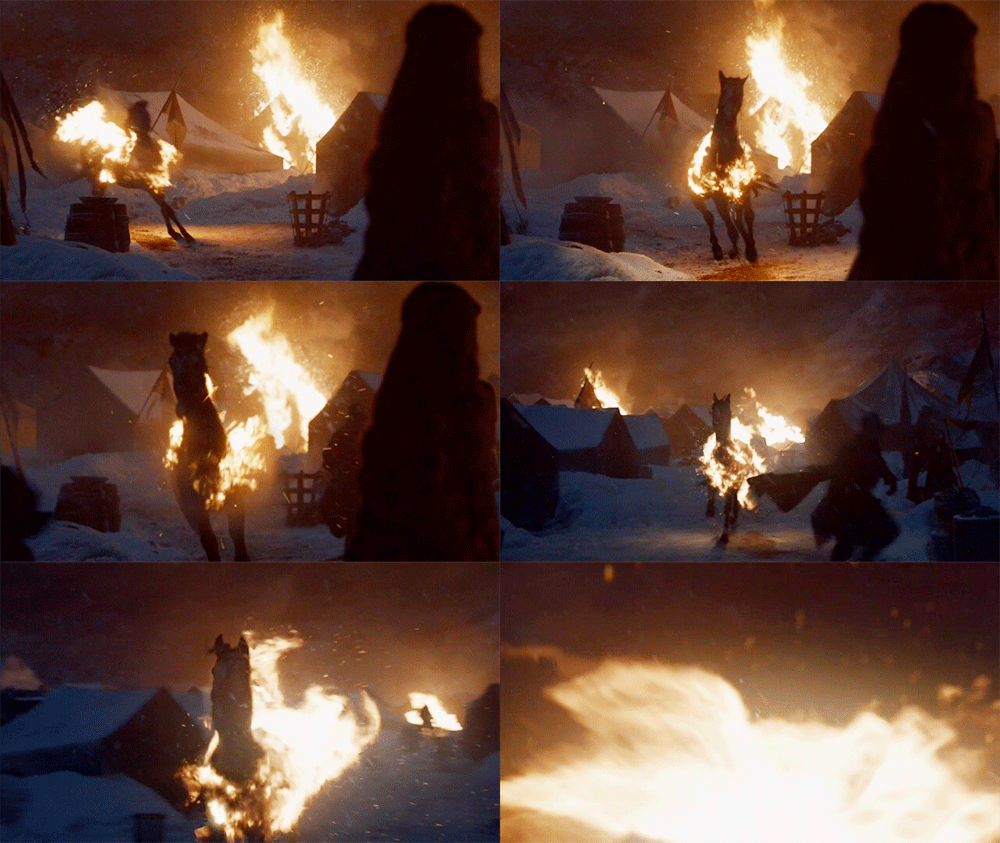
(From the scene of the Boltons’ attack on Stannis camp, keep in mind that poor horse on fire. It’ll be helpful later on.)

The demand was to sacrifice Shireen Baratheon, Stannis’ only child, by burning her alive. And yes, it arguably means that the girl acquired by Meryn Trant was actually the luckier one. O tempora, o mores!

It also means that “Game of Thrones” is like a car without an engine, or a restaurant with no food, or a bank with no money, or practically any other entity that’s failing to fulfill its basic purpose. Yes, the “anyone can be killed” show actually sucks at killing its characters.

That’s hardly news. It’s been like that ever since the pilot episode, which in its very first scene stripped Ser Waymar Royce’s death of any heroism. It was like that this entire season, as evidenced by TV Barristan’s death. But the burning of Shireen was a whole new level. Opposite to many other of Benioff and Weiss’ interventions, this one wasn’t exactly illogical (not because it’s logical but because there’s no criteria the act can be measured against in regards to logic), as much as it was the very definition of unearned moment. Even though the showrunners packed it with Shireen’s screams and the soldiers’ horrified looks and Selyse’s late tears, the scene just couldn’t operate beyond the pure spectacle aspect. If you’re generally disturbed by the image of a child burned at the stake, or, even more, by her agonizing cries for help, chances are the sacrifice of Shireen was not an emotionless viewing. But it hardly reached something deeper.

It simply couldn’t, because a) none of the characters involved, almighty R’hllor included, was ever properly established or developed, and b) the context it shapes is, typically for Benioff and Weiss, contradicting any realistic take on the setting.

TV Stannis is exactly what Benioff and Weiss want him to be: a fanatic devoid of any humanity, a driven sociopath, nature’s cruel joke that never made anyone laugh. How can such an individual ever inspire any loyalty or devotion, is among the numerous questions Benioff and Weiss wouldn’t know how to even begin answering. TV Selyse is someone who keeps dead fetuses in jars; whoever thought that can lead to a relatable character, probably watched too many movies with dead fetuses in jars. TV Shireen was a kid borrowed from some fairy tale, too perfect for her own storytelling good: characters of that type are written either by authors at odds with realism, or as an exercise in some cheap manipulation aimed at breaking the hearts of the audience at some point; or, as it’s sadly often the case with GOT, both. TV Melisandre is out of character every time she appears dressed, and, speaking of her dress, R’hllor isn’t The Red God anymore, if the fifth season is anything to judge by. If those are the characters that occupy a particular storyline, well, don’t expect that anything that happens to them will actually matter. The audience may be instinctively affected by this horrific sight or that one, but that’s where any intellectual and/or emotional connection stops. Honestly, the only remotely relatable element in that scene was those shocked soldiers, hence the point number two. In a world that is entirely built around the institution of family, a character that burns his own daughter just because his supplies and horses were destroyed is perhaps possible, but definitely not useful in a storytelling sense, unless the sacrifice itself isn’t the very climax and practically point of his arc. Since the episode aired, many critics and commenters compared Shireen’s death to the sacrifice of Iphigenia committed by Agamemnon ahead of the Trojan War, but it’s just wrong for a number of reasons. First, Agamemnon doesn’t even have a family name. He is not Agamemnon of the House Whatever. He’s just Agamemnon, because that entire society is built of quite a different fabric from Westeros. Second, in Greek mythology deities really are everywhere and involved in everything. When Agamemnon’s fleet can’t sail because the wind stopped, there is no shadow of a doubt in the mind of any soldier or subject of his that the gods are behind the obstacle—just like they actually are. So, Agamemnon is forced to appease, one way or the other, the deity he insulted.

ASOIAF is a completely different story, set in a fundamentally different culture. One of the most important aspects of the saga is that supernatural forces are coming back to the world. In effect, that means Westeros, at the beginning of ASOIAF, is a place governed by rationality, simply because it didn’t witness any magic for ages. There is faith, of course, because the Westerosi don’t delude themselves into thinking they can control the rain and the snow and the storms and whatnot. They never mistake themselves for gods. They are aware some things will always escape their reasoning, and therefore they do place their faith in the deities of the religion they happen to belong to. But they are a pretty rational society. Primitive compared to modern societies on 21st century Earth, but very rational. The traditions and rules they follow are established by centuries and centuries of human experience, and not because this divine authority or that one issued an order. One could say that even their faith in higher powers is somewhat rational at its core.

That delicate balance between reason and faith is what enables the culture that commands the political and social system in Westeros. And in such a culture, a king who sacrifices his daughter just because that’s how he interpreted the order form the deity he worships is a freak, an abomination, a lunatic that nobody would follow anywhere, let alone into war.

And it’s not that the Westerosi never heard of the concept of sacrifice. In fact, in the early stages of Stannis’ arc in the books, we’re told the story of Azor Ahai and his beloved Nissa Nissa, whom he had to kill in order to save the human race. But that’s exactly the point: Nissa Nissa died so the world would be saved, and not for a victory in a dynastic war. With that legend, the author makes us understand what kind of sacrifice is possible in the world he created, which, by extension, renders some other types unacceptable.

And in the books everyone’s aware of that. Whatever feelings Stannis has for his daughter, he’d never even think about sacrificing her for the Iron Throne. Melisandre would never even mention such a suggestion to Stannis, nor does she herself ever entertain the idea, it seems. Even R’hllor looks pretty uninterested in Shireen at this stage, although Stannis at the end of ADWD (and beginning of TWOW) is arguably in a worse situation than his TV namesake—if for nothing else, because that TV blizzard is a joke compared to the one Martin described in the book.

Have to say, I was unpleasantly surprised by a number of people that reacted to TV Shireen’s death with the notion that Stannis in the book would never burn his daughter like that, but Mel totally would. I really can’t say where that interpretation of Melisandre is coming from, but Martin’s famous statement that Mel’s probably the most misunderstood character in ASOIAF only makes more sense now. There undoubtedly is a fanatical and merciless side to Melisandre, but she’s not all evil. Far from it. In the very chapter she’s introduced in, when Maester Cressen approaches her with a poisoned wine, she openly warns him against the deed, signaling him to abandon the attempt on her life. Many readers seem to forget or overlook that detail, but it’s quite a telling one. It doesn’t mean she’s some kind angel, of course not; some of her acts are clearly repulsive and unforgivable; but, just like the vast majority of ASOIAF characters, she’s nuanced and layered. And no, not in any moment so far she even thinks about burning Shireen or indicates that it has to be done.

But David Benioff actually claims Shireen will be sacrificed in the books, too. In “Inside the episode” video, this is what he said:

“When George first told us about this, it was one of those moments where I remember looking at Dan, it was just like, `God, that’s so, it’s so horrible, and so good in a story sense, because it all comes together.`”

At face value, this may look like Benioff’s storytelling talent finally came through. At long last, he produced a line that is subtle, mysterious, intriguing, open to various, though not necessarily illogical, interpretations, and worthy of a serious analysis. And, most importantly, it didn’t happen by chance; no, he obviously intended it that way.

And that’s it. That is really the full extent of Benioff’s talent, because in the very next sentence he managed to embarrass himself and deliver a factually wrong recollection of his own work:

“You know, from the beginning, from the very first time we saw Stannis and Melisandre, they were sacrificing people, they were burning people alive on the beaches of Dragonstone. And it’s really all come to this. There’s been so much talk about king’s blood and the power of king’s blood, and that all leads ultimately, fatally, to Shireen’s sacrifice.”

Beg your pardon, Mr. Benioff, but what the hell are you talking about? What people were they burning alive on the beaches of Dragonstone? Those were statues of the Seven, not people, Mr. Benioff! If you want to leave the impression you’re in command of Martin’s yet-untold story, you shouldn’t be misremembering parts of the story you yourself already told. But let’s get back to the beginning first line: “When George first told us about this . . .” What does this “this” of yours stand for, Mr. Benioff? If you’re trying to say that George told you Stannis will allow Mel to burn Shireen after Ramsay destroyed his army’s supplies, you’re either lying or once again misremembering vital parts of the story. Melisandre and Shireen aren’t even with Stannis on his march to Winterfell in the books. Ramsay doesn’t perform some miraculous commando mission in the books. And George did write those books, all five of them so far. So he theoretically couldn’t have told you about “this”!

What he possibly did tell you, is that Shireen will indeed be sacrificed, maybe even by Stannis himself. But many a reader speculated about that possibility for years and years. I guess you and Mr. Weiss were busy reading online theories about Jon Snow’s mother, so perhaps you didn’t have the time to go through other predictions dedicated readers keep posting, because otherwise you wouldn’t be too surprised when George first told you about “this.”

Yes, Shireen’s sacrifice has for long been hinted at in the novels, and since Martin didn’t rebut your statement, it’s now as good as proven that it’s going to happen in the remaining two installments. But it’s even more certain Martin isn’t going to do it in such a shallow and gratuitous way as you two did.

(Gratuitous! What a word. It was in every GOT-related article these past weeks, but now, when TV Stannis gratuitously burns his daughter, it’s nowhere to be seen, it seems. It’s as if this kind of violence doesn’t particularly disturb mainstream media, because it’s not politically bankable.)

Your scene, Mr. Benioff, lacked the gravity ASOIAF scenes are famous for. It happens a lot in this “adaptation” of yours, because things that fascinate you two apparently confuse you too. For example, you also managed to misunderstand patricide, as evidenced last year when you omitted the most important part of Tyrion’s decision to abandon his escape from prison and go look for some explanations from Tywin. This season, a sacrificial murder of a man’s own child was obviously too much for your comprehension, even though you couldn’t resist putting it in the show.

And yes, you also failed to properly interpret Ramsay, although you evidently adore the guy. And allow me to show you what I mean, by asking you a simple question: When did you discover you’re in love with Ramsay’s shenanigans?

Here’s my guess: only when you read “A Dance with Dragons,” e.g. by the time you already scripted the entire second season of your show. Was it humiliating, Mr. Benioff, to read in awe those Winterfell chapters in that book, while all the time thinking about the huge mistake of cutting Ramsay out of your “adaptation”? Yeah, in the third season you managed to bring Ramsay in (and ever since you waited for the opportunity to add a burning horse, which is a book scene associated with Ramsay material you skipped in Season 2), because by that time you became obsessed with him and his cruelty. But you were still mad at yourselves, and possibly at George, for omitting Roose’s bastard from the second season, which resulted in the mess that was the TV Winterfell storyline that year. Was it then when you finally made George tell you the endgame for ASOIAF, so you could avoid similar missteps in the future?

Was it then when you also found out about Shireen’s ultimate fate? Because neither Shireen nor Selyse appeared in Season 2, which indicates that when you were writing the scripts you probably still didn’t know about that “this” thing you referred to in the latest “Inside the episode” video.

Seeing how fascinated you obviously are with both Ramsay’s sadism and Shireen’s sacrifice, I’m positive you’d have included both in Season 2, had you known back then what Martin had in store for them. Not that Ramsay’s or Shireen’s TV arc would benefit from it. I mean, just look at what you did to the Daznak’s Pit scene, which, in the same “Inside the episode” video, you described like this, Mr. Benioff:

“Even before we put it in paper, I remember reading this scene in the book and saying ‘Holy shit.’ And, actually, I remember e-mailing George right after I read the scene, even before I finished the book, just after reading this scene, and saying: `That’s one of the best scenes in any of your books and I have no idea how we’re gonna do it`.” Well, looks like eventually you got some idea. This is how you “did it” in the end: you made it even more complicated, though in a completely ridiculous way that inevitably removed every quality the scene possessed in the book and replaced it with some silly action the ultimate purpose of which was, yes, to feed Peter Dinklage with what you probably recognize as award material. You even failed to reward your man Jorah with a badass moment: when he hits that Son of the Harpy with a spear, it looks impressive at first, but then one realizes Jorah couldn’t miss actually, because the Sons of the Harpy were everywhere. In whichever direction he sent that spear, he’d kill one of them!

But all of that is small potatoes compared to your biggest, meanest, vilest gesture ever, Mr. Benioff. Let’s get back to “Inside the episode” video and your “When George first told us about this” line.

Asking you what right did you have to spoil the future books that way, would definitely be futile. Earning a right to do something is, clearly, one more concept you see no problem rejecting. I also doubt you ever think about comeuppance, seeing how dismissively you look at the very idea of higher justice. Just like I’m sure the next time you need to cover your unparalleled incompetence, you’re again not going to hesitate to put the responsibility on Martin, and spoil the coming novels in the process. But don’t fool yourself, that’s sort of kinslaying what you do. And you are on ASOIAF ground. And you’re about to lose all your supplies, because scripts for the next season you’ll have to turn in any day now, and “The Winds of Winter” is still not out.

And, after the last episode, I think you two have a very clear idea how strong and mind-corroding is the despair that falls on self-entitled, under-equipped fanatics caught on hostile, unfamiliar territory.

Not a Review, Part I

27 Wednesday May 2015

Posted by brashcandie in Game of Thrones

≈ 36 Comments

Tags

episode 7, Game of Thrones, got, miodrag zarkovic, season 5

An article that has almost nothing to say about “The Gift,” the seventh episode of season five of “Game of Thrones”[i]

by Miodrag Zarković

It’s fitting that, when discussing something originally created by the mind of George R. R. Martin, alliances are not so easy to form. Enemy of your enemy doesn’t have to be your friend in any way.

In the matters of “Game of Thrones,” a TV show that was supposed to be an adaptation of Martin’s “A Song of Ice and Fire” book series, my enemies are David Benioff and Dan Weiss, the two showrunners. Needless to say, they’re not really my enemies. I wish them no harm. I present no threat to them or anyone they love or care for. I’m just regularly appalled by the dismal results they produce in HBO’s hottest item of the decade and by the frustrating disrespect for the source material they display week in, week out. Nothing more and nothing less. It’s not a “life or death” situation, but it is a serious issue.

Is then the sudden, long overdue, and very strong critique of their show, that surfaced ten days ago, a reason to celebrate?

Well, no. Not really. For the same reasons one couldn’t enjoy those misplaced complaints some four years ago, following the second episode of the debut season of the show. The episode, titled “The Kingsroad,” ended with the execution of Lady, Sansa Stark’s direwolf, and immediately after the credits rolled internet went ablaze with accusations from thousands of viewers that the show is advocating animal cruelty and that they won’t watch it again. The controversy was so big, Martin himself had to react on his “Not a Blog” and remind everyone that: 1) the dog that played Lady was actually not hurt in the scene, and 2) the kid who played Mycah, the poor butcher’s boy who was also slain in the episode, was okay too, in case someone was wondering. Possibly ashamed by Martin’s sarcastic remark, the complainers stopped with their rage, but it was an early sign that something’s very off with the public perception of this show. A legion of viewers truly thought they had to defend the species of direwolves from the man who actually brought them back to life in his saga. Yes, GOT was a strange journey from the very beginning.

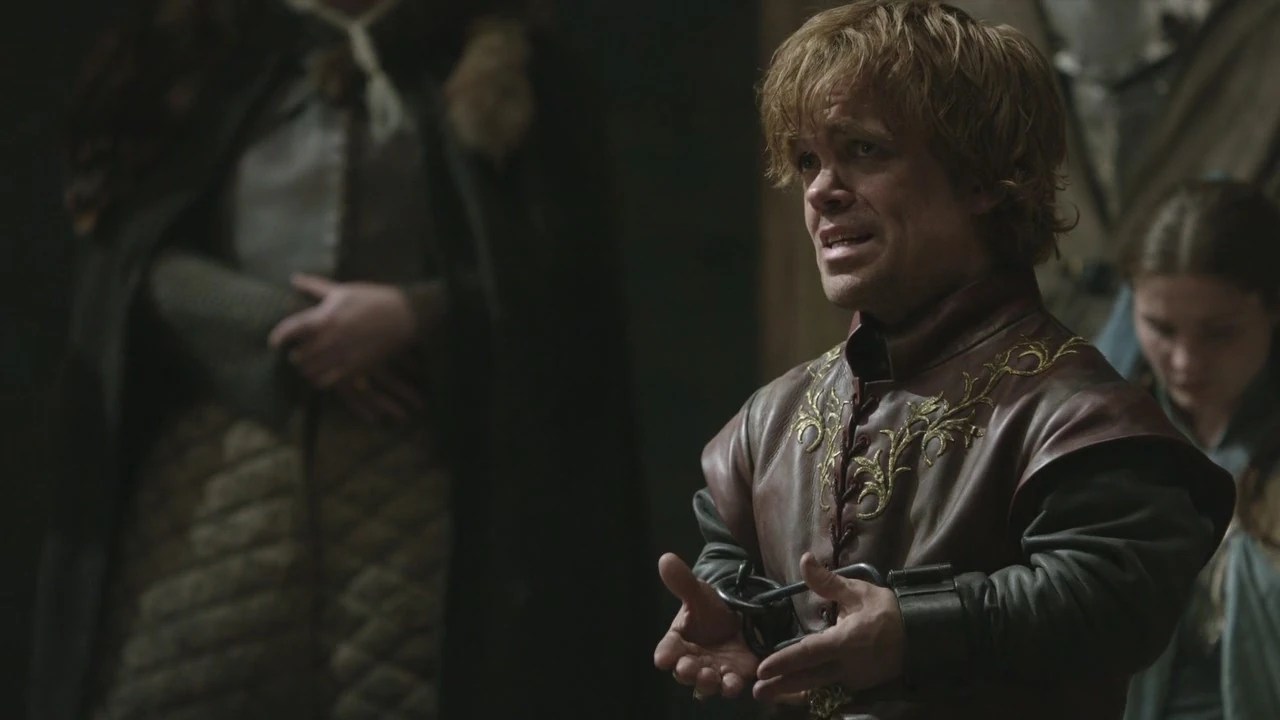
TV critics were not too different from common folks. See, ahead of each season, critics are given screeners, e.g. a certain number of episodes in advance, so they can prepare both previews and early reviews. For the debut season, they received the first six episodes. The vast majority of them expressed their positive impressions of the show, hailing production values, interesting plot twists, a grittiness that was surprising for a fantasy show, good acting, and especially Peter Dinklage’s performance as Tyrion. Well, there was one exception on the last account. One critic was openly displeased with Dinklage’s performance, most of all with his accent. Some viewers also noticed the problems Dinklage, an American, had with the British accent and by extension with the delivery of some lines, but critics, apart from that one, reached the consensus that the Tyrion actor was a revelation. Here’s the catch: the one critic that disagreed was writing her reviews right after watching each episode. Opposite to other critics, she penned her reactions before watching the next episode, and she didn’t want to “correct” them afterwards, even if she changed her opinion on a particular issue later on. Her colleagues, on the other hand, just binge-watched the six screeners and only then went back and wrote respective reviews for each of the episodes. And, naturally, the sixth episode, titled “A Golden Crown,” left the biggest impression on them, because it actually was the last fresh material they’d seen. And, truth be told, it was the episode Dinklage excelled in, with his dealings with Mord and his trial at the Eyrie as high points.

In short, that may very well be the explanation for the Dinklage euphoria that accompanied the first season and practically lasts to this day. The critics, save that one (who was tastelessly attacked on show-dedicated sites as a “traitor”), simply didn’t pay too much attention to “details” like actors’ delivery and cared much more for their general feelings on the material. Because Tyrion was the unexpected hero of the last screener they received and watched, it was easy for them to single him out as the stand-out among the cast, even though his performance in the earliest episodes was far from remarkable.

At the time, I couldn’t help but wonder what would’ve happened if the critics were given seven instead of six episodes. Would Jason Momoa as Khal Drogo, who pretty much owned the seventh hour with his war speech after the attempt on Daenerys’ life, become the favorite of the critics and receive an Emmy later on? What would’ve happened if there were only four screeners? Would Michelle Fairley, with her striking turn in the scene in which her character Catelyn Stark captures Tyrion, receive the biggest acclaim in that scenario? We’ll never know, of course, but the fact that the strongest character in the last screener reviewers received ahead of the first season became the critics’ darling and, later on, favorite of the showrunners as well (who went on to write a number of invented TV scenes that seemed to serve Dinklage first, the story itself a distant second), could be more than just a coincidence.
At any rate, this showed that TV critics aren’t to be too trusted either, at least when it comes to “Game of Thrones.”

The rest of the season only strengthened the feeling. The beheading of Ned Stark was universally praised as a revolutionary move for the TV industry, in that no show before GOT had killed its main character in the first season. Back then, however, critics weren’t asking the question that by nowadays seems like the most frequent one about GOT: was Ned’s death gratuitous, e.g. just for the shock value? Was it meant just to take viewers by surprise and send a signal that anything can happen on this show (a thought often rephrased as “Anyone can die in GOT”), or did it carry some higher importance?

A pity, really, because the answer was there all the time, offered by the showrunners themselves, in the now infamous “Inside the episode” videos and regular media interviews. In regards to Ned’s death, all they could talk about was how utterly shocking and disturbing it was supposed to be. (This is the exact quote: “It’s great to be surprised in that way, and I only hope that the people who come into this show without having read the books will have the same Holy shit response that I had when I read the book, because it was a big Holy shit for me.” Dan Weiss, eloquent as ever.) Not a word on some thematic importance, some sophisticated meaning, some subtle message if you will. No, TV Ned died solely to convey how dangerous and merciless the world of GOT is, which really is just a code word for a successful attempt to shock the viewers beyond their wildest imagination.

And pretty much the entire first season served that one purpose: to portray what a dark and unforgiving setting the show managed to create. “No good deed goes unpunished,” another direct quote, this time by Benioff, about Mirri Maz Duur effectively killing Drogo after Dany saved her.

But why would such a setting be interesting in the first place? Why would the audience care for the world in which no good deed goes unpunished? What artistic or philosophical significance could individual fates in that environment possibly have for the viewers? What was supposed to separate “Game of Thrones” from horror rides in amusement parks?

All those questions were left not only unanswered, but practically unasked, during the first ten episodes. Even the last scene, in which Daenerys stands up amidst the ashes with three little dragons on her, was hailed as a triumph and “the most effective” usage of a naked body in recent memory. Apparently, nobody had a problem with the obvious failure of the scene, e.g. its chronological discontinuity represented by the fact that Dany enters the pyre at night and emerges from it on daylight. Those rare viewers that didn’t particularly like such a break in continuity were easily convinced by the showrunners that it was a necessity, because of some difficulties with special effects.

As if it was impossible to insert the red comet as the reason behind the sudden light. Yes, the actual red comet: it appears in the books, too, and it was heavily shown in the very next episode, the premiere of the second season, so it’d probably be much more logical to have a bright comet shining on the site, instead of making the entire khalasar sleep for a few hours while Dany burns.

The critics and the viewers, however, were thrilled. It’s a fantasy show that doesn’t hesitate to kill its main characters, after all. Who gives a damn if there’s no logic for some of the most instrumental moments in the story? Who cares if a crucial political decision (King in the North) takes no more than 30 seconds to be reached, just so we can have that endless “Naked whore exits Pycelle’s chamber” scene, or that even more futile verbal sparring between Littlefinger and Varys? It’s a show about some dreaded world in which anyone can be killed at any given moment and honor is just a shortcut to an early grave and everything’s bleak and everyone’s cruel and nothing is sacred . . . We need that world, so we can favorably compare our own reality to it and feel great about ourselves. Therefore, it’s a brilliant show. It has to be. Right?

The sad truth is that, just like countless other shows and movies, the first season of GOT really offered not much more than pure escapism. And was hailed for it.

A very small minority was disappointed. The corresponding book (those days it was still possible to recognize one, at least) offered a multitude of finer explanations and explorations that went well beyond that “You didn’t see that coming, did you?” pettiness that is sometimes confused with good storytelling, but almost none of those found its way into the show. Those that did seemed to exist on screen despite the showrunners’ intentions and not because of them. But most were missing. There was no connection to the past (Ned’s dream, for example) that determines the present. The importance of one’s heritage was practically erased, most notably from Ned’s arc for which it was the most important aspect in the books; the one exception was the character who was only bound to appear inconsistent because of that later on—Tywin. There was no underlying humanity in, say, the Night’s Watch, where TV Alliser’s cheap “Come winter, you’ll die, like flies” speech had way more gravity than Jon standing up for Sam and securing him a place on the Wall (the second part was actually omitted).

Sadly, rarely anybody seemed to care. Cersei speaks of some dead infant? The Trident scene was amateurishly filmed? Doesn’t matter, an alleged animal cruelty in the same episode needs be addressed. Ned was robbed of his dream sequence and given only one scene in the dungeon? Doesn’t matter, everybody just loved he was killed. People are going to be confused about battles and war strategies and army movements and secessions and complicated political relations between the kingdoms in the realm? Don’t worry, look how strongly everyone hates Joffrey!

The second season came with only bigger problems. Instead of delivering a rather complex but enlightening back-story about his troubled upbringing that left eternal consequences on his personal views on deities, TV Stannis was literally teased by Melisandre into a sexual intercourse. And on top of everything, Bryan Cogman, a trusted accomplice of Benioff and Weiss, was actually angry when asked about the decision to go overt with the Stannis/Mel sexual affair, opposite to the books where it’s only hinted at: he openly revealed that the two of them also have sex in the novels, despite the fact the positive confirmation is still to come in the source material, strong hints notwithstanding. He, who’s always so careful not to spoil anything from the future episodes, actually didn’t hesitate to spoil the books in order to defend the show’s need for nudity and sex scenes.

This is not about being a Stannis fan, of course. In case somebody’s interested, I’m not, by the way. Technically speaking, I’m a fan of all the characters. Even Ramsay: I literally can’t wait to read the next chapter he or some letter of his appear in, which probably makes me a fan of Ramsay, too. So no, I’m not a Stannis fan strictly speaking, but I was shocked by the sad truth that this “adaptation” is headed by the men who find Stannis’ alleged sex life much more interesting than his religious beliefs. He is the closest ASOIAF comes to Prometheus: he wants something given by the gods (the position of a monarch), though not to serve deities but the realm (e.g. humans), and there’s a fire involved heavily in his arc . . . And yet, in the show he’s reduced to a power-mad warlord who can’t control his sexual impulses. But, in battle he’s the first to climb the besieged walls, without a helmet even, so the show won that round, apparently.

Arya’s Harrenhal sequence was deformed into a vehicle for two actors to appear together on screen. Sansa’s arguably bravest deed (saving Dontos) disappeared after the initial gesture, along with some of Sandor’s lines that—again!—went Littlefinger’s way. Jon was learning how to be an idiot whom Ygritte can best in any way. Tyrion was busy with grammar dilemmas and not with actual ruling. Jaime was preoccupied with murdering his relatives for no reason at all. Theon was realizing the life without Ramsay has no closure—literally! Robb and Dany’s respective arcs were seen as improvements of the source material, because, apparently, it’s better to have moronic characters and nonsensical twists in more scenes than believable characters and tight stories delivered in less . . . sorry, fewer memorable scenes. And Bran and Rickon stopped being important to anyone. That’s the outline of the “season of romance,” as Benioff called it, and, again, hardly anyone complained. It was still the show with horrible things happening to everyone and bad guys were still winning. What’s not to like about it?

Season 3 came a year later, with the scene Benioff and Weiss always emphasized as the main reason they went in this “adaptation” to begin with. Without going into details, here’s just one, often overlooked example, of what the writing in the show looked like by then: when Robb is informed by Talisa she’s pregnant, she asks him: “You’re angry with me?” Seriously, someone in the writing team thought it’s a theoretically possible line in a world that has no idea of anti-baby pills and little of other forms of contraception. (The scene belongs to the episode written by Martin himself, but, until proven otherwise, I’m positive the man didn’t write a single line for the abomination called Talisa, and the scenes often get shifted between episodes anyway.)

By the way, Benioff and Weiss’ most beloved book scene, the Red Wedding, was so gratuitous in the show that in the end it was obvious the infamous Talisa was added mainly for the massacre to be even more shocking, by having her repeatedly stabbed in the belly.

Once again, the critics managed to largely miss or purposely avoid all the low points of the show. Occasionally, someone wrote about the assassination of this character or that one, which was a big step of course, but it was still an exception and not the rule. The vulgar honeymoon between GOT and the critics was still far from over.

And then, last year, something happened. The romance between the media and the show abruptly paused. The reason was the scene in episode 3 of Season Four, depicting the now infamous intercourse between Jaime and Cersei in the sept, right by Joff’s corpse.

“Rape!” yelled the critics in fury, every single one of them. And, if one didn’t know better from the books, it actually looked like a rape. Cersei’s resisting at first, but Jaime doesn’t want to stop and she eventually surrenders. For the unsullied eye, it could look like nothing but the forced sex in which one party was clearly violated. The crew, however, claimed something else. When the scandal broke, the showrunners, the director of the episode and the actors themselves kept saying the scene wasn’t meant to be seen as a rape.

I remembered the case with Lady’s death in Season 1 (not the least because Martin himself once more felt the need to react and remind everyone the scene in his book is written way differently), and realized once again there are two sides making strange claims, neither having any grasp whatsoever over whatever the hell they’re talking about.

Let’s start with the crew first. It’s truly something special, though really not in a good way, when you manage to film a scene and practically everyone sees it differently than you do. That’s quite a milestone in the history of TV incompetence. As far as memory serves, no other show, or movie for that matter, managed to unintentionally convey something so different from the original idea. There’s a lot of unintentionally funny moments in the history of motion pictures, but before this there was probably no unintentional rape scene. Everyone who wrote, directed and edited the said scene, should really go back to the basics of their jobs and start the career all over again. Some things really can’t be fixed, only reset, and this is obviously such a case.

On the other hand, even if we agree it was a rape (and, again, to anyone who didn’t possess the knowledge from the books the scene could look like nothing else), I’m still to hear why any Unsullied critic/viewer was upset over it. Isn’t this the show in which everyone can be killed, or maimed, or brutalized? Or raped? How was an Unsullied to know if such a scene will lead to any meaningful conclusion or not? If we look at the show as a separate entity from the books—which is a line every show lover, TV critics included, kept parroting all these years—there was simply no way to tell what the show intended to do with this development in Jaime and Cersei’s relationship.

As for book readers, this scene could be just the last straw in a long string of serious misinterpretations of Jaime’s character—similar to last week’s situation with Sansa. If one’s concerned with the way Benioff and Weiss are adapting Jaime Lannister, one was bound to be unhappy ever since the second episode of the first season (the scene in which Jaime, a member of the Kingsguard, mocks Jon and the very concept of the Night’s Watch), angry ever since the murder of cousin Alton in Season 2, and outraged after witnessing the humiliation Jaime suffered in that duel with Brienne in Season 3. To start attacking the show only then and there, over that one scene? That didn’t sound convincing to me back then, and it doesn’t sound any more convincing now.

And the best thing is, it’s pretty much evident Benioff and Weiss were speaking the truth when they said it wasn’t meant to be a rape.

I don’t believe them when they say they love and respect Martin’s books, because with every given episode they’re just proving they’re much more in love with the garbage they invent. I don’t believe them when they say they had to make this change or that one because the corresponding source material wouldn’t look good on TV: with every given episode they prove how little they know of any medium at all, be it literature or television. I don’t believe when they say weather conditions forced them to give Sandor’s lines to Littlefinger, because the scene itself proves it couldn’t be the case.

But when they say they didn’t write Jaime raping Cersei, I believe them. They were just trying to solve the mess they created with their Cersei. You see, TV Cersei loves her children. It’s not only she who recognizes it, but basically everyone around her agrees. Even Tyrion, who openly hates her, admits she’s a loving mother. Why they wanted her that way, I can only guess, but the fact is that a loving mother would never have sex right by her son’s dead body. No. Freaking. Way.

Ahead of the fourth season, Benioff and Weiss figured it out, or more probably someone told them. And they saw they were in a trap. It was one of those butterfly effects Martin was warning them about. Book Cersei is obsessed only with herself and, while she doesn’t hate her children and, as Martin once told, she sees them as extensions of herself rather than as individuals she loves, she really sees no problem in having sex with Jaime right by Joff’s dead body. Jaime, who’s a POV character in that chapter, outright says he feels nothing for Joffrey, which is a clear signal Cersei also doesn’t, not really, because otherwise she wouldn’t engage in intercourse with her lover in the most inappropriate of moments and at the most inappropriate of places. Anybody who ever grieved for anyone can testify to that: just ask yourself if you would be able to have sex right by the fresh corpse of your loved one. That is why the intercourse in the book is clearly consensual, just like the author explained—because book Cersei doesn’t love her children, at least not in the most common meaning of the word.

TV Cersei, on the other hand, loves her kids. That’s how Benioff and Weiss created her pretty much from the start. And then, facing the sept scene, they realized they can’t have her in a consensual sex with Jaime in those circumstances. To the Unsullied viewers, who for years watched Cersei as this loving mother, that would be extremely odd. So, talented as they are, Benioff and Weiss tried to fix their mess by having Jaime somewhat more forceful at the beginning of the scene. And just at the beginning. That’s how they operate: a loving mother would never have a consensual sex with her lover right by their son’s corpse . . . but, if he pushes her a little . . . now we’re talking! It doesn’t start as consensual, but it ends like that. Problem solved!

Trying to preserve their twisted characterization of Cersei, they ruined the character of Jaime, once more. Granted, instead of dodging a little storm, they caught the big one. Butterfly effect. Martin was warning them. They didn’t listen. Their funeral. Not an atom of mine felt sorry for them. Remember, they’re my enemies.

But I also couldn’t side with the enemies of my enemies in that case. All those critics that crucified Benioff and Weiss obviously had some agenda, but their agenda was not something that in any way corresponded with one of mine: the love for the ASOIAF books. Book purism, if you will.

In that controversy from a year ago, book admirers were the only side that wasn’t represented, other than in Martin’s brief statement on “Not a Blog” and on fan forums. The scene was discussed either from the perspective of show apologists, who continue to claim there’s nothing wrong with it and everyone should just have complete trust in Benioff and Weiss’s skills, or from the perspective of politically correct media that pursued their own interest, which wasn’t much different from the already mentioned “animal cruelty” scandal after “The Kingsroad.”

Something similar happened last week, with the new controversy, this time around TV Sansa’s rape. Contrary to last year’s situation, there is no doubt this time—it was a rape. Theon’s face confirmed it clearly, along with Sansa’s own reaction in this week’s episode, “The Gift.” Contrary to last year, Benioff and Weiss are silent this time around. Contrary to last year, some media outlets are not only listing silly accusations, but openly declaring they’re going to stop covering/promoting the show from now on. Contrary to last year, some other media outlets are determined to justify Benioff and Weiss by throwing some silly accusations of their own about other people’s accusations. In short, everything seems different this year, except from one detail: again, nobody was talking on behalf of those who love the source material, both Sansa fans and the rest.

(to be continued before the next episode)


[i] Just like the headline and the subtitle say, this was not meant to be a standard review. However, it wasn’t a decision made just because of the gravity of last week’s controversy but also for practical reasons. “The Gift” was, truth be told, an unbelievably dull episode, in which the show reused all the nonsensical aspects that plague the current season. The one refreshing thing is that Dorne was probably not the most moronic part of the episode, thought they did try hard to preserve the status, both with Myrcella’s almost Talisa-like outburst at her “uncle” Jaime, that ironically contained the most truthful line of the entire subplot (“Why is it happening at all?”), and with the poison triggered by the sight of boobs. Alas, the stupidest sequence has to be the Tyrion/Jorah weekly adventure. That cheap attempt at a “Gladiator” rip-off, combined with Tyrion’s sudden martial prowess that was not an unintentional rape but was certainly unintentionally ridiculous (and don’t forget a complete nonentity releasing him at the most convenient of moments), has to be included in textbooks as a perfect example of dishonoring not just one but basically two source materials. Congratulations, Benioff and Weiss, you again managed to outdo yourselves. The rest of the episode was just a bridge between the nonsense seen in the first half of the season and the final three episodes, therefore, it will probably be addressed in the coming reviews, when it will be put in the context.
A pound of flesh, but not one drop of blood

18 Monday May 2015

Posted by brashcandie in Game of Thrones

≈ 29 Comments

Tags

Game of Thrones, season 5

“Game of Thrones” got their pound of flesh tonight. In a season that has seen nearly all characters obsessed with vengeance, Sansa Stark was shoehorned into an absurd plot for what was clearly now meant to have her terrible victimization and trauma be played out for shock value, under the paper-thin guise of this allowing her to get revenge on her family’s killers. In truth, we didn’t need to wait for the disgusting optics and aurals to be seen and heard in this sixth episode. Indeed, from the moment D&D proposed that Sansa Stark’s arc was interchangeable with that of Jeyne Poole’s—a character who can’t even be properly understood to have an arc in the full sense of the term—we could have predicted what an absolute travesty this all would turn out to be. For those who question why this could happen to Jeyne and not Sansa, the answer is simple: these two girls might have been friends in the books, but their identities and experiences are not one and the same. Jeyne is sent to a brothel to be brutalised and trained into being submissive and compliant. Sansa Stark remains in KL to suffer much abuse too, but her development as a main character is focused on her becoming stronger and more resilient as a result.

Unlike Jeyne, whose sexuality becomes the means of her terrible exploitation in the series, Sansa’s sexuality is tied to her liberation and empowerment. It’s not a matter of her being “saved” from rape as some readers interpret, but rather that Sansa is constantly resisting attempts to get her to submit sexually to her oppressors. She comes to understand in that famous wedding scene with Tyrion that her desires are important, and that she is not willing to sacrifice herself for what her husband wants, even if she’s in a situation where she couldn’t be more powerless. Sansa’s sexuality, and her control over it, is an integral part of her growth towards agency. When you have her raped in a show and still want to speak of her as being a player, you are not only warping the character’s development and themes critical to her storyline, but you are using rape as a plot device to motivate a character, which is every bit as bad as it sounds. For fans looking for some kind of hope after this appalling event, we can only direct you to the author’s latest statement on his blog, where he recommends checking out the TWOW sample chapters if you want to get an idea of where the real story is headed. D&D have their pound of flesh, but the true heart and soul and blood of Winterfell remains in the series written by George R.R. Martin.

Something is slow in the state of Denmark

12 Tuesday May 2015

Posted by brashcandie in Game of Thrones

≈ 8 Comments

Tags

episode 5, Game of Thrones, got, miodrag zarkovic, review, season 5

A review of “Kill the Boy,” the fifth episode of the fifth season of “Game of Thrones”

by Miodrag Zarković

imrs.php (1484×987)

There might be a solid reason behind the surprisingly slow pace of “Game of Thrones” in the current season. Not that David Benioff and Dan Weiss, the two showrunners, would ever admit that there’s anything slow about it, let alone that they’re doing it on purpose, but one wouldn’t necessarily be wrong in concluding there’s a system in keeping the characters at a distance from possible resolutions of their respective arcs.

That is, if we assume Benioff and Weiss are honest when saying the endgame of the show will be the same as that of its source material, the “A Song of Ice and Fire” book series by George R. R. Martin.

Take Jaime Lannister, for example. At the moment, Martin’s Jaime is in the Riverlands. His last book chapter ended with a cliffhanger, so readers are in a dark about his condition and well-being, but it’s strongly hinted that whatever happens to him is crucial—not only for his storyline, but also for at least two more characters’ journeys. For the endgame Martin envisioned, Jaime simply has to be in the Riverlands.

Benioff and Weiss, however, sent their Jaime to Dorne. If anything, that positions him across the continent from his original arc’s resolution. He’s as far from his book endgame—both physically and logically—as ever.

TV Jon is a similar case with his pit stop at Hardhome: whatever happens there (and from the production news we know, there’s going to be a big battle at that location), Jon will almost certainly come back to Castle Black, where he’ll meet the same fate that fell upon his literary origin in the last published book. In other words, the Hardhome detour will bring him no closer to his original endgame. What’s more, in recent interviews, Carice van Houten, who plays Melisandre, indicated there are more scenes with her character and Jon before the season ends, which, again, probably means that the Wall part of the Season 5 story will end at exactly the same point as in the novels.

That would also mean that Melisandre will also return to Castle Black and won’t influence the clash between Stannis and the Boltons. But, there’s no real sign that we’re going to see that showdown at all. On the contrary, all the hype about Hardhome as The Battle of the year points to the opposite conclusion. Say what you want about HBO, but they’re never shy about the things they invest their money in. Had they filmed the battle between Stannis and the Boltons, we’d probably have heard of it by now or even watched some report from the set. All of which means that the resolution for the main storyline in the North is probably not going to happen this year, and that the season will leave Stannis and the Boltons as they were in “A Dance with Dragons.”

As for TV Sansa, her storyline this season is an unprecedented mess (more on that later), but as her screen time in Winterfell passes, it seems more and more evident she’ll get out of there in a similar way as Jeyne Poole did in the novel. It’s hard to imagine TV Sansa, say, murdering Ramsay or deposing the Boltons and taking Winterfell under her rule. Most likely, she will, possibly after tasting Ramsay’s sadism, save herself by escaping Winterfell, perhaps with someone’s help (Theon and Brienne are the strongest candidates). If that actually happens, it would essentially mean TV Sansa’s Winterfell departure had no effect on the bigger picture, and, pending on her wedding night with Ramsay, even her character’s arc may not be terribly influenced by it: although definitely much more traumatized than in the novels, where she’s still in the Vale waiting for a chance to turn the world upside down with her claim to Winterfell and there’s no reason to think she even knows who Ramsay Bolton is, at the end of this season TV Sansa will possibly be able to return to a path relatively similar to her book origin’s arc for the next two books. At least, that’s how incompetent writers that aren’t too concerned with characters’ consistency and in-story logic might look at things.

And so on. Basically, so far none of the show characters stepped on the territory of “The Winds of Winter,” the sixth yet unpublished installment of ASOIAF. Season Five just passed its midpoint, and yet, Benioff and Weiss still didn’t capitalize on their alleged insight into the material Martin will deliver in the coming novels. And not only that, but it also looks like they don’t even want to go there yet. All their deviations from the source material notwithstanding, none of the storylines is even near passing the point of the published books. As a matter of fact, the one storyline that was bound to enter the future books material—Bran’s—was entirely omitted from this season. Another plotline that was heading in the same direction—Davos sailing to find Rickon and Osha—was also delayed by having Davos at the Wall with Stannis instead of in White Harbor with Wyman Manderly (who wasn’t even cast so far).

Now, wouldn’t the alternative be more in accordance with the approach from the previous seasons? Remember, Benioff and Weiss were so impatient to reach Catelyn’s famous conversation with imprisoned Jaime that they moved part of it way forward, to the finale of Season 1 (and ruined it in the process, truth be told, but still). They also fast-forwarded Brienne & Jaime’s journey to King’s Landing, by both starting and ending it before its time. Jon and Ygritte? Boy, they couldn’t wait to start with that one, so much so that they mercilessly sacrificed poor Qhorin and his role. Or what about Arya’s material from the preview “Mercy” chapter? Once again, they wasted no time in putting parts of that one into their show way sooner than needed. Also, Theon’s torture porn from Season 3 could’ve been delayed a year or two, but no, Benioff and Weiss couldn’t resist speeding up that storyline too.

Indeed, in previous seasons the show looked as if running toward the point at which it will overpass the books. The speed with which they were going through the source material surprised even Martin himself, who, after the debut season, seemed confident enough that the show would not catch with his writing before “The Winds of Winter” were out.

Also, considering the lack of respect toward the novels that Benioff and Weiss displayed over the years (cutting out one iconic line after another, changing characters and plotlines at whim, inventing new and fairly ridiculous subplots and characters while simultaneously removing those existing in the source material), wouldn’t it be expected from the showrunners to jump at the opportunity to become the primary tellers of the story? Wouldn’t it be beneficial from financial and marketing points also? Not to mention that even some book fans would hail such a move: it is no secret that the last two novels divided the readership and that those who disliked them consider a lot of the stuff there to be “fat” or “filler,” so they’d probably welcome the show if it rushed through AFFC and ADWD material.

Actually, there’d seem to be no downside for Benioff and Weiss in that scenario, right? Especially with the fact that the show’s length is predicted at seven seasons, eight at most, which means that Benioff and Weiss are running out of time to tell everything Martin designed for the remaining books (at least two of them, but possibly more). And yet, five episodes in, we’re still firmly in books territory, with small chance to reach the other side before the season ends.

Just consider what the show has to cover in the remaining five episodes in order to simply catch up with the books without overpassing them: those five hours will be as packed as anything in GOT, so it’s really hard to imagine any TWOW stuff to find its way in there. That is true even for the Meereen plotline, which, on first glance, could look as destined to go beyond the novels. But don’t let Barristan’s death trick you. Since the show is, evidently, only interested in checking significant plot points, with little to no regard at all for aspects like natural character progression or thematic significance, Ser Barristan was more than expendable in that universe. Just like Benioff and Weiss didn’t know what to do with him ever since Season 1, they also saw no purpose for him anymore and they decided to kill him off, honoring their own sense of storytelling economy. That, however, doesn’t mean that the Meereen storyline is moved to a higher gear. On the contrary: Dany has to marry Hizdahr, welcome Tyrion (published production shots prove they will meet this season), spend some “quality time” with him (Tyrion is Benioff and Weiss’ favorite character after all, with Dany not so far behind), and fly off on Drogon. Oh, and we have to follow Grey Worm and Missandei’s romance, which quickly grows into one of the more consuming subplots time-wise. All in all, there’s hardly going to be any space for TWOW moments in Slaver’s Bay this season. If anything, the never-ending scene of Barristan’s death only slowed down the progress.

And really, take a look at the content of the five episodes so far. It’s crowded with true fillers of all kinds. The last episode, “Kill the Boy,” was no exception in that sense.

That dreadful dinner Sansa had with the usurpers from the Dreadfort? Filler, as pure as they come. It further solidified Sansa’s stay in Winterfell as probably the single stupidest idea Benioff and Weiss ever had, but it added very little to the plot or the characters: 1) it increased the number of idiots by one, when Walda said to Winterfell-born and raised Sansa: “It must be difficult for you, being in a strange place”; 2) it announced Walda’s pregnancy, which doesn’t seem to bear any significance whatsoever to anybody who isn’t Roose or Ramsay; and 3) Theon was picked, by Ramsay, to give away the bride at Ramsay’s future wedding to Sansa.

Now, that third point is not very logical, because, in opposition to the book where Theon is instrumental for the wedding since Ramsay is marrying a fake Stark, in the show Ramsay’s bride to be is a true Stark, so nobody, not even broken Theon, has to vouch for her identity. Even more, it’s strange that the idea for Theon as a bride-giver comes from the man who’s supposed to be committed to changing Theon’s identity (in the novel, Roose is the one who includes Theon in the wedding, which is infinitely more logical). But the most interesting thing is that the TV Boltons had a way better solution than Theon: Robin Arryn, the Lord of the Vale and actually the last known living kin to Sansa Stark. If the TV Boltons were to think and act logically, they’d ask for Robin to give away the bride at Ramsay’s wedding, which would only strengthen the alliance between the North and the Vale that is supposed to be the idea behind the marriage proposal Littlefinger initially sent to Roose. However, since TV Sansa has to be shoehorned into book Jeyne Poole’s role, Theon it is.

Therefore, what little was established in the dinner scene that lasted for ages, only made the entire Winterfell calamity more nonsensical. And the behavior of TV Sansa herself didn’t help either: with her eye-rolling, sighing and face expressions that emit nothing but scorn, she could trick only some morons. Luckily (for the lack of a better word), the TV Boltons look exactly like the morons needed for Littlefinger’s ridiculous plan to live an episode or three more, as evidenced in the scene in which they discuss the coming war against Stannis.

What about Myranda’s two scenes? Filler, all the way. Until proven otherwise, this author believes Myranda originally died last season, killed by Ramsay while the two were having sex at the moment of Yara’s attack on Dreadfort (which would explain those blood trails on shirtless Ramsay once he faces the Ironborn), but her death was edited out later on, so that she can appear again this season. If I’m right, it would confirm she’s a completely expendable character, revived only in order to prolong the Winterfell storyline this year. But even if I’m wrong, her contribution to the story is still non-existent, and her scenes in “Kill the Boy” reaffirm that notion. Really, how insane has one to be to come up with an idea about a love triangle centered on Ramsay Bolton? Was there ever a less appropriate character for that storytelling trope?

The only thing we learned from Myranda’s involvement in the episode is that Benioff and Weiss are scared to death of the possibility that their writing is boring: just like Cersei in that flashback that opened the season insults the witch by calling her boring, here it’s Ramsay who threatens Myranda never to bore him. In Benioff and Weiss’ universe, being boring looks like the cardinal sin. As if their subconscious is sending us some signals…

The library scene at the Wall with Gilly, Sam and Stannis? Filler, through and through. There is not a single point in that exchange. It was a complete waste of everyone’s time, especially given that Randyll Tarly, Sam’s father, doesn’t even appear in the show.

Brienne and Pod’s turn this week? Okay, that was possibly not filler, depending on their importance for Sansa’s escape from Winterfell. But, boy, was it a stupid scene! Even government contractors in old communist regimes had higher recruiting norms than TV Brienne.

Jon and Tormund? While not a filler on its own (though a dull scene nevertheless, and not a pale shadow of the corresponding negotiations in the book), it opened the door for Jon’s trip to Hardhome, which, again, may very well prove to be a giant filler of the season.

The Meereen scenes did move the plot in that part of the world, but not without sacrifice. See, when TV Dany has one Master devoured by her dragons, it renders the Mossador execution from Episode 2 completely meaningless. To remind you, Mossador was beheaded because he murdered an accused man without a trial—“The law is the law,” Dany explained to him—and the execution enraged the ex-slaves and shattered the honeymoon with their Mhysa. Now, even if Dany’s turbulent relation with the masses she freed is revisited in the future (chances of which are not big, knowing Benioff and Weiss), Mossador’s death was in vain, not only because in this episode Dany became The Law, but also for the fact that a little later she again went back to political mode and coerced Hizdahr into a marriage. With a central character switching personalities at such a rate, almost everything seen up to that point inevitably became as good as a filler, Mossador’s execution most of all.

(While on the subject of Meereen, the info on Dany that Sam read to Maester Aemon, who, by the way, seems to be channeling Yoda with his advice to Jon later on, is not to be overlooked. Here’s the entire note: “And though Daenerys maintains her grip on Slaver’s Bay, forces rise against her from within and without. She refuses to leave until the freedom of the former slaves is secure.” First, what forces from without? Aren’t those forces completely cut from the show? Even Aemon says that Dany is “under siege,” but in the show universe there is no siege to speak of. Is it too much to ask from the showrunners to keep track of their own deviations? It obviously is, if we remember the number of Cersei’s children as a similar case, and also Benioff’s comment about the finale of Season 3, when he said that Mhysa moment was the fulfillment of a prophecy for Dany, even though no prophecy of that kind was ever mentioned in the show. Second, how the hell would anyone in Westeros know that Dany plans to leave once slavery is defeated? Did she ever make her plans public? Did she send ravens to all the corners of the world announcing her invasion in the Seven Kingdoms is to start as soon as she’s done with Meereen?)

All in all, opposite to, say, Season 2 which was, per Benioff, a “season of romance,” this year is evidently a season of fillers. The majority of the scenes in these five episodes were totally unnecessary in the sense that nothing would be lost without them. The season is shaped as if Benioff and Weiss, for the first time, are trying to stall as much as possible.

It’s not without reaction. Among the fans of the show, the number of those who say they’re bored by the new season seems to be higher than ever, while the official ratings are in a small but steady decline for the first time. In other words, the current season doesn’t sit well with many viewers, and the slow pace—resulting from the yet unseen amount of fillers—is universally cited as the primary reason for this dissatisfaction.

As said earlier, there could be a solid reason for the snail progress of the current season. Behind all that cockiness and shallow self-confidence Benioff and Weiss often display when asked about overtaking the books, the two of them obviously realize the sad truth: they really aren’t up to the task of writing Martin’s story before him. Their high opinion of their own storytelling competence is obviously unrealistic, but they’re not completely delusional. Deep down, they seem to be aware of their limits after all. And they wouldn’t be comfortable at all if those limits were fully exposed, which would definitely be the case if they overpass the published books. They’d rather wait as long as they can for the two last huge installments of the series, and then butcher them down to two or three drastically rushed seasons, than to live up to the almost universal praise in the media and really boldly start approaching the endgame on their own.

Or, perhaps, their knowledge of the endgame is far less than usually assumed. Perhaps Martin, not unlike the most devious of his characters, didn’t reveal all of his cards as soon as Benioff and Weiss guessed who Jon Snow’s mother is.

Whichever the case, the two showrunners look like the biggest losers of this wait for the “The Winds of Winter.” Instead of an abundance of material, Benioff and Weiss apparently have to deal with the excess of screen time, resulting from the shortage of real time as they’re approaching the point at which they have to go on without any help from George R. R. Martin, the author whose magnum opus they disfigured beyond recognition. Now, when it’s far too late to go back and fix any of the numerous ingenious mistakes they’ve made in this “adaptation,” it looks like Benioff and Weiss finally realized how out of their depth they truly were from the very beginning of their rogue journey.

It rhymes with money . . . every time

28 Tuesday Apr 2015

Posted by brashcandie in Game of Thrones

≈ 30 Comments

Tags

episode 3, Game of Thrones, got, miodrag zarkovic, review, season 5

A review of “High Sparrow,” the third episode of the fifth season of “Game of Thrones”

by Miodrag Zarković

Bold. What a word! “Merriam-Webster” defines it in three points: 1) not afraid of danger or difficult situations; 2) showing or needing confidence or lack of fear; 3) very confident in a way that may seem rude or foolish. Keep all three points in mind when you read the following excerpt:

“HBO’s Game of Thrones has been gradually edging away from its source material. Yet Sunday’s episode introduced what is perhaps the boldest departure yet from George R. R. Martin’s novels . . .”

It’s taken from Entertainment Weekly’s article about “High Sparrow,” the third episode of the fifth season of what was supposed to be the “A Song of Ice and Fire” book series brought to screen. James Hibberd, the author of the article, actually describes the departure in question immediately after the excerpt; but before getting to that part, let’s focus for a moment on the fact he called it “perhaps the boldest” one yet. According to “Merriam-Webster,” it should mean that the said deviation required courage, fearlessness, firmness and confidence from David Benioff and Dan Weiss, the two showrunners. That is what bold means, after all.

Bold. Has a very nice ring to it. One might fall in love with the term. One might even confuse it for identity and wish to take it.

Bold, Bold, it rhymes with told.

Okay, let’s see what are we told further in the article. What is this big, bold departure the show undertook in “High Sparrow”? Turned out it’s Benioff & Weiss’ decision to have Sansa Stark, the oldest living child of Ned and Catelyn Stark, marry the son of Roose Bolton, the man who, two seasons ago, murdered the firstborn child of Ned and Catelyn Stark. That is the departure EW called “perhaps the boldest” yet.

And departure it is. In the novels, the monstrous Ramsay Bolton marries not Sansa but her best friend Jeyne Poole, who was practically a nonentity in the show, where she briefly appeared—without a spoken line and never addressed by name—only in the pilot. In the books, Jeyne is the one who gets to be the lucky bride of the biggest psychopath in the saga (which says quite a lot, really), while Sansa at this point in the story is still in the Vale and has absolutely no connection to the storyline set in the North, the coldest region of the Seven Kingdoms.

Bold, Bold, it rhymes with cold.

EW’s stance implies considerable risks were taken by Benioff and Weiss in making the decision to move their Sansa into Jeyne’s role. Risks are an absolute necessity because, as Ned Stark would say, that is the only thing a man can be bold against. However, in the same EW article, just paragraphs below, Benioff and Weiss’ trusted wingman Bryan Cogman reveals something else entirely. Here’s the excerpt:

“Besides, Cogman pointed out: ‘You have this storyline with Ramsay. Do you have one of your leading ladies—who is an incredibly talented actor who we’ve followed for five years and viewers love and adore—do it? Or do you bring in a new character to do it? To me, the question answers itself: You use the character the audience is invested in.’”

Pay attention to what Cogman, also a writer for the show, says: “The question answers itself.” That does not sit well with risks and being bold. Answering questions that answer themselves is never a sign of bravery. It is quite the contrary, in fact. Letting a question like that answer itself may be smart or stupid, wise or shortsighted, rewarding or futile, but it can never ever be bold. Cogman actually says exactly the opposite of what was stated at the beginning of the article: that the show took a safer choice. Not more challenging, but more conventional one. In effect, the showrunners avoided risks by replacing a new character (which would be new in the first place, simply because Benioff and Weiss failed to introduce Jeyne Poole properly when the time was right), with an old one.

Bold, Bold, it rhymes with old.

But enough with the EW article. Let’s put the decision itself under scrutiny. So, how does Sansa’s marriage to Ramsay fit into the bigger picture in regards to logic, themes and narrative?

It doesn’t! For a number of reasons.

First, it could never be negotiated. How could Littlefinger and Roose Bolton ever discuss the idea of such a strange alliance? It’s unfathomable! It is already established that Littlefinger made the proposal (he himself said so in the previous episode, and his exchange with Roose this week confirms that), but really, why would Bolton ever accept any such suggestion at face value and not become suspicious to the point of alerting the Iron Throne of a possible traitor that resides in the Vale? Or even more, why would Littlefinger ever expect Boltons to accept it? Remember, this is supposed to be the world in which Ned Stark lost his head for being not too careful. The world in which the Northern army was massacred because Robb didn’t keep his word. How come the same rules don’t apply to Littlefinger and Roose Bolton, people who, on top of everything, were instrumental in the downfalls of Ned and Robb, so they can’t help but know the rules, which would only make them more cautious? Both Littlefinger sending the proposal and Roose Bolton accepting it are extremely careless moves that expose those who make them to drastic possibilities. Say what you want about Littlefinger and Roose, but however ambitious, greedy or brazen they may be, neither is careless. Otherwise, they wouldn’t be in their current positions.

Second, why the hell would Sansa ever go along with it? As seen last season, she’s the one who basically has control over Littlefinger now, not the other way around. She was the one who lied to save him a year ago, and one word of hers can get him killed in no time. After spending years as a prisoner of the Lannisters, she finally managed to not only escape King’s Landing, but also gain such a power over the Protector of the Vale. And now she’s going to throw all that and be the daughter-in-law of the man who can’t be anything but a nemesis and a usurper?

Third, how did Littlefinger manage to persuade Sansa so easily? She’s appalled by his idea at first, but then she accepts it a minute later. All it took to change her mind was a few badly-worded lines in which Littlefinger revealed nothing of importance nor offered any kind of assurance whatsoever. One would expect something stronger than “You’ll be running away all your life” is needed for such a radical change of heart. Actually, the entire scene of Sansa finally accepting Littlefinger’s plan was an exercise in heavy-handed, clichéd and baseless writing.

Fourth, what is Littlefinger’s plan actually? Let’s assume he hid it from Sansa (which only makes her more unbelievably stupid, though we’re well past that point anyhow), but is any viable plan by Littlefinger even detectable? Like, why would a man as ambitious and cunning as Littlefinger give away his most valuable acquisition, and to Roose Bolton of all people? In the novels, it indeed is Littlefinger who sends poor Jeyne Poole to Winterfell to pose as Arya Stark, but that in effect strengthens his grip on the Boltons, who are now ever dependent on anyone who can expose the ploy. By placing fake Arya in the hands of the Boltons, he risks not a single thing. In the show, however, Littlefinger practically gambles with literally everything. Just consider the possibility that Sansa accidentally slips who really murdered Lysa Arryn: at that moment, he, Littlefinger, would become the one who depends on the Boltons instead of the other way around. But even if nothing similar happens, Littlefinger is allying himself with the weakest ruler of the North in history, and in the process he’s giving away his main asset, who, by the way, could deliver the North to him without ever entering into any pact with the Boltons (in fact, this arrangement can only decrease Sansa’s reputation in her homeland): that’s not ambitious or brazen or unpredictable, that is outright absurd.

Fifth, once Sansa and Littlefinger reach Winterfell, it turns out Littlefinger lacks not only a plan, but also the basic information about the family he just formed a fateful treaty with. He doesn’t seem to know anything about Ramsay, a man we saw earlier being chastised by his father for allowing all the North to see what a monster he truly is. All of which means that TV Westeros is a land where the word of, say, Tywin Lannister’s death travels almost instantly, but news of Ramsay flaying lords and their families never reach the most informed guy in the realm (Varys is in another continent at the moment).

Bold, Bold, it rhymes with scold.

Yes, whoever came up with this “bold” departure from the source material deserves to be scolded and chastised over and over again, until he learns never to say Sansa is his favorite character ever again. Because he actually is saying exactly that:

“Sansa is a character we care about almost more than any other, and the Stark sisters have from the very beginning been two characters who have fascinated us the most,” Benioff was quoted in EW article.

Yeah, they love Sansa’s character so much they took her out of her arc and moved her somewhere she couldn’t belong in any meaningful way. The fact he’s saying that in the very article that deals with “perhaps the boldest departure” that actually involves Sansa, clearly proves the modern public increasingly looks as if adapted by Benioff and Weiss: who needs accountability anyway, accountability is for eight graders!

As a matter of fact, Game of Thrones may very well be the first show that doesn’t reflect the reality so much as accommodates it according to its own image. “You’re going to believe me or your lying eyes?” seems to be the order of the day at this point in the history of mankind, and nowhere is that more evident than in the case of GOT, the showrunners of which seem to have improved the catchphrase into: “What are you going to use for thinking, our interviews or your too-logical-for-its-own-good brain?”

Looks like too many choose to believe not their own eyes and minds, but Benioff and Weiss, even though the two were already caught lying in flagrante. And about the same storyline, no less. Back in Season One, when explaining why they gave book Sandor’s lines to TV Littlefinger, Cogman said it was because of the terrible weather conditions that messed up with the shooting schedule and forced them to make the switch. But in the scene itself, while Littlefinger’s telling Sansa the story of “brotherly love” between Gregor and Sandor, you can clearly see the latter standing behind, in the stands, right by Joffrey. The actor was actually there, in the scene, at disposal and very visible, and yet any number of viewers chose to believe Cogman and his ridiculous story about some weather conditions that influenced the script.

That arrogance in dealing with their own fans is the most annoying thing about the showrunners and their crew. But, one would be mistaken to confuse that arrogance with some sort of confidence. It is, in fact, the exact opposite: a calculated cockiness, aimed at leaving the impression of confidence where there is none.

Just look at the scene with the High Septon being forced naked out of the brothel. What purpose did it serve? The first part of the scene, in which the High Septon was picking whores, filled the nudity quota, of course, but the High Septon himself—no offense—certainly wasn’t disrobed for the same wisdom. He was made to walk naked through the streets of King’s Landing for one reason: to make the similar scene that is coming for Cersei at the end of the season not look too controversial.

See, last year, with the now infamous sex scene in the sept and the public outcry that followed it, the HBO executives most probably demanded from Benioff and Weiss never to repeat a similar controversy. And, while their understanding of the books is questionable at best, Benioff and Weis are probably very much in touch with the readers’ reactions to particular points of Martin’s novels. Like a politician obsessed not with his legacy but with his approval ratings: it’s not about what he wants or doesn’t want to do, it’s about how people are going to react to it. Therefore, Benioff and Weiss definitely know a significant part of the readership think Cersei’s Walk of Shame was a misogynistic measure against her. And they aren’t willing to risk their show being seen in the same light. No way. Hence the scene with the naked High Septon. This way, once Lena Headey puts her bare foot on the same streets, nobody will be able to accuse Benioff and Weiss that women are more tortured than men in their world.

That’s how bold they truly are. That is the boldness that stems only from a corporate giant that paid millions of dollars for your right to play petty games with a source material that is anything but petty.

Bold, Bold, it rhymes with gold.

And yes, the games Benioff and Weiss seem to be playing with fans of the novels often appear as petty. Just look at the Janos Slynt’s death scene. Really, how hard can it be to include “Ed, fetch me a block?” It wouldn’t take more than a few seconds for Jon to change his mind and instead of hanging to outright behead Janos. But no, Benioff and Weiss probably find some mysterious joy in omitting all the iconic lines they know the most faithful book readers simply adore.

Bold, Bold, it almost rhymes with “Ollie, bring me my sword.”

It is, after all, what they managed to do even with the first of those iconic lines: Ned’s “That is the only time a man can be brave.” There is no such line in the pilot, it’s only referred to much later on, near the end of the second season, when Robb tells Talisa about his late father.

What Benioff and Weiss possibly don’t get is that those lines didn’t become iconic because fans confused them for passwords that give access to their secret nerd societies. (Before the show, actually, ASOIAF was pretty immune to the entire nerd culture.) No, those lines are so beloved precisely because they are written as important points in the development of this character or that plotline. It’s never just about Edd or fetching or a block, but also about decisions these characters make and then go on living with them. Lines like those are what makes not only dialogues in ASOIAF but also characters so damn memorable and brilliant.

Partially because of those omissions, characters in the show are often flat and/or inconsistent. The aforementioned Janos Slynt, for example. A few episodes ago, in last season’s penultimate hour, Janos was hiding in Gilly’s room during the crucial battle with the wildlings. One episode ago, during the elections Sam was openly ridiculing Janos and his cowardice in front of everyone, and Janos did nothing at all—in effect, it means he’s a way bigger craven than Sam. But now, in this episode, all of a sudden he’s all disobedient and even rebellious when the new Lord Commander gives him a direct order. One might ask, what did Benioff and Weiss turn their Janos into such a wimp for, when they eventually ended his arc the same way as in the books? Really, how hard, or bold, it is to write a side character like Janos Slynt consistently, especially when someone else already did it for you in the novels?

And in those rare instances Benioff and Weiss are consistent (sort of), it’s for the worse. Enter Tyrion, a character who, if personal opinions are allowed, I find absolutely brilliant and one of Martin’s best in the books. But I like Tyrion only with both his best and his worst parts, and his absolute worst happens in “A Dance with Dragons,” when, all the while believing he was infected by greyscale, he penetrates a poor sex slave and thus possibly exposes her to the deadly disease. In the show, however, not only that greyscale is removed from his Essos arc but Tyrion also doesn’t sleep with prostitutes anymore. Like, he would but can’t! He appears to be an even better person than he was before killing Shae and Tywin. Some call it the whitewashing of Tyrion, but I prefer to call it the dumbing down of the entire story to the point where characters are allowed only to walk the narrow beats that were chosen for them somewhere in HBO’s focus groups-dealing departments. Tyrion is recognized as a protagonist up there, and therefore he’s stripped of layers and layers of complexity that made him such a wonderful creation.

Bold, Bold, it rhymes with mold.

It is what the show does all the time with all the characters. Benioff and Weiss are frequently praised by servile TV critics for their alleged boldness in deviating from the source material (and in the first season they were actually encouraged to do so), and looks like they came to believe it really is a question of courage. But what’s really going on is exactly the opposite. The ultimate result is that each and every deviation only made the story and the world and the characters more lame and flat and dumb, but in all fairness, the show’s deviations could never be bold. Not with all the push for them coming from all directions. Not with HBO demanding them, as evidenced by the reshooting of the pilot. Not with all the money HBO’s been pouring on the media, in the name of promoting Game of Thrones. With all the resources HBO invested in this project, taking the easier, safer route every time is never bold. On the contrary.

Bold, Bold, it rhymes with sold.

Be careful who you give the show to, HBO!

14 Tuesday Apr 2015

Posted by brashcandie in Game of Thrones

≈ 30 Comments

Tags

episode 1, Game of Thrones, got, miodrag zarkovic, review, season 5

A review of “The wars to Come,” the first episode of the fifth season of “Game of Thrones”

by Miodrag Zarković

HBO seems to be making a habit out of placing “Game of Thrones” in the wrong hands.

This past weekend, the first four episodes of Season 5 of “Game of Thrones” were leaked on the internet, immediately reaffirming the epic fantasy as the most pirated television show in the world. HBO soon released a statement, confirming that “the leaked four episodes of the upcoming season of Game of Thrones originated from within a group approved by HBO to receive them.”

One might think they’re somewhat used to the situation by now. As in, this really shouldn’t be the first time they realized they trusted the wrong people about “Thrones.” And we’re definitely not talking about internet piracy.

In April 2011, when the debut season premiered, HBO wasn’t suspicious, but, after the second episode aired, many a fan expressed their concerns. The reason was a particular scene in which Cersei Lannister visits Bran Stark, who’s in a coma, and tries to comfort his mother Catelyn. And what a comforting it was! To the woman already half-mad because of the condition her son finds himself in, Cersei tells a story about the child she herself lost to a fever years ago.

That scene had absolutely no business being in a show based on the “A Song of Ice and Fire” series by George R. R. Martin. And now, four years later, it’s pretty obvious why.

“How many children does Scarlett O’Hara have?” asked Martin recently, referring to the differences between the “Gone with the Wind” book and its film adaptation, and implying two canons for the same story is not something unheard of. Well, Mr. Martin, you were possibly addressing the wrong audience about the wrong mother. It’s not us you had to discuss Scarlett’s kids with, it was David Benioff and Dan Weiss you had to discuss Cersei Lannister’s posterity with. Because, as evidenced by the Season 5 premiere, Benioff and Weiss, the duo behind “Game of Thrones,” clearly needed some help in keeping track of their own imagination.

When asked how many children Cersei Lannister gave birth to, one isn’t necessarily to choose between the show and its source material but—between two different seasons of the same show! Back in 2011, as explained, Cersei bore at least four children: Joff, Myrcella, Tommen and a boy who died of fever. Come 2015, and Cersei Lannister mothered only three kids: that’s what she was foretold as a kid, and that’s what she obviously believes in. Yes, we’re talking about the flashback scene, the historical first in the “Game of Thrones” universe that opened the new season, titled “The Wars to Come”. In the scene, Cersei and her hysterical friend (a sidekick kid that continually and loudly advises the main kid against the thing they’re actually doing, is one of the oldest and most boring clichés in storytelling, by the way), visit a witch able to foresee the future. When young Cersei demands to know hers, the witch tells her she’ll have, pay attention, three children of her own!

The number is the same as in the books, but, alas, it doesn’t add up when you add the poor kid Cersei was talking about in Season 1. And the scene with Cat wasn’t the only one Cersei mentioned the dead boy in. She also brought up the kid while talking to Robert Baratheon, in Episode 5. It actually seals the deal that the unfortunate infant did exist in the show universe in 2011, because otherwise talking about him with the man who fathered him would make no sense at all.

That’s “Game of Thrones” for you. Go on, count Scarlett O’Hara’s children as many times as you like and draw any conclusion you find fit, just so long as you pay no attention to the kids actual characters in the show keep mentioning and then totally forgetting about a couple of seasons later. It’s not a big deal, after all. Who among us isn’t confused about the number of kids we produce? Nobody said parenting was easy, counting your children included.

But, truth be told, more serious issues than pure math are involved here. Back in 2011, fans of the books didn’t need a witch to realize how troubling the story about Cersei’s  dead boy truly was. The entire scene had a neon sign that telegraphed Benioff & Weiss’ intention to humanize the queen of Westeros. That wouldn’t be a problem had she not been humanized in the books, but she was. Which means Benioff & Weiss were repairing something that wasn’t broken. No good could come from that.

Besides the now-you-know-them-now-you-don’t kids, one more thing was notably absent from the TV prophecy: the valonqar, e.g. the younger brother destined to squeeze the life out of Cersei once all of her children are dead. It’s completely puzzling that Benioff & Weiss decided to remove the crucial part which made the prophecy what it is.

In “The Wars to Come,” there’s one more female character completely rid of any possible valonqar: Sansa Stark. Once, she had two younger brothers of her own, Bran and Rickon. The show, however, didn’t have Sansa even acknowledge their existence or their “deaths” ever since she left Winterfell early in Season 1. Instead, she was last seen preoccupied with her cousin Robert Arryn, the Lord of the Vale.

But it wasn’t for long. In the first scene of the new season they appear in, Littlefinger and Sansa leave Robert to be fostered at Yohn Royce’s household.

If you don’t recall instantly, Robert is the neurotic kid that was supposedly the centerpiece of the unrevealed but strongly hinted at scheme Littlefinger and Sansa planned last year. In the already infamous scene that ended her Season 4 arc, Sansa appears at the top of the stairs in an ominous dress (really ominous, not like the TV witch’s prophecy) of her own creation, and joins Littlefinger in manipulating the terrified Robert. “Shall we go?” she asked seductively, before the scene ended, along with her story for the season. Next time we saw her was this Sunday, and it looks like there really was no plan for Robert after all. A year ago, when she invited them to go somewhere, she was apparently talking about Yohn Royce’s household. Taking poor Robert out of the Eyrie, that was the task Sansa had to dress herself for so strangely! That’s why she had to become a seductress overnight. Of course, Robert would never follow her had she kept her hair red, her dress green, and her cleavage unexposed.

Seriously now, manipulating Robert Arryn seems like one more strange direction that Benioff & Weiss abruptly took, and then even more abruptly abandoned after realizing it led nowhere. It was a pure waste of everyone’s time, which is the one resource the show doesn’t have in abundance. Other things Sansa’s arc this season already managed to abandon, however, are even more troubling. Because, along with the time, logic suffered too.

There is no logic whatsoever in Littlefinger’s explanation on why they are leaving the Vale. “So, where are we going? To a land where you trust everyone?” asks Sansa once they’re in a carriage. “To a land so far from here that even Cersei Lannister can’t get her hands on you,” answers Lord Baelish, thus making the audience as puzzled as Sansa seems to be.

You see, thanks to the information from the production and images from the trailers and incidents mentioned at the beginning of this article, it’s not a secret he’s taking Sansa to Winterfell, which is ruled by the Boltons at the moment. And you have to be a moron to run from Cersei by hiding among the Boltons. So, either TV Littlefinger is the moron for trusting the Boltons on any level whatsoever, or TV Sansa is a moron who doesn’t realize Littlefinger is about to sell her to the worst possible bidders, or . . . you know . . . like, HBO should really be way more careful about who they’re sending “Game of Thrones” episodes to.

Sansa’s storyline this season is emblematic of the biggest problem the show continues to suffer from: the lack of any context whatsoever. And it’s not just about the faithfulness to the source material. Yes, Martin’s novels offer any number of contexts that could and should have been exploited on screen to no regret. Benioff & Weiss, however, ignored the majority and used only a handful of them, and added many contexts they invented, as lacking as the latter may be. But eventually it’s all for nothing, because Benioff & Weiss apparently didn’t meet a context they were careful not to violate in a blatant way.

Really, why would anyone, be it Littlefinger or someone else, go all those lengths to save Sansa from King’s Landing, only to hand her over to one of the rare families that is visibly more disturbing and depraved than the Lannisters? It makes no sense at all. Not to mention that Littlefinger has no reason to expect the Boltons wouldn’t turn Sansa over to the Iron Throne the first chance they get. Roose and Ramsay aren’t famous for their loyalty, after all. Why would anyone expect a better treatment from them than the one Robb Stark received?

But no, looks like Benioff & Weiss didn’t think Sansa’s TV arc through. No wonder it’s only becoming a bigger and bigger mess: at one point, Littlefinger was saving Sansa from the Lannisters; next moment, she was saving him from the Lords of the Vale and the accusation about the death of Lysa Arryn; then, in no time, the two of them seemingly agreed to control the Vale by manipulating Lysa’s challenged son; alas, no, Littlefinger actually had something entirely different in mind, and what he plans now is, by the way, far worse than anything he or Sansa or both possibly intended up to that point.

That’s what you get when you write ignoring the consequences your decisions may have.

“The Wars to Come” contains at least two more blunt examples of ignored contexts. Chronologically, the first is the scene with Cersei and Jaime in the sept. The disaster was a given. There’s Jaime, there’s Cersei, there’s a dead body right by them, they’re alone and at a holy place. The context of messing with such an opportunity in a very wrong way is not the one Benioff & Weiss could ever ignore. And they did mess with it, big time.

“Did you set him free?” asks Cersei to her twin brother, referring to Tyrion, of course. Jaime instantly forgets he has a tongue, which Cersei correctly understands as the confirmation that yes, he was the one who released the Imp. And she’s not about to let her twin brother go off the hook lightly: “Tyrion may be a monster, but at least he killed our father on purpose. You killed him by mistake. A stupidity.”

And that’s it. That is all the punishment Jaime will receive from Cersei for saving the person she hated all of her life. Just to sum things up: almost the entire Season 4, Cersei spent carefully arranging Tyrion’s death, and when she was finally about to get precisely what she wanted, her little brother somehow escaped from the dungeons and managed to murder their father and the family’s patriarch, and then she finds out it was her other brother that started this chain of events by breaking the law and releasing Tyrion on his own—and she does nothing but chastise Jaime? It all comes down to scolding him!

That kind of storytelling actually isn’t connectable to a competent writing. Cersei is either obsessed with bringing Tyrion to his death, or she isn’t. Tywin’s death is either a big deal, or not. And if the characters themselves don’t seem affected by the crucial events at all, why would the audience be? If incidents like Tyrion’s escape and Tywin’s death effectively have no meaning for Cersei or Jaime, why would they mean anything to the audience?

Similar questions may be asked in regards to the closing scene of the episode, in which Mance Rayder refuses Stannis’ offer and chooses to be burned alive. The scene is so shallow and self-serving it looks like the logic perished in flames long before the King Beyond the Wall. Really, why would Mance refuse Stannis? Is not bending the knee really that more important than saving lives? And if so, why did the Wildlings ever bother to flee south in the first place? What the hell did Mance expect: to enter the realm, but avoid becoming a subject to one king or another, and lose not a single man in the process?

A season or two ago, his plan looked very differently. A season or two ago, he wasn’t opposed to the very idea of Wildlings fighting their way into the Seven Kingdoms. But now, when one Stannis Baratheon effectively offers them the help of his troops, Mance refuses? Suddenly, he’s a conscientious objector who’d rather burn than pick a sword against another human being?

“You’re a good lad, truly you are, but if you can’t understand why I won’t enlist my people in a foreigner’s war, there’s no point explaining,” says Mance to Jon before their final goodbye to each other. But it’s all wrong. From the very beginning, the Wildlings had to count on the armed resistance their invasion on the Seven Kingdoms will be inevitably met with. Fighting the 7K armies is not a possibility Stannis introduced. If anything, Stannis recognizes the common cause and proposes to join forces, since they obviously face the same enemy. But Mance refuses. And instead chooses to be burned alive. The reason be damned.

The first episode of the new season ended right after Jon Snow put Mance out of his burning misery by killing him with an arrow through the heart. And the big question remained hanging in the air:

Really, HBO, why weren’t you much more careful with granting access to this material?

The Winds of Winter Sample Chapter Overview: Alayne I

10 Friday Apr 2015

Posted by brashcandie in PTP TWOW

≈ Leave a comment

Tags

asoiaf, george r.r.martin, harry the heir, littlefinger, sansa, sweetrobin, twow

She was reading her little lord a tale of the Winged Knight . . .

The unexpectedly released new TWOW sample chapter opens with a line that calls back another scene in her last chapter in AFFC, where Sansa is also trying to get little Robert Arryn out of bed, promising to read him all the stories he wants and give him all the lemoncakes he wants if he’ll do so. The latter delicacy will come later, but here she’s making good of her word in what is essentially a scene meant to show that Alayne Stone is still exercising a beneficial influence on Sweetrobin, employing the trappings of the songs she’s left behind to embolden and hold control over a difficult child she takes care of. She is making use of method acting from the very beginning, appearing in full Alayne mode since the initial lines, from her first thoughts on the need to make Harry Hardyng accept and love her and her use of her bastardy to stop the insistent demands of a little boy with a huge crush on her that wants to marry her and expresses displeasure at the presence of the Heir, demonstrating a surprising awareness about people’s real impressions and ambitions concerning his seat we’d not heard of before:

I hate that Harry,” Sweetrobin said when she was gone. “He calls me cousin, but he’s just waiting for me to die so he can take the Eyrie. He thinks I don’t know, but I do.” . . . “He wants my father’s castle, that’s all, so he pretends.” The boy clutched the blanket to his pimply chest. “I don’t want you to marry him, Alayne. I am the Lord of the Eyrie, and I forbid it.” He sounded as if he were about to cry. “You should marry me instead. We could sleep in the same bed every night, and you could read me stories.

Internally, Alayne thinks like Sansa and expresses that she cannot be married so long as the Imp is alive, a significant line that does help properly frame her behaviour towards Harry, as well as reminiscing the time she was trueborn and noble and was meant for this boy, but outwardly she resorts to her status as a natural daughter of the Lord Protector, arguing that the bannermen won’t let such an union go unchallenged because of him, mixing her identities when she says any child of theirs would be baseborn. Similar to her exasperation in her last chapter when the boy-lord was particularly obstinate, she is harsh in her thoughts when Sweetrobin insists that he could have her despite marrying another, which prompts Alayne to retort with whether he’d want to dishonour her so and leave. On the whole, the scene does show three salient points: that she’s pretty much still the only one that can have Sweetrobin behave as best he can, that the boy is quite aware of his surroundings, and that Sansa is not aware that Sweetrobin is being poisoned; on the contrary, she tells the little boy that he’ll someday have someone appropriate for a consort, and in her internal thoughts, she wishes him to live long enough to have a wife that can appreciate something beautiful in him, like his hair.

Searching for her “father,” Alayne goes freely and confidently through the castle describing the scenery, alluding to a detail that can be of significance at a later date: the scattered papers on Baelish’s solar that look, and reveals the destination of the much speculated-about tapestries of the former king. Alongside her walk, she reflects on the upcoming tournament, which we get to know was her idea, with the purpose of empowering young Lord Arryn and give him security by reproducing his favourite story about Ser Artys Arryn.

 […] the eight victors would be expected to spend the next three years at Lord Robert’s side, as his own personal guard (Alayne had suggested seven, like the Kingsguard, but Sweetrobin had insisted that he must have more knights than King Tommen).

Baelish had found the idea “clever” and preparations were made for the youth of the Vale to attend a tourney where sixty-four knights would compete for one of the eight places and wings in the Winged Knights guard for Sweetrobin. Aside the positive impact on the little lord’s morale, this is also a political move that will render fruits to Baelish in terms of tightening his control of the Vale and keeping the nobles in check, which accounts for why he accepted it readily. Most contestants are in the castle for one month or so already, and some of the knights are in the yard, training some and courting Myranda Royce others. In the scene where she “rescues” Randa from her admirers, we get the first instance showing her new level of maturity, as Alayne has come far from the proper little lady that blushed at compliments and overtly sexual comments, due to her influence, as now she does reply with banter of her own to the knights, a flirtatiousness of which we’d gotten a glimpse before and that is amplified a lot in this chapter, and doesn’t react going beet-red at Randa’s racy remarks but instead does for the first time call the bedding act by its name, and later giggles at the older lady’s joke on Lyn Corbray’s inclinations. Showing quite a great deal of confidence, she dares to use her “father” as a means to boldly poke and prod Ser Lyn over the newly-married Lord Corbray’s impending fatherhood, coming from a marriage arranged by Baelish, which leads to the startling discovery that Lyn is definitely very infuriated at losing his place as heir and resentful of Littlefinger for this; resentment he doesn’t hide to the girl. Alayne concludes that the man could in reality be Baelish’s foe pretending to be his ally pretending to be his foe, a discovery that could have interesting and potentially negative consequences for the Lord Protector and his plans. No less interesting a discovery with potential for trouble is that the Mad Mouse, into whom she bumps right after leaving the yard, has definitely identified her as Sansa Stark.

“A good melee is all a hedge knight can hope for, unless he stumbles on a bag of dragons. And that’s not likely, is it?”

“I suppose not. But now you must excuse us, ser, we need to find my lord father. “

She has no clue about what he was really alluding to, though, and concentrates her efforts again on finding her Baelish to greet the upcoming last guests, wisely ignoring Randa’s pointed questions about her “father’s” little finger. She doesn’t find him before the Waynwood party arrive, so has to race to the gates with the Royce girl, reminiscing along the way of similar races she had in Winterfell with her sister and friend Jeyne, another example of Sansa is very much there despite the chapter never mentioning her real name even once in accordance with the needs of acting like she’s someone else. There, she greets Lady Anya Waynwood, who addressed Lady Royce and herself, introducing her grandson Roland, her younger son Wallace, and her ward Harrold, to whom Alayne has a nervous yet hopeful reaction, wishing him to like her as it’s crucial for her “father’s” plan:

My Harry.  My lord, my lover, my betrothed.

Ser Harrold Hardyng looked every inch a lord-in-waiting; clean-limbed and handsome, straight as a lance, hard with muscle. Men old enough to have known Jon Arryn in his youth said Ser Harrold had his look, she knew. He had a mop of sandy blond hair, pale blue eyes, an aquiline nose. Joffrey was comely too, though, she reminded herself.   A comely monster, that’s what he was.  Little Lord Tyrion was kinder, twisted though he was.

She admires his handsomeness, going through a mental list of the things he could be as she does so, but immediately compares him to Joffrey, who was her first and most lamented mistake of judgement as a young girl, a sign that this worldlier version of herself can no longer be seduced by looks alone, a hard lesson. She does understand the need to win him over, despite the lack of genuine sentiments towards him, so she behaves graciously and charmingly, but also notices that, unlike the gallant flirter Ser Roland and the eager Ser Wallace, he doesn’t look pleased to meet her. Indeed, he ends up insulting her rudely when she offers to escort him to his place in the castle, saying that there’s no reason as to why it’d please him to be escorted by “Littlefinger’s bastard,” which almost has Alayne in tears. Stone-faced, she begs her leave, wishing in her head for Hardyng to fall off his horse in the tilts and be humiliated as she goes to search for Baelish. On the path, she finds Lothor Brune, who bestows on the boy the epithet of Harry the Arse, for which Alayne is grateful.

Despite working for Baelish and taking part in some unsavoury activities, Martin seems to have pinpointed Brune as someone that Sansa can regard as a friend and potential ally, and the “quick hug” she gives him is another example of her ability to forge alliances in hostile settings. Finally locating her father in the vaults – the Lord Protector had been having a meeting on the Vale’s food stores—Alayne shares her distress over Harry’s ill-mannered words: “…He called me your bastard. Right in the yard, in front of everyone.” Although he is quick to reassure her by citing realistic reasons for Harry’s behaviour, Petyr’s callous self-interest is revealed when he shifts seamlessly into his Littlefinger persona:

Petyr put his arm around her … “Charm him. Entrance him. Bewitch him.”

“I don’t know how,” she said miserably.

“Oh, I think you do,” said Littlefinger, with one of those smiles that did not reach his eyes.

It’s easy to forget with the overwhelming carefree tone of this chapter, but the insidious coercion LF employs over Sansa is still in effect, and his only concern about any misgivings she might have is how soon she gets over them. Another significant detail in their conversation is that LF mentions her hair will be shining in the firelight at the feast, which suggests that Sansa’s natural hair colour is returning, an auburn shade that makes her resemblance to her mother even more striking. As LF predicts, Alayne rules the night with constant requests for dancing and knights vying for her attention. The highlight of the feasting comes when a massive lemon cake is wheeled out in the shape of the Giant’s Lance, with a sugary Eyrie on top. Sansa thinks that the cake was made especially for her as Robert only came to love the delicacy because it was her favourite. The phallic symbolism of the cake can be interpreted through the lens of sexuality and power, but it’s also a remarkable display of lavish extravagance that brings to mind the Purple Wedding—an event that ended in disaster. Alayne is rewarded when Harry comes to her table as the dancing is underway and pleads her forgiveness for his rude comments. She hesitates in accepting his apology, but grants his request for a dance. After struggling to think of what to say to capture his interest, she settles on an interesting choice to ask about his bastards, in order “to see if Ser Harrold would lie.” Why this focus on honesty, especially as Harry’s bastards are common knowledge and Alayne herself is participating in a deceit? The answer may be found in the fact that honesty is a particular quality that Sansa values when it comes to judging the merits of her suitors, as she once recalled with bitterness the “Lannister lies” fed to her by Tyrion in contrast to Sandor’s “a dog can smell a lie” brand of candour and trustworthiness.

While he doesn’t lie about his bastard children, Harry does show considerable insensitivity towards the girl who bore his first child, Cissy, commenting that she has grown as “fat as a cow.” It’s not a remark that would endear anyone to him, and it’s to Sansa’s credit that rather than find anything funny about Harry’s comments on Cissy, she goes for the harmless teasing about names when he mentions that “it is different with Saffron,” the girl he has left currently pregnant. It is this teasing manner and her sharp play of words that finally attracts Harry’s true interest in her as more than a pretty girl with a large dowry:

 I hope you joust better than you talk.”

For a moment he looked shocked. But as the song was ending, he burst into a laugh. “No one told me you were clever.

Having been successfully disarmed, Harry asks Sansa for her favor to wear in the tourney; Sansa is still following through with LF’s script, however, and withholds this token, telling Harry that it is “promised to another.” It’s an intriguing comment that further suggests the relative insignificance of Sansa’s relationship with Harry, and ushers in the prospect of unforeseen characters and events emerging ahead.

Newer posts →

Recent Posts

  • 2025 STATE OF THE TALE: The Best “Beauty and the Beast” Reads of the Year
  • AUTHOR INTERVIEW: Beka Gremikova
  • BOOK REVIEW: “The Edge of a Knife and Other Stories” by Beka Gremikova
  • A Tale Transformed: Reexamining ‘Beauty and the Beast’
  • ‘Pawn to Player’ is back!

Archives

Categories

Blogs I Follow

  • Martin Studies International Network
  • Race for the Iron Throne
  • lucifermeanslightbringer
  • Wars and Politics of Ice and Fire
  • Radio Westeros

Blog at WordPress.com.

Martin Studies International Network

Race for the Iron Throne

You Win or You Die - Historical and Political Analysis of Game of Thrones by Steven Attewell

lucifermeanslightbringer

The Mythical Astronomy of Ice and Fire

Wars and Politics of Ice and Fire

Political, Military and Historical Analysis of A Song of Ice and Fire

Radio Westeros

ASoIaF Podcasts

  • Subscribe Subscribed
    • PAWN TO PLAYER
    • Join 74 other subscribers
    • Already have a WordPress.com account? Log in now.
    • PAWN TO PLAYER
    • Subscribe Subscribed
    • Sign up
    • Log in
    • Report this content
    • View site in Reader
    • Manage subscriptions
    • Collapse this bar