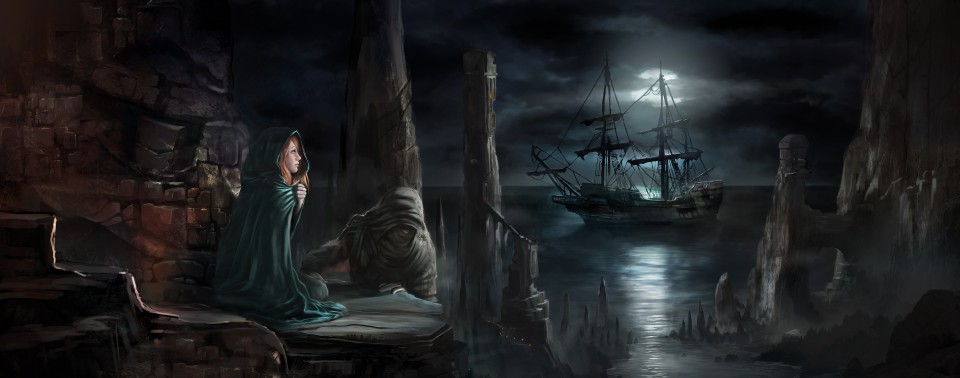
A review of “Mother’s Mercy,” the tenth episode of the fifth season of “Game of Thrones”
by Miodrag Zarković
 Not that David Benioff and Dan Weiss necessarily realize it, but the decision to include Dorne in Season 5 of “Game of Thrones” was possibly their luckiest one ever. Essentially, the presence of the Dornish subplot presented their apologists with a precious opportunity to appear “objective” when they deal with long overdue criticism. For example: “I don’t think it was illogical of Sansa to agree to marry Ramsay, and I don’t share the notion that Stannis would never burn his daughter like that in the books, and the stabbing of Jon Snow was as powerful as in the novel, if not more so—but, hey, if you think I’m just too big a fanboy to ever acknowledge any flaw of the show, let me tell you, the Dorne material was really shameful this season, it was a disaster, and I can’t even express how disappointed I am in that specific part of the season; so, I’m objective, am I not?”
(In case you’re wondering, this was not a direct quote from any of the reviews, but if it actually resembles some of the “arguments” out there. Well, it was bound to happen.)
So, this review will address literally everything, except Dorne. We’ll go through all the other parts of “Mother’s Mercy,” the last GOT episode of the year, but the southernmost kingdom of Westeros will be left alone this time. It suffered too much already, as Benioff and Weiss’ version of a sacrifice to the Gods of TV Criticism.
Dorne is discussed enough elsewhere anyway. No need to open those wounds just to join the choir. Let show apologists handle Dorne.
And, of course, right at the start, we’re going to break that promise. Because, this is a “Game of Thrones” review, after all. People need to be shocked. And is there a better way to shock people than to manipulate them into thinking something, just so you can do exactly the opposite the first chance you get?
So, Dorne, here we come. Prepare your good wives. And that other group. Good daughters, of course. Who else?
Anyway, to say that Benioff and Weiss hate Stannis would be a huge understatement. By now, it’s evident they abhor the Baratheons as a concept. Not even the long-dead members of that royal family can rest in peace. See, what Myrcella’s “I’m glad you’re my father” little speech to Jaime actually indicates is that she’s euphoric not to be Robert’s daughter. Not just happy but truly overjoyed. Don’t let her relatively calm demeanor in that scene trick you: essentially, she doesn’t mind she’s been lied to all her life, or that she’s a product of incest. Or that neither she nor her brother have any claim to the throne their family occupies at the moment, which theoretically might put their lives in danger. Looks like not being Robert Baratheon’s daughter outweighs all the consequences that stem from the fact.
Also, it makes Robert even stupider in hindsight, because, besides him and possibly the High Septon, is there anyone in Westeros who didn’t figure out Jaime and Cersei’s dirty secret?
(Well, there actually was one more person: Tywin Lannister. But we’ll come back to him in the review of the entire season.)
At least, that’s how the entire angle about the twincest, this scene included, is written in the show. In Benioff and Weiss’ universe, it really isn’t a big deal. Only those backward Baratheons overblow the importance of Jaime and Cersei’s affair, but everybody else is more or less okay with it.
Like incest, kinship is also not a concern. Why would Trystane Martell’s cousins trouble their conscience with him at all? Why would his aunt Ellaria give a flying kiss about his wellbeing? Caring is for pussies! Though not for bad ones, apparently.
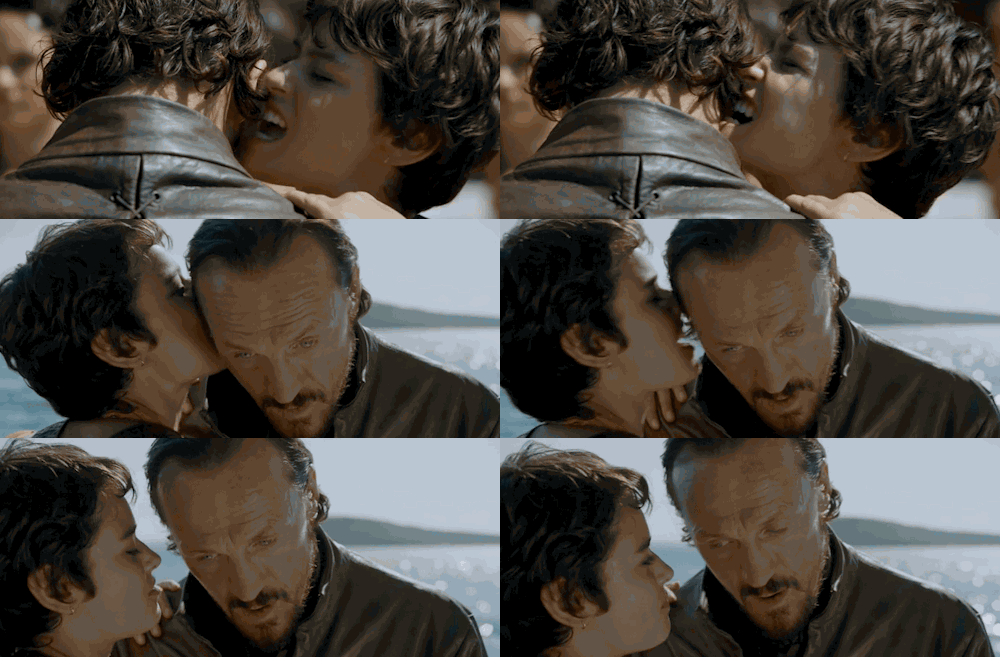 And that’s what the perception of family in GOT boils down to. It’s a vague connection between people with common ancestry, the connection that doesn’t actually oblige anyone to follow some strict rules of conduct and behavior. God forbid. Because the idea of family doesn’t translate too well onscreen, right? “The Godfather,” anyone? “The Sopranos”? Do we really need another epic failure of that kind?
Alright, kidding about Dorne is the easiest thing ever, but who are we kidding? Was the rest of the season substantially better than that “you need a bad pussy” brilliance?
Of course, it wasn’t. How can TV Sansa’s “If I’m going to die, let it happen while there’s still some of me left” line be taken more seriously than Tyene’s mindless vulgarity? Who talks like that? What does it even mean? “While there’s still some of me left”. . . Did an adult person really think such a line would add some gravity to TV Sansa’s supposedly tragic arc? You know, in order to be tragic, an arc has to exist in the first place. And if it lacks any basic logic whatsoever, it can never exist. And if that’s the case, no line, no matter how overloaded with words desperately covering for the lack of depth, can save it. Did an adult person honestly think such a line would help the audience forget the stupidity of the path that led Sansa to the current situation?
Is that kind of audience theoretically possible?
Looks like it’s not only possible, but very real, because the reports say that “Mother’s Mercy” was the most watched GOT episode ever. So, if numbers are anything to judge by, TV Shireen didn’t burn for nothing a week earlier. Her death at least attracted strong ratings, with people presumably expecting to see how the sacrifice was going to pay out for TV Stannis.
Was the audience satisfied with the result? Much more than Stannis himself, definitely. He was doomed, because at last he faced an opponent he couldn’t overcome with magic: logic.
Benioff and Weiss finally decided, and in the most awkward moment, to treat Stannis’ story logically, which meant that half of his forces deserted the lunatic who burns his own daughter for no reason. It wasn’t realistic, because the desertion happened with a ridiculous secrecy, but at least it was logical. And that’s precisely why the outcome was even more absurd.
In a way, that is exactly what Benioff and Weiss did with Sansa this season, too. Both her and Stannis’ arcs were destined by highly unreasonable, unexplainable, unacceptable choices they made: she agreed to marry into the family that betrayed and murdered her family, and he agreed to burn his only child as a sacrifice to a deity. And once they made their respective decisions, both Stannis and Sansa couldn’t help but suffer dearly, because from then on their arcs developed somewhat more logically: his campaign ended in a devastating defeat, and she was exposed to constant physical torture and humiliation by her husband.
And that’s the main problem with their arcs. Stannis’ TV fate proves why no person with any sanity left would even think about doing what he did to Shireen under those circumstances. Sansa’s TV ordeal proves why no person with any sanity left would ever agree to marry into a family of known traitors and usurpers. Ultimately, Sansa and Stannis prove why no writer with any talent should ever so much as consider writing something so stupid as their respective decisions this season.
There are some who disagree, naturally. On his “The Nerdstream Era” blog, Stefan Sasse took issue with my review of the infamous “Unbowed, Unbent, Unbroken” episode. Specifically, my notion that Ramsay not raping Sansa would be an illogical outcome once they’re married, Stefan found to be an example of logical fallacy, and he “took up the challenge” of providing a satisfying alternative that could make Sansa’s marriage to Ramsay work. He then describes what he calls several propositions, which, honestly, to me look like they all come to essentially the same thing: Roose forbids Ramsay to molest Sansa, and Ramsay has no choice but to obey.
But of course, just because an alternative can be described, it doesn’t mean it’s logical in any way. The very demand on Roose’s part would ring untrue, not the least because in the show there are no Northern lords, the reaction of which might trouble the Boltons. And besides, what PR problems would Roose worry about, when someone as informed as Littlefinger wasn’t able to find out anything about Ramsay? But even that aside, a villain who’s so obedient to his father isn’t exactly a villain anymore. Just compare Stefan’s proposal with the situation from the book, where Ramsay threatens Reek just because Roose is about to briefly take him away. And, no, Ramsay just can’t be compared to Joffrey, nor to the rest of Margaery’s husbands, which is something any reader—or show watcher—would have to agree.
But the biggest fallacy of Stefan’s argument is the very idea that two wrongs make something right. Like, if Sansa’s ridiculous acceptance to marry Ramsay is followed by the equally ridiculous PR concerns and Ramsay’s obedience, everything’s going to be fine. In other words, let’s put Sansa into some nonsensical arc, but we mustn’t infuriate Sansa’s fans so we’ll perform some additional acrobatics to elude the most logical outcome of the said nonsensical arc.
Well, if you don’t want to infuriate Sansa’s fans, how about not putting Sansa in an arc without any sense whatsoever? Keeping her away from Ramsay would be a good start, most probably, because that way she wouldn’t have to make a decision no reasonable being ever would.
And anyway, what’s this big reward Sansa was taken to Winterfell this season for? What was the big payoff? A jump from the walls? Is that how she avenges her family? Is that how she learns not to be a bystander any more? Is that how she won’t be running away all her life? Also, if TV Sansa is to eventually end in the same place as book Sansa (which is Benioff and Weiss’ self-announced intention for all the major characters at least), now she has to leave Jeyne Poole’s role and go back to Sansa’s book path—which clearly means her arc this season was nothing but a filler.
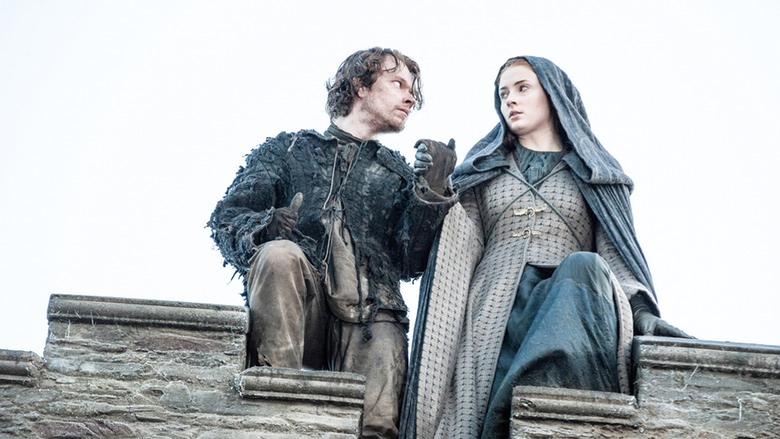 How contagious was the entire idea of TV Sansa in Winterfell is also evidenced by the utter destruction of Theon’s book arc. What Theon goes through in “A Dance with Dragons” is widely and righteously considered one of the highlights of the entire saga and one of the strongest ASOIAF claims for a place in a literary Pantheon. Atmospheric, suspenseful, highly disturbing and at the same time strangely poetic, armored with both political intrigue and supernatural elements, and commanded by perhaps the hardest personal struggle any character in the series had to overcome, those chapters are not only memorable as a reading experience but also very cinematic for a screen adaptation. Something would inevitably be lost in the transition, like Reek’s famous rhymes, but there’s enough other meat there to make a brilliant TV season’s arc without any alteration. What we witnessed in the past ten weeks, however, is not even a pale shadow of that arc. Partly because Benioff and Weiss were portraying Theon’s agony for two previous seasons (also in a very unsatisfying manner), and partly because this season Theon’s story had to share screen-time with that of Sansa (and, by extension, Littlefinger), they were all shorthanded in the end.
The only thing the Winterfell subplot this season “lacked” in comparison to the infamous Dornish one were some poorly choreographed fight scenes. And also, unlike Dorne, Winterfell was occupied by characters that weren’t just introduced at the beginning of the season. But if we put these differences aside, the story in and around the ancient seat of the Starks was really not a bit better than the Sand Snakes’ shenanigans. That is the “power” of TV Littlefinger’s plan for TV Sansa!
Meanwhile, TV Stannis was almost bearable in the first half of the season, which, given Benioff and Weiss’ well documented mistreatment of the character in the past, was a rather surprising turn of events. But, everything came to “order” in the last two episodes. As said, the logical fallout from Shireen’s sacrifice only made matters worse: of course that half the army (at the very least) is going to desert a monstrous zealot who burns his own daughter, and that is precisely why not even a religious zealot would do something so inhuman, not even if he’s totally emotionless toward his daughter, let alone if he actually does have feelings for her, as the show itself tried to establish early in the season. Even if TV Stannis is someone who’d choose ambition over familial love (and we have no reason to doubt such a description, since it’s Benioff himself who delivered it in the “Inside the episode” video), only an imbecile would confuse the Episode 9 situation with such a choice, just like Episode 10 ultimately proved. Having all that in mind, Stannis’ subplot this season really came close to the infamous Dorne, at least at the very end, which managed to be comically bad even without “bad pussies” in the offering.
 So, Stannis and Sansa’s arcs this season make a pattern of incompetence of a sort. But it goes even beyond that. As an unlikely couple of tragic victims of this “adaptation,” Stannis and Sansa present the strongest case against everything “Game of Thrones” managed to destroy from its source material. These two characters are seldom analyzed in sync, but maybe they should’ve been, because together they reveal all the richness of Martin’s unique vision and the astonishing range of his storytelling genius. Between the two of them, you have everything there is to love about “A Song of Ice and Fire,” with Sansa’s being possibly the most intimate POV in the saga, and Stannis probably the least intimate but most epic perspective of the series (and he’s not even a POV character), and last but not least, the situation is changing with both of them, in that Sansa is more and more engaged in the dynastic war (of which she was part of against her will at first, but by now she seems to fully accept her involvement in), while Stannis’ choices are becoming more and more personal (if for nothing else, then because Davos, his father figure and conscience, is not with him at the moment to help him with decisions).
It is quite an “accomplishment” to mishandle both of them. It takes some kind of effort. My impression is that Benioff and Weiss hate Stannis, while they are completely disinterested in Sansa. But it could just as easily be the other way around: they hate Sansa, and it’s Stannis who interests them in no way. Or any combination in-between, really. But what is absolutely certain is that Benioff and Weiss understand and/or love neither Stannis nor Sansa.
But, is there anything they do love and understand about ASOIAF? It doesn’t appear so. They’re possibly in love with their twisted take on some of the characters, like Tyrion or Cersei or Margaery or Olenna, but not even their TV fates offer some extraordinary rewards to dedicated viewers. Like, in the season finale Tyrion was just handed a city to rule! How can that be even remotely engaging or intriguing for any true ASOIAF admirer? Book Tyrion fights for both his survival and basic dignity in almost every scene in ADWD, while his TV namesake receives Meereen on a plate only days after he reached the damn city! He even gets Varys once again. It is not a bit less ridiculous than Dorne, truth be told. And, by the way, Meereen also suffered from some abysmal choreography this season on several occasions, which is, again, completely comparable to the Sand Snakes and their action scenes.
Add to that Daenerys, and her character that was all over the place this season, and especially that last scene when Dothraki riders circle around her for some reason, and I honestly fail to see why was Meereen better than Dorne this season.
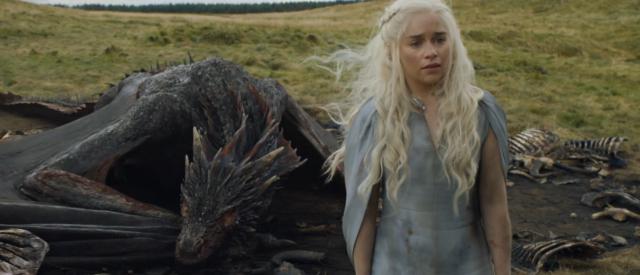 Was Brienne’s arc better than Dorne? Hardly. She was also cursed with nonsensical dialogue, involved in a ridiculous fight, and left aimlessly to wander between two other people’s plots: Sansa’s and Stannis’. Needless to say, none of her scenes resembled anything from her book chapters, which even if often underappreciated by some readers provide a pretty solid and eventful arc that could’ve made a strong TV season. Again, the viewers knew Brienne from before, and she wasn’t handling poisons but candles, but in reality, that’s all that separated her “arc” from that Dornish rubbish this season.
The least bad storylines were those in King’s Landing and Braavos, but that’s not to say they didn’t suffer from grave problems. Speaking of Arya, her final scene, in which she goes blind even though she didn’t consume any potion that might be responsible for the condition, but not before No One Who Looked Very Much Like Jaqen died for some reason, only to be instantly reborn in another same-looking body, was one more exercise in forced stupidity, created out of a wish to change the source material at any cost.
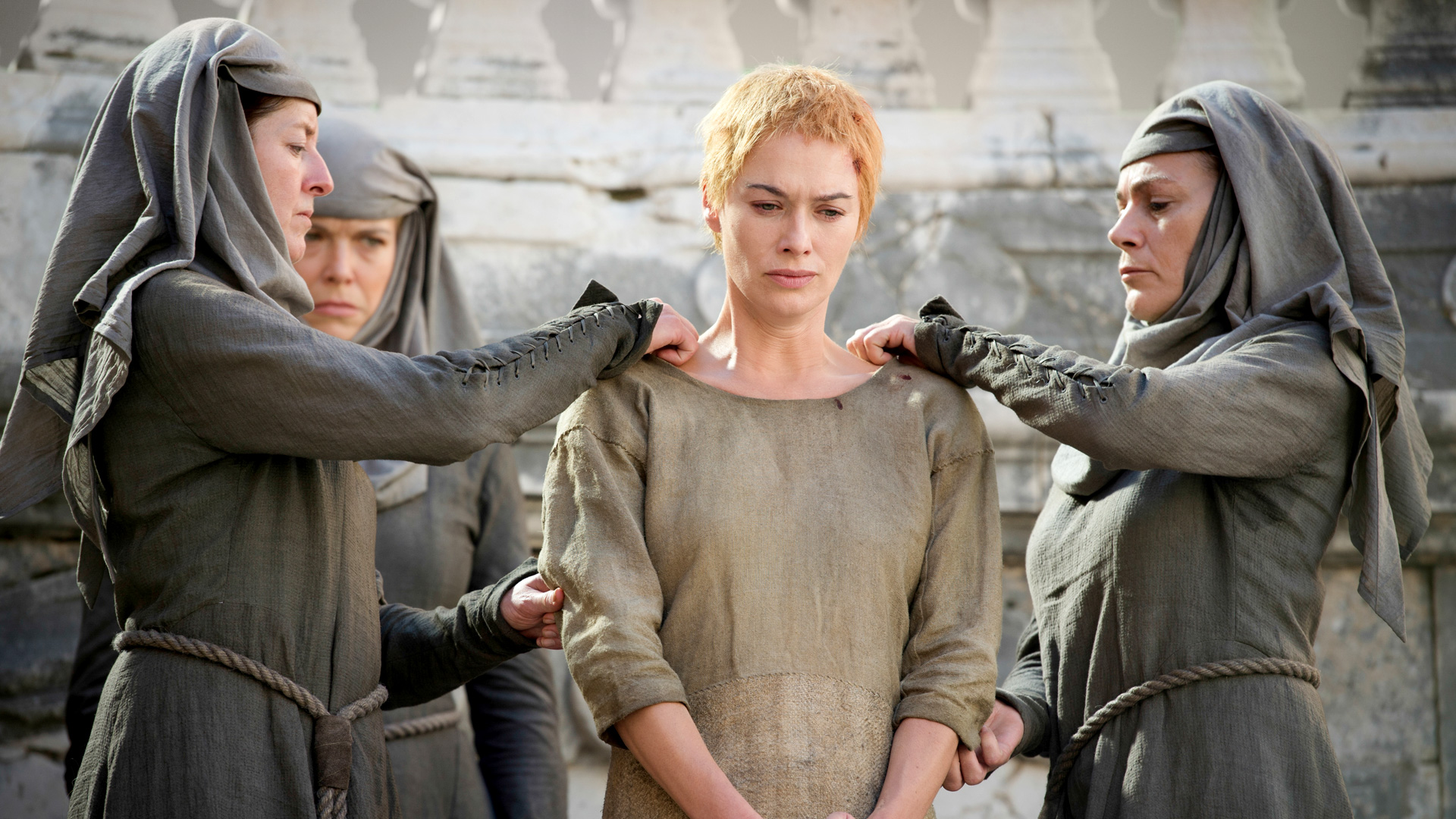
Meanwhile, in Westeros’ capital, the things ended much better than they started, because of the powerful Walk of Shame scene, that was—surprise, surprise—the most faithful one to the source material. In the name of that, let’s leave the rest of it to the review of the season as a whole.
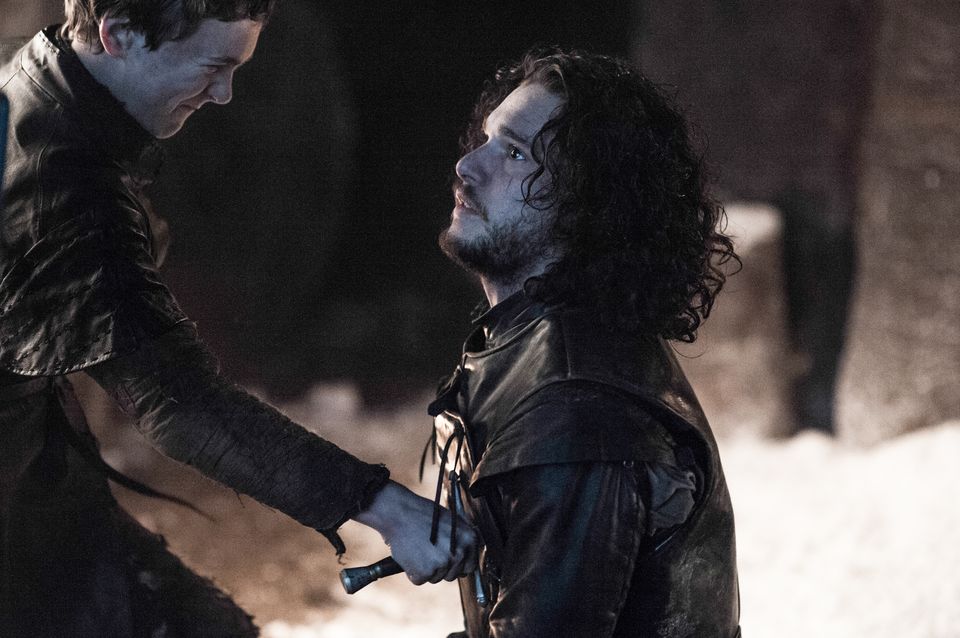
And finally, the Wall. Where it all started. And where, as media reports suggest, TV Jon’s life actually ended. His arc was not ruined beyond recognition, like Sansa’s or Stannis’ or Jaime’s or Brienne’s (or Sam’s, for that matter). But it was one missed opportunity after another. Brilliant points from his ADWD storyline were either completely cut (his dealings with Bowen Marsh and other direct subordinates, for example, and also his gradual involvement in the Northern politics), or thoroughly underwhelming (the Wildings entering the realm), in order to give space to the show invention of the Battle at Hardhome, that ultimately ruined the climactic moment of the entire season: the stabbing of Jon. His supposed death in the show was so unearned, not only because his intention to confront Ramsay was omitted but also because the Hardhome experience was rendered meaningless in the show universe. Like, if the dramatic battle against the merciless enemy in full force, wasn’t a reason enough for the mutineers to at least delay their move against the Lord Commander, then it’s really not a surprise his direwolf is now called Olly, same as that annoying kid who managed to undo both Ygritte and Jon.
(Come to think of it, Ramsay does have his match finally. If anyone can stop him, it’s Olly. Better not disappoint this youngster, Mr. Bolton.)
 So, how do TV Westeros and Essos look like at the end of Season 5? It’s a place where wars are decided by 20 good men. Where highborn girls willingly marry into families that destroyed their lives. Where children actually prefer to be products of incest. And where an entire city can be delivered to a complete stranger with a dark and mysterious past.
How did we exactly get to such a silly place? We’ll talk about that in three days, on Friday, when the review of the entire season, in a refreshing form proposed by the management of the site, will be posted here.
Is there anything we, as a community of ASOIAF admirers disappointed in this “adaptation” that seems back on its feet once again, can do to remedy the situation? You know, there actually might be something. More on that on Friday.
 PAWN TO PLAYER
Yes, Miodrag, I really do think some adult considered that line of Sansa’s to be utterly profound and indicative of a heroic last stand that would somehow make the audience overlook that just minutes before she had returned from lighting a candle in a tower to be rescued. The inanity of the line was further underscored by the fact that it was being said to Myranda — not the person who was Sansa’s chief tormentor this season, but good enough in a pinch for pathos, I suppose. And there concluded the disgraceful, shambolic, and despicable story line that D&D concocted for Sansa this season, where she was shuttled between “hardened woman” and “terrified victim” as the plot required. Moving on the Wall, you’re spot on in how they completely gutted his final moments of any impact or true weight. And it gets to the underlying problem with the show in that viewers are just supposed to be shocked for the sake of being shocked. Olly stabbing Jon was supposed to mean something because look, there’s that kid that Jon made his steward and now he’s stabbing him!!
In the end, you’re correct in saying that outside of a few scenes in KL and Braavos, there was nothing in GOT this season that could pride itself as being better than Dorne. All of the plot holes, missing logic, character assassinations and thematic bungling were absolutely on display in whatever locale the show centred on.
LikeLiked by 5 people
Well, the finale certainly puts to rest any arguments that Sansa’s arc this season was anything other than being a substitute for Jeyne Poole.
LikeLiked by 1 person
“If you think this has a happy ending, you haven’t been paying attention.”
It’s the war cry of hundreds of thousands of show apologists and I’m slowly starting to realize that there’s no point arguing.
It’s clear to me now (and really should have been evident from the end of season 3 onward) that Ned’s death and the Red Wedding were the seminal moments in the books for D and D simply because they shocked and surprised the reader. The build up to them and the characterization which ultimately made them possible were unimportant, the political realities unnecessary – all that matters is that GOT is the show where bad things happen to characters that the audience loves. They killed Ned, can you believe it? The killed Robb, Talisa and Catelyn, can you believe it? They killed Oberyn, can you believe it?
And this season; they raped Sansa, burned Shireen, killed Stannis and Jon, can you believe it? But the answer is no – I can’t.
I can’t believe Sansa’s rationale for agreeing to marry Ramsay. But it’s horrible to see her raped, so in it goes anyway.
I can’t believe Stannis would burn his only child before he’d even run out of horsemeat and was apparently a day’s ride from Winterfell. But it’s horrible to see Shireen burned, so it goes in anyway.
I can’t believe Stannis would allow himself to be so pathetically defeated without regard to tactics or military order, but allowing the Boltons to win, and win convincingly, is horrible to see, so it goes in anyway.
I do believe the Night’s Watch would kill Jon. Mainly because Jon makes no effort to make his argument to his Brother’s in a way which makes sense. Why they didn’t turn on him prior to him bringing 5000 wildlings through the wall is a question without an answer however. And like Theon’s switcheroo, it occured not as a natural result of the story, but because it was episode 10 and they needed something to happen.
I haven’t been invested in a single episode this season because I spend every moment wondering why the showrunners made these decisions and drawing a blank.I don’t know at what precise point the show ceased to be entertainment for me, but now it just makes me miserable, or confused or both.
LikeLiked by 4 people
“I don’t know at what precise point the show ceased to be entertainment for me, but now it just makes me miserable, or confused or both.”
– that, my friend, is the TvTrope known as Darkness-Induced Audience Apathy and no show want to end up there because that basically means that it is dead in the water.
GRRM’s last two books suffer somewhat from the same syndrome but here Sansa’s Vale arc provided the reader with a bit of a breather from all the brutal misery.
LikeLiked by 1 person
On the mark, as usual. There’s no logic in any of these plots this entire season, now that I think about it. Though I guess Arya’s plotline didn’t have any breaches of logic because none was established in the first place. How does the House of Dark & Vague work? No one knows, and they won’t bother explaining it!
Let’s talk about what we had to assume:
-The Boltons always had an extraordinarily large host that somehow everyone overlooked.
-At some point Roose decides to abandon their “defensive advantage” despite the fact that Ramsay burned all of Stannis’s provisions and it’s stated that WF has provisions for 6 months (i.e. Stannis is doomed even if they don’t lift a finger).
-Reek became Theon off-screen.
-Melisandre lost her faith off-screen.
-Brienne infiltrated an army without earning a scratch and happened to locate the king that no one cared enough about to allow him to retreat into the woods.
And this is just one plotline in just one episode.
LikeLiked by 4 people
You always make a great point with your spot-on puns, Miodrag… Given the messy ending to this messy season, laugh is a good choice.
Looking at the last scene, I was thinking of what D&D were telling us at the start of the season: that it would be “for the most part” within the books, and that the first and last scenes were going to be “from the books.” And yet, here is what they’ve actually done:
a) First scene: They cut the “valonqar” part, which accounts for half of the Maggy the Frog prophesy, and added a blunder of their own, as they forgot that in their own universe Cersei had four children, which automatically invalidates the prophesy. No hint of Melara’s fate, either. So, the first scene from the books came to us mutilated and invalid from the get-go.
b) Last scene: There was no building tension that would help establish the reasons Jon was assassinated for; no Pink Letter, no Bolton threats, no rescuing of the little sister, no mutiny in daylight, no hours-long talk with Tormund, and other details are missing. Instead, we have Alliser Thorne and a bunch of conspirators luring Jon with his uncle Benjen’s name (why not use his sister?) into a dark room, and stabbing him all of a sudden. Of course, their beloved original character had to be the one to deliver the killing blow, and Jon’s last words weren’t “Ghost” as Robb’s weren’t “Grey Wind” either… Instead, they gave us “Olly…” So, the last scene looks like Jon’s murder wasn’t earned by his political decisions, and curse it all if the Starks are wargs, because in that show it seems like only Bran can warg, and the direwolves are there just to facilitate things like reward sex for the best friend, not to help their own master.
And I won’t even go point by point on why the season’s whole plotline isn’t “for the most part” within the books, because we all know already. If the disaster they created for so many arcs and the character assassination of quite a few is their idea of being faithful to the books’ plotline “for the most part,” I don’t even want to know what their idea of “diverging even more” is. It’s clear enough.
Seeing all that, how can they not blush at the dishonesty of their pre-season declarations, and how exactly can they say with a straight face that the first and last scenes were “from the books”?
Let’s take Martin’s famous mantra to illustrate why D&D fail so spectacularly in their understanding of what “within the books” means. What is it that GRRM says? “How many children does Scarlett O’Hara have?” The answer to that is: three (five, if you take into account the sequel, where she has one stepson and one more daughter) in the book, one by each of her husbands: Wade Hamilton, Elia Kennedy and Bonnie Blue Butler. And in the film? One, Bonnie Blue. Does it matter? No, not really, and here’s why: because the plot-relevant child of Scarlett, the one that has the significant impact on the story is Bonnie Blue, and that child was kept in the film. Because Selznick, unlike D&D, understood that Scarlett’s children weren’t interchangeable and that he couldn’t just cut any of them and not pay for it, he knew he could cut Wade and Elia, but if he cut Bonnie Blue and replaced or combined her with any of her siblings, he would be in trouble. He would be in serious trouble, because in the book, there’s meaningful conversations between Rhett and Scarlett over their daughter, Rhett does for the child things he cannot do for Scarlett, and when their marriage deteriorates, it’s the child that helps keep them together, and her death is amongst the chief reasons for that famous “Frankly, my dear, I don’t give a damn” line. That’s why it doesn’t impact the “Gone with the Wind” film plotline negatively that Wade and Elia are out, as they don’t play a significant role in their mother’s story, or the overall one.
My point is: changes don’t matter in itself, but why you do it and how does matter, and matters greatly. D&D don’t seem to understand this, that plots and character arcs aren’t interchangeable and mixable, that a story is more than hitting plot points regardless of why and how and where, that Sansa cannot replace Jeyne for the same reason Elia cannot replace Bonnie Blue… And as a result of this dismissal of such a basic storytelling rule, the changes the showrunners made hurt their story. I’ll never tire of saying it’s not that they changed, it’s how they did it and what for.
Either Martin doesn’t know the finer points of this metaphor he uses so freely, or he’s making his point subtler than we realised. It’s not how many children Scarlett O’Hara has, it’s which of these children is kept in or out.
LikeLiked by 5 people
I truly regret breaking my promise never to watch this shitshow again. My only take away is that D&D not only hate Sansa, Stannis, and Jaime, but have nothing but contempt for GRRM and the fans of ASoIaF. I’ll even toss in the viewers since there is no other way to explain the Dorne plot. What a trainwreck.
LikeLiked by 2 people
I’ve started reading your reviews this season. I’m pretty sure you are one of the best reviewers out there – every review has been a joy to read. Not only because I agree about everything you say, but also because you say it better than I could. It’s good to have arguments as well put as yours when dealing with show apologists, but it’s also just good to know that I’m not the only one being dumbfounded by the sheer idiocy of the show’s storytelling. Thanks so much for your writing.
LikeLike
I am a big fan of Sansa, and I am bitterly disappointed about her storyline in the last season. Why should she marry a Bolton? What is the advantage of this?
LikeLiked by 1 person