A review of “Unbowed, Unbent, Unbroken,” the sixth episode of the fifth season of “Game of Thrones”
by Miodrag Zarković

(A small forward: Years ago, David Benioff and Dan Weiss were asked who’s their favorite character in the books. Many were surprised when they answered it’s Theon Greyjoy. Before you finish this review, perhaps you’ll agree with me that there’s a damn good reason they’re so in love with the only remaining son of Balon Greyjoy. And now, let’s go to the review.)
“But it also happened in the novels!” has to be the most hypocritical phrase ever uttered by those blindly in love with everything they see in “Game of Thrones.” The fact that the show’s supposed to be an adaptation of the “A Song of Ice and Fire” book series by George R. R. Martin, is something they remember and recall only when they think it suits them—while in the very next moment they can shamelessly claim it’s actually good that GOT deviated as much and that it owes no fealty whatsoever to its source material.
The closing scene of “Unbowed, Unbent, Unbroken,” the sixth episode of Season 5, is one of those instances. Ramsay and Sansa’s wedding night bears some strong similarities with the corresponding scene in the books, claim these show-loving folks.
For the sake of argument, let’s agree that there actually is a corresponding scene in “A Dance with Dragons,” in which Ramsay Bolton does have sex with his new bride (though not Sansa, but her best friend Jeyne Poole), and that poor creature once known as Theon Greyjoy is also present and playing a part in the horror Ramsay orchestrates. In fact, not only that the scenes do resemble each other in quite a few ways, but also, what happens in the novel is even more disturbing than what Ramsay did onscreen.
So, one might ask, why is the show scene getting this negative reaction the book scene was spared from? Without a doubt, book Ramsay’s wedding night was recognized as one of the most disgusting moments in a saga not lacking in them, but it never received such a deep contempt its show counterpart is met with. Why is that so?
Now, David Benioff and Dan Weiss, the two showrunners, quite possibly don’t have any real answer to that question. And that is the saddest aspect of the entire “Game of Thrones” endeavor!
All Benioff and Weiss could offer would probably amount to: “People are just upset that it isn’t as in the book.” That is what show apologists keep repeating ever since the episode aired, after all. And they even go further, accusing show complainers of some kind of inhuman favoritism: “You were cool with Jeyne going through what Sansa tasted in the show, so why are you bothered all of a sudden? Is it because you care just for Sansa and not for Jeyne?”
In other words, they wonder why is Ramsay brutalizing Sansa Stark more upsetting than the same Ramsay brutalizing Jeyne Poole.
The answer is, however, quite a simple one: storytelling is really not the same as legality. Under the law, book Jeyne would deserve at least as big a compensation as TV Sansa, for the crime committed against both of them by Ramsay Bolton. But in a narrative way, book Jeyne is something completely different to TV Sansa, because a reader’s sympathy is not earned by the letter of law, but by inspiring him/her to bond with the character, and that takes a skill, or time, or, most usually, both.
Her brief appearance in the first book of the series “A Game of Thrones” aside, Jeyne Poole became a character not before she was introduced to Theon/Reek in “A Dance with Dragons.” Even though it is soon revealed, through scarce but precious exposition, what a nightmare she lived in ever since Littlefinger took her under his wing, only when she’s presented to Theon as “Arya Stark” is Jeyne’s real arc launched. And, like with many characters in ASOIAF, for poor Jeyne things first become worse before (if at all?) they get better. Things become way worse for her, actually, because what Ramsay submits her to is truly devastating—but, in a way, it also serves to lift Ramsay’s arc, because, in all fairness, he’s also relatively a newcomer at that point, and any insight into his mind and mentality is valuable.
So, when Ramsay brutalizes Jeyne on their wedding night in ADWD, it is actually the first time we see both of them in their respective roles: Ramsay as this unprecedented sadist whose menace is so all-consuming not the least because of the almost casual, effortless way he inflicts irreparable damage on any human being that had the misfortune to stand in his proximity, and Jeyne as a deeply traumatized individual who is surprised there’s something even worse than what she’s endured previously. In those haunting lines, Ramsay and Jeyne are fully realized as new, but important characters, worthy of readers’ full attention and despise (Ramsay) and empathy (Jeyne).
And then, there’s the third character, Theon, a.k.a. Reek, who’s forced by Ramsay to take part in the brutalization of Jeyne. Somewhere between the wedded couple, in the sense that he’s to be somewhat despised for his past crimes but also somewhat felt sorry for because of the constant psychological and physical humiliation he suffers from his “beloved” Ramsay, Theon is, actually, also debuting in his “new role.” A familiar face from the very beginning of the saga and a POV character in “A Clash of King,” Theon is revisited in ADWD and, at first, all we see are the horrific consequences on his mental and physical integrity left by Ramsay’s treatment. We witnessed some of that treatment in the first half of the book, but only when Ramsay orders him to prepare Jeyne for the marriage consummation the full extent of the torture Theon experienced in the Dreadfort is finally comprehended in full measure.
So, in the book scene, unsettling as it was, all three participants were fleshed out in unforgettable details and in the roles we’ve never quite seen them in before. From the pure narrative aspect, that scene is as effective as any other in ASOIAF, which does say a lot. With some other characters, something similar could look unearned, or cheap, or shallow, or manipulative, but with these three it was nothing but brilliant in its obvious depravity. When you’re trying to show the worst in humanity, that is how you want to do it, because otherwise you might as well be promoting it.
The corresponding scene in the show, however, is the polar opposite. In it, there was no character progression to speak of. As a matter of fact, for two of the participants it was just a repetition, just more of what these characters are already associated with and for a long time, while for the third one it was a clear regression, the return to past misery and then some more.
TV Ramsay was already there. In fact, he never left the place: between maiming Theon, killing random girls, having violent intercourses with his supposed girlfriend Myranda and flaying random lords, he barely had time for anything other than his sadism; even his conversations with Roose, that might’ve been useful for the creation of at least some perspective in this torture porn that poses as an arc, were kept to a minimum.
TV Theon was already there. In fact, he never left the place ever since Season 2. All he’s been doing these past years is witnessing or tasting Ramsay’s sadistic cruelty.
TV Sansa was not exactly there, but she was near enough. She’s been in a very similar place for more than two seasons, between Ned’s beheading and Joffrey’s death. And then she was taken from there and put on what looked like a different path. The new path was silly, of course, with several truly ridiculous elements like Littlefinger’s helplessness in the investigation into Lysa’s death or Sansa’s new dress code, but it did look like a path on its own. Alas, this season the path started meandering and, eventually, it transformed itself into . . . the arc of another character from another storyline! And to make matters worse, it reached a place that very much looks like the one TV Sansa was in already: in the hands of a merciless psychopath who takes pleasure in hurting her.
All of which means that, because of two decisions by Benioff and Weiss (to start showing the cruelty of their Ramsay and the torturing of their Theon as early as in third season, and to have their Sansa take the arc of book Jeyne), TV Winterfell is aimlessly repetitive. Since it’s simultaneously garnered with a lot of violence and sadism, it’s also cheap and exploitative. When you’re trying to depict the worst in humanity, this is the most offensive way to do it, because it can’t help but look like those primitive mechanisms for shocking the viewers by exposing them to some repulsive banality they’ll tend to talk about tomorrow at work.
But, truth be told, TV Winterfell wouldn’t be better off even if Ramsay didn’t brutalize Sansa on their wedding night. There’s a saying: When you’re on the wrong road, each stop is wrong too. The moment Benioff and Weiss decided to take their Sansa to Winterfell to marry Ramsay, her road became wrong. They put themselves in a hole out from which they could never crawl. Let’s speculate for a moment how the episode would look like if it ended with Ramsay restraining himself from consummating the marriage. It wouldn’t be offensively exploitative, but it’d definitely be ridiculously unconvincing and offensive for the viewers’ intelligence. Ramsay making love to Sansa instead of violating her? The same thing: that wouldn’t be Ramsay! And so on. There is no scenario in which Sansa’s marriage to Ramsay can work.
And that is because no one with Sansa’s experience from King’s Landing would ever willingly expose themselves to a marriage into the family that murdered their mother and brother.
Why did Benioff and Weiss make that decision then?
One can only guess, and not a single possibility is pleasing. But what is possibly even worse, is seeing some of the media that just a few weeks ago praised Sansa/Ramsay as a bold and welcomed departure from the novels, start to attack GOT all of a sudden. Similar to last year’s Jaime/Cersei fiasco, politically correct entertainment journalists again seem to care only for those issues that fit their shallow agenda, and rape is one of them.
Yes, of course, Benioff and Weiss don’t know how to deal with rape in a meaningful manner. But they don’t know how to deal with anything in a meaningful manner either. Have you seen the way they deal with death, murder, revenge, punishment, war, love, sex, religion, faith, honor, duty, emotions, slavery, responsibility, parenthood, poverty? Not a bit better than with rape. They are still to meet a sensitive issue they understand, let alone address in a competent way.
Just recall the similar fashion in which they changed Dany and Drogo’s wedding night in the pilot episode. Back then, the show was in its infancy and many a fan was willing to turn a blind eye to a misstep or two, so that scene created no uproar similar to the one inspired by Jaime and Cersei’s sept scene, but by all accounts it was worse. With Jaime and Cersei, they most probably didn’t intend to film it as a rape (if anyone’s interested, I can explain in the comments how, years in advance, I predicted the trouble they were going to have with the sept scene, because of Cersei’s changed characterization in the show, and all I saw in that scene makes me think they actually tried to remedy the mess of their own creation by making Jaime somewhat more forceful at the beginning), but with Dany and Drogo, they are on record admitting they really wanted the first sexual encounter to be as brutal as it was. Naturally, it never occurred to them that there was an important reason behind Martin’s decision to put Dany’s consent in the book: it completely eliminates the Stockholm Syndrome nonsense the show embraced. From the very start, Martin showed he’s not in the business of writing about characters that find their happiness by loving their abusers.
The critics were, however, okay with the nonsense from the pilot. Just like, until the very last episode, they saw no problem in Sansa marrying Ramsay. I’ll repeat once more: some of them were even congratulating Benioff and Weiss on a job well done!
I’d really like to know how would those critics solve the wedding night. Would they choose to make it ridiculous by having Ramsay act normal and omitting the rape? Ramsay? Normal? Do they really think that would cure the mess created the moment TV Littlefinger sent a raven with the marriage proposal to the Boltons?
It wouldn’t! That mess had no place in what’s supposed to be an adaptation of ASOIAF in the first place. You want Ramsay to rape someone on his wedding night? There’s Jeyne Poole for you. She’s not a living person, you know, just like Sansa isn’t. Jeyne can’t be hurt, not really. She can make sense or not, she can carry some meaning or not, but you won’t really harm her if you put her in Ramsay’s hands. So, if you want Ramsay to brutalize his wife, use Jeyne Poole. It will make sense. It did in the book, to great effect. But don’t put Sansa, or Brienne for that matter, or Cersei, or whoever, in Jeyne’s shoes, because it will make no sense whatsoever, and something will definitely be hurt: the intelligence of the audience.
By putting Sansa in Jeyne’s role, Benioff and Weiss practically ruined what little they managed to do with Sansa in the four previous seasons. It can never be overstated how lacking her TV arc was in comparison to its book origin, but once they sent her to Winterfell it lost any resemblance to any arc that could possibly have some meaning.
When show apologists say that the difference between Ramsay’s wedding nights in the book and in the show is no big deal, they miss the point because they ignore the narrative logic. Ramsay’s wedding night in the show could be tantamount to this hypothetical situation: Theon and Jeyne escaped Winterfell and Stannis’ forces captured them, but then, for some reason, Jeyne agrees to marry Clayton Suggs and, to her horror, he brutalizes her on their wedding night. That would mean that Jeyne’s escape from Ramsay was actually ineffective in a narrative sense and that, after the author manipulated the readers for a while into thinking she’s on her way to some sort of salvation, she just ends up in the same place as in Winterfell.
That would be repetitive and cheap and exploitative. Luckily, Martin will not do that, just like he never did anything similar. His world is no cartoon city, people do suffer terrible fates in his books, but never without a narrative reason, and never in a repetitive manner.
When you’re repetitive in a short form of fiction, it’s clumsy and silly. When you’re repetitive in a huge saga, it can be tiring and draining. But when you’re repetitive in an adaptation of the source material that is anything but repetitive, it’s outright pathetic. And when the repetition includes sensitive matters like violence, it’s also insulting and tasteless.
But the Winterfell sequence was not the only repetitive thing in the episode. There was one more thing, spotted in the already infamous fight scene around Myrcella Baratheon in the Water Gardens.
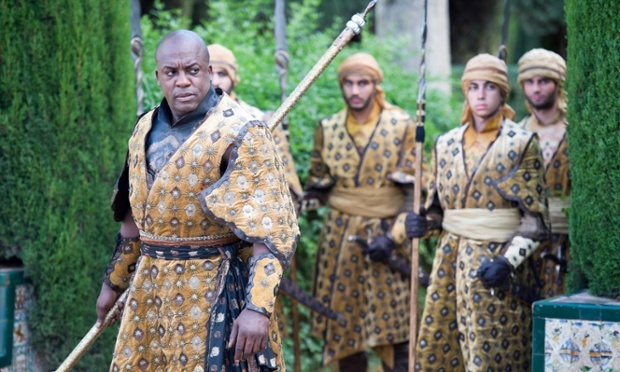
First, the entire fight scene and everything that lead to it was ludicrously amateurish. From writing to acting, to choreography and direction, everything was simply embarrassing. Thankfully, it is discussed all over the internet and, from what was possible to observe, never in a forgiving way, so it’s not necessary to go through all of that here. There’s a suggestion, however. A Mexican standoff is, per Wikipedia, a confrontation between two or more parties in which neither party can proceed nor retreat without being exposed to danger. After “Unbowed, Unbent, Unbroken,” a new expression should be coined, A Dornish standoff: a confrontation of an ever-increasing number of parties in which not a single party follows any reason whatsoever in its actions and yet suffers no real consequence either. (I will not take this back even if it turns out Bronn was indeed poisoned with that dagger that wounded him, because the very idea of a seasoned warrior that brought poisoned daggers in a mission to kidnap a princess is fascinating in its absurdity.)
Second, let’s remember how Dan Weiss praised Kit Harrington’s fighting skills a year ago, in the “Inside the Episode” video for “The Watchers on the Wall,” the penultimate hour of last season. Weiss said that, when he and Benioff were checking the raw footage in the editing room, at one point they thought someone sped up a part of the scene with Kit, because Kit’s moves looked too fast and therefore unnatural. So, Weiss says, the two of them called the special effects guy and asked him to remove whatever effect was applied on the footage, because they didn’t want the final product to look like that. To their surprise, it turned out that no effect was applied and nobody sped the footage up, Kit was simply fast and handy with his sword.
Let’s also remember something that, years ago, secured my reputation as an obsessively pedant GOT hater: the essay I wrote about the second season of the show, in which the editing was especially critiqued. In particular, I wrote about the two instances from episodes 5 and 15, in which the raw footage was sped up in order for fight scenes to look “more effective,” which, naturally, resulted in the most essential problem motion pictures can ever suffer from: discontinuity of the experience of consuming a visual content.
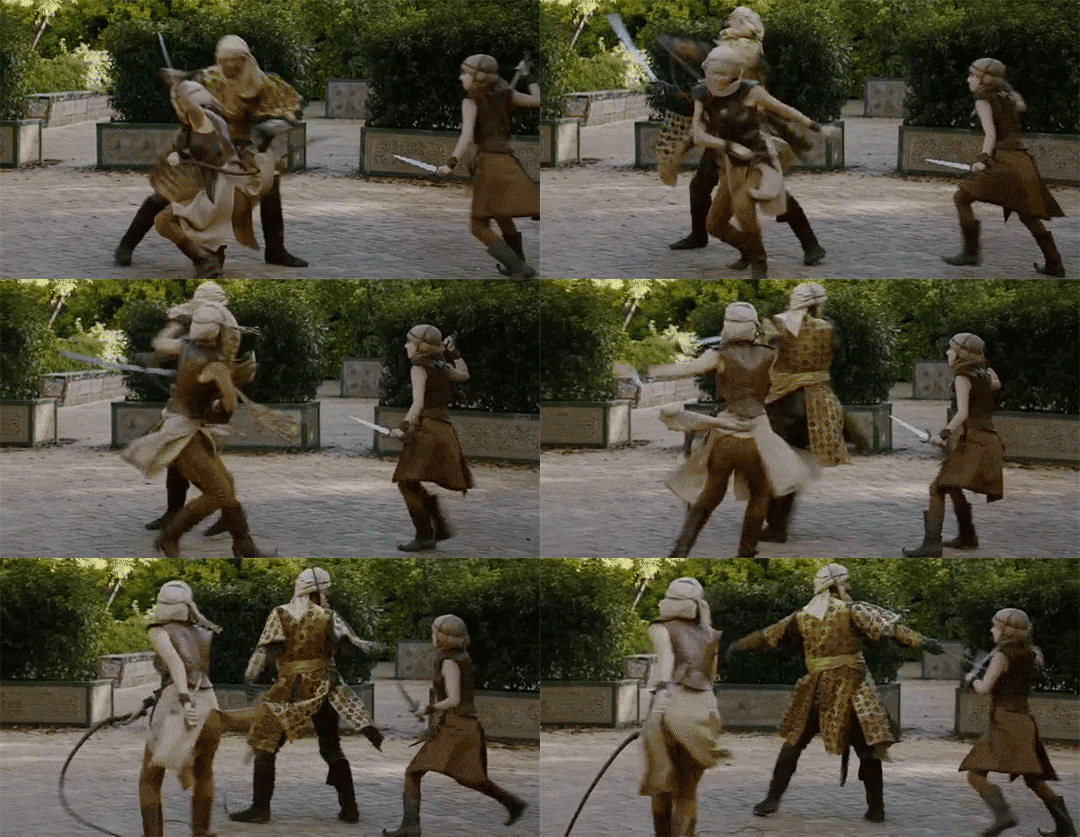
Well, the geniuses did it again, in this episode, in the Dornish standoff. When Bronn kicks Tyene and she falls on her back, she quickly jumps back on her feet. Ahem, not quick enough, it appears, because her jump was sped up in the editing room, which is why Bronn, who’s in the same frame all the time, makes some rapid and unnatural moves. If you look at Bronn while Tyene’s jumping, you’ll clearly see what I’m talking about and why no filmmaker in their right mind would ever do anything similar. That is how low this show actually is. They’re doing the one thing Weiss himself described as a no-no not a year ago. This episode was one big festival of repeated idiocy, hence the title of this review.
But who are we kidding? This show was never taken seriously by anyone other than Martin and fans (several actors included). By everyone else, it was always treated as a joke. Well-paid and fame-earning, but a joke nonetheless. After all, there are cock merchants in GOT now! And, please, did anyone catch why the hell Cersei summoned Littlefinger at all? When she told Qyburn to send a message, she insisted for Littlefinger to come immediately. But what was so important? She just wanted to hear him say that the knights of the Vale are loyal to the Iron Throne? Is that the reason Littlefinger had to leave Sansa in Winterfell? 
Benioff and Weiss are charlatans, first and foremost. It is, I believe, wrong to ascribe sexism or misogyny to them. Like countless talentless writers, they are even less competent when they write characters of the opposite gender, and generally, characters whose experience they didn’t share personally. And, all in all, they’re no fundamentally better when dealing with male characters and their arcs. Just recall the ridiculous Jon arc in season 2, when his brilliant mission with Qhorin in the books was completely ruined just so he can flirt with and be dumb in comparison to Ygritte. Just look at TV Stannis and everything that happened to him whenever his scenes strayed away from the source material.
Benioff and Weiss endless incompetence suggests privileged backgrounds, which are typically associated with political correctness. Their rare but insightful political comments seem to point in the direction of progressivism as their real-life mindset. All of which could mean that they are not consciously mistreating women or homosexuals (or almost any other group, really) in their writing, but it is the product of their drastic lack of skill and craft.
Perhaps they are not Tywins of the House HBO, in that there is not some dark mission behind their missteps and failings. Perhaps they’re also not Ramsays, because they’re not even enjoying all the damage they’ve inflicted. Perhaps they really are like Theon Greyjoy when he, per some wild chance, took Winterfell under his command: murdering little children, just so they can appear competent and to hide their shortcomings.
 PAWN TO PLAYER
You already know I appreciate your reviews, Miodrag. Unlike many, you’re no latecomer to the criticising GOT party and have been there from the onset.
I can only say that, despite the fairweather aspect of current criticism, it has borne fruit. For the first time in 5 years of steady praise, the show’s gotten a Rotten Tomato. It’s the first one in their history, and it’s bound to sting at the very least, and ideally make them see that what they do has consequences, at least for their pockets, which is where it hurts the most. It’s quite sad that it took a third rape, and one that didn’t even happen in the books, for so many to take the blinders off and see the questionable storytelling in this show, but sometimes that’s what takes.
LikeLiked by 2 people
Well, that’s something that they finally got a rotten tomato. But have you seen the imdb ratings? After you mentioned the rotten tomato I was curious so I checked. All of the first five episodes of season 5 are in the top 20! This episode is ranked 27. How it is not last I have no idea. I am not that familiar with the IMDB rating format so maybe the rankings will go lower over time but I am surprised how highly all of season 5 is rated. Here’s the link: http://www.imdb.com/title/tt0944947/eprate?ref_=tt_eps_rhs_sm
LikeLike
“When you’re repetitive in a short form of fiction, it’s clumsy and silly. When you’re repetitive in a huge saga, it can be tiring and draining. But when you’re repetitive in an adaptation of the source material that is anything but repetitive, it’s outright pathetic. And when the repetition includes sensitive matters like violence, it’s also insulting and tasteless.”
Outstanding summation, Miodrag; this review is one that every book reader should read, and every one who asks themselves why it’s so offensive to have Sansa take the place of Jeyne Poole in the show. It was a gaping plot hole and gross mishandling of her development to have her go to Winterfell and agree to marry Ramsay in the first place, but they crossed the line into unforgiveable and untenable character assassination when they chose to subject her to the same kind of brutality Jeyne receives for shock value.
Dorne.. what can be said about Dorne… Absolutely amateur and lacking in any kind of sense. The sandsnakes just happen to be there ready to thwart Jaime and Bronn at that precise time? They are one hell of a tactical unit aren’t they? And all this takes place right in the Water Gardens, a place where the Prince of Dorne is currently residing and one would expect would be securely guarded. But hey, when Jaime and Bronn can stroll right in…
I read one of the reviews on this episode make the point that with Dorne being so terribly sloppy, it made what happened to Sansa look even more sadistic on the part of the showrunners, and I have to agree. This was an episode that insulted not only Sansa’s character in the final scene, but us readers in nearly every single location and interaction their cameras focused on.
LikeLiked by 2 people
“I read one of the reviews on this episode make the point that with Dorne being so terribly sloppy, it made what happened to Sansa look even more sadistic on the part of the showrunners, and I have to agree. This was an episode that insulted not only Sansa’s character in the final scene, but us readers in nearly every single location and interaction their cameras focused on.”
Yes, exactly. The senselessness of Dorne and the entire Sansa-to-Winterfell plot is so stupid, arbitrary, and nonsensical that it makes the rape even worse – because, as Miodrag said, it serves no narrative purpose. So… they’re just raping Sansa for the hell of it? “OOH, look how edgy we are. We raped Sansa. CUT TO BLACK!! So dramatic…”
Thank you, Miodrag, for very neatly skewering the asinine defense of this episode as seen on certain video reviews of the TV show which appear on certain well-known websites. Because, yeah. Narrative purpose – ever heard of that? These clowns D&D think they have a license to show rape, murder, torture, pregnancy stabbing, whatever, anytime they want, because some of that is in the books. That’s essentially like a five year old watching his daddy use a power saw and thinking… well, you get the idea.
The only thing I can add is of a more personal nature, since Miodrag nailed the nuts and bolts (I will def be sharing this article to fellow show watchers). I do not trust this show anymore. As in, I will never watch it again because I just don’t trust D&D to show me images on a screen anymore. I wish I hadn’t watched that episode. I’ve been thinking about when to stop watching anyway, as it’s just gotten worse and worse since season 3, which was the last season with relatively good episodes (some of them). Since then, it’s been a scene here or there that has made watching worthwhile – it’s nice to see certain things visually. So.. I was watching the Dorne debacle, thinking to myself, “I don’t know if I can watch this anymore, this is soooo terrible,” and then we get Sansa rape. I just did not want to see that. It was awful.
I’d like to say a word about the difference between reading a thing a watching a thing. Now, all of the other criticisms of the scene are valid, and the problem I am singling out is not the only one, and fixing it would not have saved it. But, it must be said. Artists have to consider the medium they are using. Reading about someone getting raped or stabbed is just not the same as seeing it. When you are depicting things visually, you do not need to show very much to get the point across. And that includes sound as well – hearing Sansa scream off camera was not making it better. Just awful. We saw a teenage girl get raped on TV. I don’t really want to watch that.
Now let’s discuss glorification of violence vs honestly dealing with violence. Case in point – Theon. George picks up Theon’s tale in ADWD after he has already been ‘reeked.’ The entire focus is on the aftermath, the psychological effects on torturer and tortured alike. He doesn’t spend very much time giving actual descriptions of torture – most of it is implied. It’s creepier, but more effective that way… but when you spend 6 episodes showing a guy on a cross getting foot-clamped and castrated… that’s torture porn. That’s not telling a story.
George always focuses on the effects of violence far more than the violence itself.. D&D are completely missing the latter part, and ramp up the former whenever they have a chance. EG, Craster’s keep and the mutineers. Pregnancy stabbing.
I am totally finished with that show.. I’ll just read these reviews to stay up on the ongoing torture of an ASOIAF-like substance.
LikeLiked by 4 people
“Now let’s discuss glorification of violence vs honestly dealing with violence. Case in point – Theon. George picks up Theon’s tale in ADWD after he has already been ‘reeked.’ The entire focus is on the aftermath, the psychological effects on torturer and tortured alike. He doesn’t spend very much time giving actual descriptions of torture – most of it is implied. It’s creepier, but more effective that way… but when you spend 6 episodes showing a guy on a cross getting foot-clamped and castrated… that’s torture porn. That’s not telling a story.
George always focuses on the effects of violence far more than the violence itself… “
Completely agree, and this brings to the table another topic that bothers me. If they’re terrible writing women, writing males with non-traditional roles and stories in a competent manner seems to also escapes them. Case in point, what they’ve done with the trio of characters with interesting redemptive/rehabilitative arcs: Sandor, Jaime, Theon.
These three men have experienced crushing psychological and physical trauma: the first one’s been dealing with childhood trauma and abuse for all his life, the second has seen horrible deeds inflicted on innocents as a teenager, committed some himself later and lost a hand, and the last is the worst case of physical and psychological trauma we have in the books. All three men are handled superbly by the author, regardless of whether you like them as characters or not; all three are multi-layered and have some of the best scenes in the books with examples of GRRM’s best writing. And for someone in my area, the three are case studies I personally enjoy analysing because of the inner complexity they exhibit, for comparative literary analysis and for psychological analysis the three are perfect.
Yet, what has the show done with these three men? Instead of PTSD-suffering non-knight Sandor, PTSD-suffering no true knight Jaime, and PTSD-suffering misguided Theon . . . D&D have given us The Chicken-Eater, Larry of the Lannisters and Punching-Bag Greyjoy. It’s just so irritating to see how they missed the opportunity to do their plotlines justice, as at least 2 of these men have plenty of material to be traditionally “badass” without being cartoonishly so due to the addition of other themes that add depth to their arc, like love, honour, ethical choices, faith, family…
If they can handle their most favourite character of all, Theon, like they did, there’s little reason to hope they’d do much better with the others, is there?
LikeLiked by 2 people
Others have made the point, but you can kind of see what D&D got out of the books by the decisions they made. They definitely noticed the sex and violence… after that… they did notice the dragons… and, uh… well, there’s… let’s see, what did they take from the books? I mean, any character you think about, it’s the same story.
I mean, we don’t even have to discuss, but.. “Daenerys.” Sure, the role was miscast, but nowhere does the show’s penchant for cheap, dramatic one-liners rear its ugly head more than in her dialogue. Man. And although I like her feeding slavers to dragons in the abstract, it’s the opposite of what she was doing two weeks before that… We probably shouldn’t even go there. Anyway.
On a side note, the Lucifer means Lightbringer wordpress blog is up. If anyone has not read my astronomy theories, check it out. There’s an entire hidden backstory having to do with comets, moon, meteorites, and the Long Night that George has cleverly hidden inside the story. All that overly-descriptivelanguage about red skies and bloody moons was actually hiding something coherent. 🙂 If you have read them, I’ve updated the first one with new text corroborations. Cheers 🙂
LikeLike
The site looks wonderful, congrats 🙂 Can’t wait to get lost in there…
LikeLike
Is it easy to start a blog? I’m not very good with computers but would like to start a blog or two – one about the fantastic in the arts and one about jewellery design.
LikeLike
I am giving you a standing ovation for this review.
You completely nailed it in every way!
Bravo!
The issue is not misogyny or sexism by the writers, the core issue is that they aren’t capable of doing anything better than the cheap shock tactics, and typical Hollywood cliches.
They have proven to be utterly incapable of dealing with any of the deeper themes of GRRM’s work in any profound way. And their incompetence was heretofore before covered up by the excellence of the source material. And even then not completely.
The comparison to Theon is another brilliant stroke. They got lucky and found themselves in a position that they in no way merit, and now they are stuck. Theon at least had the Wall as a fallback option, D&D is going to crash and burn.
LikeLiked by 1 person
Fantastic review, I also wish to let you know that The Mary Sue will no longer be promoting GoT. Thanks to this episode.
I have always said that D&D are not capable of grasping the subtlety that some characters require and Sansa is one of them, this episode is proof of it. To say this is a butchery of her character is an understatement, what was done is nothing but cheap shock value and to (quite possibly) turn her into a bitter woman bent on revenge (as if she didn’t have enough reasons already).
I wish I could say I am surprised by this turn of events, sadly I am not. Sophie had been hinting at it for a while, going so far as to say this season would be traumatic for her character. And with every passing episode where Jeyne didn’t appear, I knew this was the direction they were going.
As a book reader, I care about Jeyne; what was done to her in LF’s brothel is awful and to subject her to Ramsay is vile; she’s an innocent suffering the consequences of war. And to replace her with Sansa is ofensive to both of them.
And Dorne, amateur and eyeroll worthy.
LikeLike
Great essay, and you succinctly refuted all the show apologists’ arguments.
As to your final conclusion about D&D, you’re probably right or very close to the truth. However, I still can’t help thinking that there is also a lot of sexism at work and that those who feel Sansa’s rape seemed like “a rejected high school boy’s fantasy” are also very close to the truth. I’m sure that D&D believe that they are very progressive in their attitudes to women (and homosexuals), but they are one of those people who aren’t aware how sexist their views are, and that unconscious sexism seeps through their writing.
LikeLiked by 2 people
Excellent review as always (I too find the assertions D&D are disturbed creatures who truly despise women thus the show their “revenge” quite silly, only rather it is all resulting from their own idiocy and inability to write well).
The Dorne sequence was one in which I had to pause for a moment because of how much I was laughing. All the way from Trystane’s bleating to the cut from Dorne to Winterfell, it was utterly hilarious. Even Winterfell was to an extent, seeing at how badly they’ve botched this arc (and no Northern lords! They weren’t there as pretty decorations you know…)
I’m finding the hilarity is growing with each episode, because as much I have an extreme dislike for the show, it succeeds in making me laugh at how terrible it all is and the ineptitude of those whom are responsible for the mess. It’s becoming a comedy, a “so bad it’s enjoyable” thing, which is what an adaption of A Song of Ice and Fire should never, ever be.
LikeLiked by 1 person
In the books, what happens to Jeyne is not only crucial for Theon to regain his identity – it is also the catalyst for what looks to be a Northern rebellion against the Boltons. In this respect, you have to ask yourself exactly why D&D loved this particular subplot so much – and why they felt the urgent need to make Sansa sub for Jeyne, especially when they have decided to erase the Northern lords from their adaptation of this subplot. Is it entirely for Theon’s benefit? Then why sacrifice Sansa? They say that Sansa is the character that they care the most about – but it certainly doesn’t look like it!! In fact, this whole mess IMO feels very much like a sort of new and horrible punishment of the character.
I think that they had no idea how to go forward with Sansa’s own story without any significant new material. They also needed to condense and cut a lot of things and they are very, very poor when it comes to writing female characters. The moment they decided to sub Sansa for Jeyne, there could be only one outcome for Sansa – and that is what we saw and it was horrible. We don’t know how they are going to handle the fallout from this assault on Sansa. I have a nagging suspicion that they are going to turn her into an undead version of Lady stoneheart, which would be as complete a character assassination as it could possibly be. They’ll probably also be using it for her to turn against LF.
The other, and I suspect, much more important reason they decided to do this was for the tried and try effect of shock, which is an approach with its own problems:
So, in order to achieve a number of things: condensing a sprawling plot and a huge number of characters, effecting Theon breaking out of Reek and figuring out what to do with Sansa (a character that they really seem to have no idea what to do with and whose characterization has been inconsistent throughout the series, often with the purpose of making her a prop for another character’s story: I won’t forgive how they made her forced marriage about Tyrion only). The sacrificial lamb in this equation is Sansa, since they not only chose to achieve all their goals through her rape but also managed to combine 3 of the most nasty and sexist tropes to accomplish all this: 1) rape as a means to characterize the rapist as villain, 2) rape as a means to motivate another male character, and 3) rape as the means for a woman to get agency through revenge (the rape-revenge trope).
So I call a loud and angry BS on D&D’s supposed care for Sansa’s character! I don’t doubt that they like Sophie Turner a lot, but they certainly don’t seem to like Sansa much. Especially when you see their efforts at rewriting Tyrion as St. Tyrion the Pure, patron saint of bastards, cripples and broken things – and whores.
LikeLiked by 4 people
Precisely. It is very sad too because I utterly adore the Northern storyline from ADwD (which I refer to as the Northern civil war) and Theon’s personal arc was its soul. It’s been stripped down to not only being utterly illogical and damaging two main POV characters (like Theon before this episode became a cliffnote in Sansa’s fan fic Winterfell arc, yet now the rape of Sansa is switched for his development and it all becomes a massive mess (why they never omitted Theon from Season 3/4 I’d love to know)) but also the escalation and tension. And this is only for 1/4 of that arc (with Asha, Davos and Jon all mutilated too). It is quite amazing when some show apologists claim Sansa was such a clever idea because “who cares about Jeyne Poole”… well, she was never the centre of that storyline anyway, though one has to be somewhat callous to not feel empathy for Poole, even disregarding the Ramsay marriage for a moment considering all Littlefinger had done… nor does the end result of the marriage make those two girls identical in their experiences making it interchangeable for either.
Frankly, if they did Stoneheart, it would not surprise me if she returned in the form of Talisa considering how much D&D are enamored with their own precious characters, such as Ros, Olyvar, Olly (!!), etc, etc. However, if they were really that confused about Sansa, they should have simply excluded her from Season 5 like with Bran, thus also freed up room for material from AFfC/ADwD they’ve scrapped like it was nothing… well, when they aren’t wasting time with things like Myranda and useless trite like Cersei and Olenna sassing each other… what the hell do they actually think that adds to the story? And, of course, you have that dim actress only legitimises D&D’s folly.
I agree with your third paragraph completely, though I still scoff at the notion of them being women haters with this series some revenge or whathaveyou. Still, the three things you listed (by the way, do you go under a different name on the forums, or are you even there?) are all signs are bad, bad writing and using rape in a pathetic manner. As Miodrag explained above, the books handled what could so have easily been some shock value hollow pile of shit and turned it into something that actually means something and can be interpreted from many, many different angles (even the last line of the chapter that switches the third person from Theon to Reek adds).
Do the Unsullied still give a fuck above Tyrion? To me, he is incredibly boring this season (at complete odds with the real Tyrion’s depth) and Dinklage’s acting is so lazy. As I’ve said, his arc for them appears to be a checklist. Tyrion in ADwD goes to Pentos, Voltantis, the Sorrows (in a manner of speaking), etc. whilst stripping it of everything it meant for Tyrion, or reducing otherwise riveting sequences like the Sorrows/stone men skirmish to be akin to a cheap horror flick (though we’ve seen this before with the Others, in the prologue and Sam slaying Puddles. Incredibly eerie, scary scenes reduced to laughable acted/directed piles of shit with stock horror music).
As mentioned on the rant/rave thread, they seem to have forgotten that the season that propelled Tyrion into being a fan favourite for millions was the one which was by far the most faithful to how he was in the books. Back then Dinklage’s accent, etc. wasn’t painful because the man actually pulled off Tyrion’s wit and vitriol, manner, etc. Now I’m surprised he hasn’t yapped on about marching back to Volantis to complete the Das Reich with Marxys.
Well, they’ve demonstrated their lack of understanding for many characters plenty of times in interviews, with Sansa the most recent, except the damn gall to claim they love the character so much whilst doing… THIS to one of GRRM’s creations (whose recent post brimmed with apathy toward the show). Though its not a curse of writing bad female characters specifically; they are bad with almost anyone (though I’d say there’s much more distaste with some of the women ones). It takes a very special talent to screw up a story far, far worse than any intentional fan parodies of their ineptitude.
Still, it makes for good comedy, as this episodes only further compounded with classics like the Dorne birthmark being a massive plot device, the Water Garden skirmish and Winterfell (to be frank, the scene did not horrify me, only anger mingled with scoffing at their genius striking gold once again).
LikeLiked by 2 people
No, I don’t think that the double Ds hate women. I wouldn’t be surprised if they think themselves quite as progressive when it comes to women’s rights, etc.
However, their writing choices, especially the handling of rape, shows that they don’t have much understanding of and very little sensitivity about those matters – most likely because they don’t think deeply about these matters and because it is not something that directly impinges on their own reality and on the lives of those they love. It is actually a very common thing with a lot of otherwise very nice and intelligent men that they come up short when women complain about sexual harrasment, etc. They often don’t see these things or think deeply about them because these are not things that are part of their daily existence. Unlike most women, men don’t have to deal with the fact that sometimes walking down a street is like running a gauntlet of unwanted and aggressive (sexual) attention from complete strangers. That you as a woman have to be aware that there is a very real risk of sexual assault – even in otherwise ordinary and supposedly safe environments. I was once directly threatend with rape by two men in broad daylight, one street away from a busy thoroughfare that is always peopled! I was lucky because they only wanted to scare me but I would have been raped if that had been what they wanted. These things are the realities of many many women’s daily lives – but they are very very rarely the reality of men’s lives and many people won’t really step out of their comfort zone and really think about matters like these unless they are forced to confront these issues directly and sometimes on a very personal level.
I had an account under this name a w.org a couple of years ago but had it deleted because I found most debates on sensitive issues very triggering and the only place that I actually liked was the general literature forum. Ultimately, I felt that participating in that particular forum was bad for my mental health, which is the same reason that I’m not going to watch the show for a long time, if ever, again. However, I’ll still follow this site and chime in on things. And I am always ready with recommendations for great books, movies and TV shows because I am a voracious consumer of cultural products.
I have found Martin’s books entertaining but also very problematic on many many aspects -.and I must admit that I have some serious ethical reservations about the series as a whole, which also ties into the whole trend with the grimdark fantasy that is very much inspired by his work. His greatest strength is his characters (Catelyn and Sansa are my favorites) but I’m not of the opinion that he is one of the great masters of modern fantasy or even the most talented writer in the field at present.
For me, mastery requires much more than a trhilling story and great characterization. It requires consistent quality on a greater and more varied body of work, mastery in different narrative formats (like short stories, etc.), originality, and most importantly: a true mastery of the aesthetic aspects of story-telling – and I think that he is especially weak in the latter department. The fact that he has had such trouble with and hasn’t be entirely successful with controlling and coherently shaping his sprawling narrative in the last two books is another mark against him. Some of the greatest masters of literature are able to produce tense, complex and beautifully written novels in comparatively slender volumes – and as a writer myself that is one of the things that it is the very hardest thing to achieve. Being a writer is not only having ideas, shaping them, etc. – it is also knowing when to prune the text, to kill your darlings so to speak – and IMO his last two books in the series suffer from the lack of a hard but firm editing hand. It is always hard to “kill your darlings” but it is sometimes necessary and that it is why it is so important to have external eyes on your work and for you to listen seriously to their advice and opinions.
LikeLiked by 1 person
“In the books, what happens to Jeyne is not only crucial for Theon to regain his identity – it is also the catalyst for what looks to be a Northern rebellion against the Boltons. In this respect, you have to ask yourself exactly why D&D loved this particular subplot so much – and why they felt the urgent need to make Sansa sub for Jeyne, especially when they have decided to erase the Northern lords from their adaptation of this subplot. Is it entirely for Theon’s benefit? Then why sacrifice Sansa? ”
THIS. This exposes how little they have thought things through beyond “ooh this will be edgy.”
LikeLiked by 2 people
@Miodrag
Do you believe at long last Game of Thrones is quickly approaching the twilight of its honeymoon period? Even casuals seem to hate the Dorne scene this past episode and from what I gather this season does not have the massive acclaim and love as last years, or the year before that, etc, etc.
LikeLiked by 1 person
@ The Weeping Knight
Yes, I believe so, but I’m not to be trusted on that account. I was convinced the show would suffer greatly and be justly crucified by the fans and critics for the way it handled Bran and Rickon’s fake deaths back in season 2 (which, for me, is still possibly the biggest idiocy on the part of D&D, because I can never fathom why the hell did they make it irrelevant – even in their fucked up version of the endgame of War of the Five Kings, everything would’ve been at least somewhat more understandable had they made Cat and Robb informed about B&R’s “deaths” on time). However, the ratings and the praise kept rising.
Then, I was convinced the Red Wedding will do it. Not only that is was handled badly, but in the show it carried none of the thematic and philosophic impact it did in the books. In the book it was much more shocking than in the show, not only because the reading is definitely a more intimate experience but because the entire build-up and the chapter itself were pure brilliance in the storytelling and literary sense. That is why readers, although understandably disturbed, kept reading. Not all of them, mind you, because some readers actually quit after RW. And it’s OK, because, you know, ASOIAF isn’t for everybody, nor it should be. There is nothing wrong in saying: perhaps it is a good story, but it definitely isn’t my cup of tea. And after RW probably every reader had to ask himself is it still his cup of tea. And the thing is, the book does offer you legitimate reasons to continue reading it. While those reasons didn’t satisfy everyone, majority of the readership was obviously satisfied. But the show, I strongly believe, offers none of it. If I were just a show viewer at that point, I’m positive I’d quit, because I’d see nothing but misery porn, because it really was just a misery porn. I mean, Talisa and her belly! And also, how many times was RW mentioned in the show after that? No more than few times (opposite to the books, were it’s constantly referred to as the crucial event nobody’s allowed to forget).
But, to my surprise, the viewers kept piling up.
So, it’s probably for the best if I restrain myself from predicting anything about the popularity of the show ever again.
LikeLiked by 1 person
Before D&D could go along with GRRM’s plot (whilst disregarding themes, characterisation and arcs, logic itself, etc.) and now they’ve lost that, resulting in the worst season yet, which even seems to be a common opinion among the casual fans (even those I know who love the series found this past episode terrible). As you said, when they stumble into season 6 (even if TWoW is released prior to that point) they have lost the same benefits and are shooting blind. I believe it is already starting to go the way of Lost/Dexter, or at the very least its legacy will sour when people begin to reflect on it. As you said, they created a pop song popular for a brief summer, not classic, timeless symphony.
… Although, given the AFfC/ADwD hate, there is this notion all the changes are bold, fantastic, pioneering and improving (*shudder*) on the books, so this episode may unfortunately be a small misstep with a recovery in the final 4 episodes.
LikeLike
I loved this review. I find it sad that it took three rapes (neither of which is included in the books) for the outcry to be so loud. I think that those people who say, “well, there is rape in the books,” miss the difference between sexist settings and sexist writing. I know it’s quite bold to cast Weiss and Benioff as sexist and leave it at that, it’s easy, but I don’t think it captures just how careless they have been with the adaptation.
Miodrag, I am very interested on your thoughts on how they have handled Loras and Renly. I found myself cringing as Margaery and Olenna mentioned stable boys in Renly’s past, and in other episodes where several candles seemed to have replaced the sun quite easily for Loras. It seems to me that the show runners failed to understand the depth of that relationship. And I can’t help but think it’s because Loras and Renly are gay, and Weiss and Benioff don’t quite know that gay people don’t have sex with every man they meet.
LikeLiked by 2 people
Carol, Sithsa… the third is?
LikeLike
Sexism is always a conscious stance. Your society has a very very long history of disregarding women’s lives and experiences. That becomes a deeply engrained part of the cultural unconcious and it is not only reflected in our societal structures but also in our very language, the medium in which we talk about things. They become a deep and unseen part of our own cultural conditioning and it takes conscious work to recognize them in order to work against them.
Consider how artist who are female always are referred to women/female artists but male artists are just artists. In art history, the great artists of the past are generally reffered to Old Masters but when that term is inflected to Old Mistresses for female artists, the meaning becomes altogether different. Also, consider how most of the degoratory terms about women are almost always aimed at their gender or sexual status (I won’t bother to name examples, we all know what they are).
People, both men and women, can exhibit sexist attitudes with themselves recognizing exactly how those attitudes are sexist – and when it comes to story-telling there are many well-worn and widely used tropes that are so deeply sexist that they often aren’t even recognized as such.
LikeLiked by 1 person
@resoketswe
By far the smartest thing I’ve read about Loras and Renly’s portrayal in the show is a comment from years ago, when the episode 5 of the first season was aired. Unfortunately, I don’t remember where did I read it (probably the forum on Westeros.org) nor who posted it, but this is what it said: Loras and Renly are not gays in the books; they are homosexuals, but not gays; it is ridiculous to put elements of modern-day gay culture in a feudal society like Westeros.
The poster was, of course, referring to the infamous scene in which Loras and Renly were shaving each other. That scene, among countless others (not only with Loras and Renly, but with numerous other characters), was an early sign that D&D have no comprehension at all of the culture and societies Martin established in his masterpiece, and no understanding whatsoever of the characters Martin created.
LikeLiked by 1 person
The very notion of homosexuality, as in the idea of a certain kind of sexuality as a defining part of identity, stems from the late 19th century.
In earlier times sex between men was seen as just one example among a variety of sexual practices that were deemed unnatural and illegal by the Church. Men who loved other men and had sex with them would never have seen themselves as homosexuals in the Middle Ages, the Renaissance, etc. Society would label them sodomites, but that is not to be understood as the same thing as homosexuality. There was really no notion that sexuality as identity, just different sexual practices, some accepted and some condemned as illegal and unnatural.
Men who had a same-sex preference still married, had children – and then participated in other sexual activities not acceptable to soceity and the Church.
You’re right that there was no gay culture like today, but neither was there any notion of homosexuality as we understand it.
LikeLiked by 1 person
Edit:
What you liked to do in bed was not who you were, because personal identity was much less important than family and social idendity. That is also why women kept their family name even when they married. The tradition of a woman adopting her husband’s family is actually a fairly recent one that became popular among the wealthy middle class in the late 18th century. For a long time even the peasantry didn’t adopt this custom. I have foremothers who still went by their family name until the 1830s.
That’s why Sansa Stark will always be Sansa Stark regardless of who she married. If GRRM had to be completely correct, Catelyn ought to have still been Catelyn Tully despite her marriage to Ned. The same goes for her sister. I always laugh at the fans who keep referring to Sansa as Sansa Lannister or now Sansa Bolton – it is not correct in the context of the feudal society of Westeros.
LikeLike
Catelyn is a curious case, but she is still called Catelyn Tully often in the books. She is however also called Catelyn Stark a few times, but this may be a sign of her identification both with her Tully heritage and with her husband’s family. The only female who is consistently called by her husband’s name in the books is Lysa, but this may be partially because she is primarily seen as the regent of the Vale for her son after her husband’s death. There’s certainly no point at which anyone refers to her as “Baelish”. It’s possible that the prestige of the Starks and Arryns compared to the Tullys also plays a role. They may all be Great Houses, but Tullys were never kings and are almost a new up-jumped family compared to the ancient Andal kings of the Vale or an even more ancient kings of the North.
But most of the women in ASOAIF are consistently referred by their birth family name, as medieval ladies did in real life. The show changed that to reflect the modern customs.
LikeLiked by 1 person
@ Trinuviel
Perhaps that’s true for where you live, but in the history of my region (Balkans Peninsula) women actually were taking husband’s family name in the Middle Ages – sort of. It’s a little more complicated, of course, because there were no registries of citizens back then, at least not in the modern sense of the term. Church was registering who’s whose child and who married who, and state’s authorities leaned on those data quite often, and that was basically it. But what matters is that women were married into the family of their husband, not the other way around. In fact, there was a special term for men who married into wife’s family (if, for example, a husband went to live in his new bride’s maiden home), and some of them even accepted the term as their family name (Domazet, in case someone wants to check how many people with that family name there is today in this region). So, again, I don’t see what’s Martin doing wrong, especially if we consider that Byzantine Empire, which ruled these parts of the world for centuries and centuries (actually, it is the longest lasting empire in history) and set many traditions and customs we follow to this day, was a big influence for him when he was writing ASOIAF. But even if you were right, I still see nothing wrong with the way Martin handled the issue. Perhaps he wanted to make things as simple as possible, and with so many characters it’s not an irrational thing to do, but the main thing is that yes, women in Martin’s world do preserve a lot of their madden identity (for lack of a better word) even after the marriage. That is why Catelyn, while listed as Stark in the appendix, often comes forward as a Tully. Not to mention Cersei. And so on. I really don’t think any important aspect of medieval/feudal lifestyle escaped Martin.
As for homosexuals, the term they used in a particular period of history is of no importance for the post I quoted. We today call them homosexuals, just like we call our whole species homo sapiens. If someone says that homo sapiens populated Ancient Greece, it is a correct statement, even though an ancient Greek wouldn’t even begin to understand what the hell does that mean. But the post I quoted emphasized this: homosexuals like TV Loras and TV Renly didn’t exist and never could exist in feudal societies, because TV Loras and TV Renly are practically gays, which is as anachronistic as anything. By the way, homosexuals, as I’m sure you know, existed even before the Middle Ages. The jury is, I believe, still out on the matter of Sparta and the nature of relations between young men and their respective mentors in that city, but the Ancient Greece did deliver the term pederasty, which is, here in the Balkans, still the main expression we use for homosexuals (though many consider it pejorative, although it was definitely not a pejorative term in Ancient Greece).
LikeLiked by 1 person
Miodrag,
Of course there are grat regional variations. I didn’t make it completely clear but I was referrring to the Wester European tradition. In Scandinavia where I come from medieval traditions held out longer and they also had their roots in the older Viking custom of women havinf the suffix “datter” (meaning daughter of *father’s name*). Interestingly enough, Iceland is still uses that tradition today.
martin draws on the history of high medieval England, specifically the civil war between the houses of York and Lancaster during the 15th century. Furthermore, I was speaking in more general historical terms and not as a criticism of Martin’s novels since they largely follow the relevant naming tradition. He has just simplified the complicated English system of feudal titles. England has still to this day the most complicated system when it comes to aristocratic titles.
As for the matter of homosexuality. If you read carefully I never stated that people who have sex with persons of their own gender have never existed through out human history. they have always existed. What I was pointing out that there have been different names attached to this phenomena – and those names are important because they signify how people through different periods conceptualized this form of sexual behaviour. The Greek term “pederasty” refers to the same kind of sexual behaviour as “homosexuality” but the meaning invested in these terms are not entirely the same. Just as the meaning behind the medieval term “sodomy” and the modern term “homosexuality”. When I speak for homosexuality as a modern concept I refer to the way this type of sexual behaviour is conceptualized as a specific notion of personal identity not just sexual behaviour. When it originated in the 19th cenutry is was closely tied up with the new disciplines of psychology and crimenology because same-sax relationships were viewed both as a psychological perversion and an illegal practice. So it isn’t wether homosexuals never existed but they way people have conceptualized and spoken about this type of sexual behaviour.
I the modern world sexual orientation is very much seen and understood as an integral part of personal identity. In that sense gays and homosexuals mean the same things. What I wanted to illustrate was that in the medieval age sexual preferences were simply not understood in terms of personal identity and neither was it in ancient Greece where relationships between young and older men were completely acceptable and seen as a natural part of a young boys journey to manhood. men who prefered to have sex with men just didn’t see their sexual behaviour as an integral part of who they were. Sex was something they did, love was a feeling they had – but it wasn’t a particular big part of how they understood themselves, i.e. their own identity. It is only in modern times that sexual behaviour is seen as something intimately tied with personal identity.
That was the point I tried to make. I hope it is clearer to you now.
LikeLike
Miodrag,
Well said. And you’re right that women did tend to take their husband’s family names long before modern times. For the Western nobility’s case, which is the one that Martin based his book nobility on, it’s worth to bear in mind that whilst noblewomen in the Middle Ages didn’t adopt their husband’s surnames as a rule, they did share their titles and territorial titles, which were often used as surnames. So, for example, if the husband’s territorial title was Lord B., she did become Lady B. even though she didn’t adopt the name of his family.
In this context, Catelyn being called Lady Stark or Catelyn Stark is correct and does reflect the times because Ned is Lord Stark. If Ned weren’t the ruling lord but still called Eddard Stark, then it’d not be right for Catelyn to have his surname. But Lord Stark is the title of the head of House Stark, so it’s right. Same applies to Lysa, since Lord Arryn is the title of her husband. That also explains why these women can be called, say, Catelyn Tully Stark, and it’s correct.
On the other hand, Sansa Lannister doesn’t make sense because Tyrion isn’t Lord Lannister, Tywin was in possession of the title and currently it’s Cersei. And now, Ramsay isn’t Lord Bolton, Roose is, so the only one with the right to be called Lady Bolton is Fat Walda, not Sansa. The only way Sansa can acquire a different surname is through the territorial title or ruling title of her husband, but not otherwise.
The issue here is that it tends to be overlooked that Martin has simplified the feudal nobility’s gradation of titles, eliminating many in-between ranks, and he’s often conflated family names with territorial titles, rolling them into one, when in the feudal society they weren’t necessarily like that. And that’s not wrong, because this isn’t a historical novel, and he has the right to decide what elements from real feudalism he can take in or leave out for his world, a liberty a historical novelist doesn’t have.
LikeLiked by 3 people
Fantastic, fantastic review, as always.
“Benioff and Weiss are charlatans, first and foremost. It is, I believe, wrong to ascribe sexism or misogyny to them. Like countless talentless writers, they are even less competent when they write characters of the opposite gender, and generally, characters whose experience they didn’t share personally. And, all in all, they’re no fundamentally better when dealing with male characters and their arcs”
This was really interesting. I come down a bit hard on calling out the sexism in their narrative, but I do believe the writers themselves are not sexist. It’s just they are so inept that it leads to sexist results, because their grasp of women’s issues is as deft of their grasp of anything else. However, I will always assert that there is something incredibly uncomfortable about the fact that they went out of their way to “correct” Sansa’s actions around Tyrion (having her kneel and shower him with kindness/compliments), and the fact that they defied every single shred of in-verse and out-of-verse logic to move Sansa to a place where she would be brutalized (complimenting Tyrion moments before). It probably didn’t even occur to them what these implications *could* be. Which is disquieting in and of itself.
I will never get tired of watching that gif either (is that the one I made? lol). Dorne was just downright insulting to viewers.
LikeLiked by 7 people
This! There is something about how they chose to represent Sansa up to her rape that gave me a very uncomfortable aspect of “punishing” her character. Considering how they’ve whitewashed Tyrion, I actually wouldn’t be surprised that they would have her apologize for being unkind to him if these two characters ever meet again in ShowVerse. It certainly played right into the discourse that many Tyrion fans have about his relationship with Sansa.
Now I need to go throw up in my mouth. Uck.
LikeLiked by 2 people
“there is something incredibly uncomfortable about the fact that they went out of their way to “correct” Sansa’s actions around Tyrion (having her kneel and shower him with kindness/compliments), and the fact that they defied every single shred of in-verse and out-of-verse logic to move Sansa to a place where she would be brutalized (complimenting Tyrion moments before).”
Perfectly said!
LikeLike
@chebyshov
I hear you, and I’m not disputing D&D write female characters in insulting, humiliating ways. I’m just saying they do that with male characters, too. In one of the previous reviews, I tried to reflect on that through the example of TV Stannis and his scene with Shireen every other reviewer seemed to adore. I, on the other hand, was very displeased with that scene, for a number of reasons, but one of the main ones is that D&D don’t seem to know any way to “humanize” characters other than to beat us in the head with how loving a parent he/she is. But they did it with Cersei too, not only with Stannis. Also, just look at their Jon and the entire Night’s Watch part of the story: it’s a completely male environment, and D&D still don’t know the first thing about writing it.
Of course, writing male characters is probably somewhat less troublesome for them than writing female characters. That’s true even for much better writers, both male and female, that they all tend to write characters of their own gender with more ease. That is one of the things I admire in ASOIAF the most: both genders are written exceptionally well. In any case, it is true that on average male characters in the show are somewhat less butchered than female ones, but if there is sexism, I’d say it’s something D&D inherited with the industry. But, on the other hand, with D&D we can never be sure and you could be right that there is some semi-hidden sexism. For what it’s worth, I think I’d be able to write an essay about how anti-dwarfs their writing of Tyrion is, even though it’s damn obvious how hard they try to whitewash Tyrion in every way imaginable. Perhaps I’m gonna pull a piece on that in the future…
LikeLiked by 1 person
…That’s certaintly an interesting position I haven’t heard before. The most I can think of is Tyrion being utterly helpless in almost all physical confrontations in the show.
LikeLike
I think that one of the main reasons why they have whitewashed Tyrion so much is because he is a dwarf. D&D believe they are being incredibly progressive because, like the books, they have a sympathetic main protagonist who is a non-fantasy dwarf, but they are afraid of having Tyrion do anything wrong or be anything but saintly, because he represents a minority group. It’s the same unconscious prejudice of people who believe themselves to be liberal and progressive, that was responsible for so many portrayals of blacks as one-dimensional saintly characters (starting with Uncle Tom’s Cabin) and later, gays as one-dimensional saintly characters (many movies and TV shows). The western culture has now progressed past the former, has only started to progress past the latter, but a dwarf as a protagonist is still a rather new thing, and D&D are making the same mistake. They don’t understand that the books are already much more progressive than their show, by having Tyrion be a three-dimensional, morally grey, emotionally complex character.
Another aspect of their simplified writing of Tyrion is that they play too much into the stereotype of funny dwarf – which, in the books, is clearly a persona Tyrion uses as a defense against the world, a mask. The way they are adapting his ADWD material shows that in particular.
LikeLiked by 2 people
@The Weeping Knight,
Just two examples: TV Shae, as poorly written as she was, did seem to honestly love Tyrion. Which means TV Tyrion sent away the woman he could be happy with (and was happy with, though also in a poorly written manner). And why did he do that? Just because his father demanded it. And what does it mean when an adult person is so strongly influenced by the parent? That the person is immature. (Cersei in ASOS, for example, when she obediently sits down when Tywin orders her to, and Tyrion laughs inside.) So, one wouldn’t necessarily be wrong to assume that D&D think a physically underdeveloped person has to be mentally underdeveloped as well.
Two: in the very last episode, Tyrion says to Jorah he killed Tywin because he wanted to execute him for the crime he didn’t commit (a lie, actually, because Tywin even made a deal with Jaime, which Tyrion himself then broke), and-pay attention-because “he was fucking the woman I loved”. Now, about the second point, in the books it’s actually Tywin who’s the pathetic one, because there’s hardly anything more pathetic than secretly fucking your son’s ex whore; but in the show it’s Tyrion who’s really more pathetic, because he actually killed someone (his father nonetheless!) for sleeping with his ex whore! D&D turned the situation around and made Tyrion more sexually frustrated than Tywin.
Of course, it goes without saying that I am aware D&D are really trying hard to whitewash Tyrion, and they probably think they’re doing a good job with it, but in reality they suck even in that. It just shows how appallingly incompetent they are.
LikeLike
Wow, write that essay! I actually touched on it myself in a 7600 word behemoth I did on Sansa:
“In the show, D&D have done everything they can to portray Tyrion as an unproblematic Good Guy™. They completely erased his more fucked up actions from the books, because they wanted him to be the hero. Perhaps it comes from a good place: Tyrion is a character who suffers greatly due to his disability, and the desire to protect someone so marginalized is something to consider. And though that’s a sympathetic reason to want to write a character in a more positive light, it in many ways reduces his character to nothing but his disability. Martin respected Tyrion enough to be able to present him in a morally grey light. And to me, that is true progressivism. His disability clearly informed his character, and for that reason we do sympathize with Tyrion and understand this. But it never excuses him from responsibility for his actions and agency. That matters.
Instead, D&D opted to have Tyrion commit no wrongs. But what’s particularly upsetting is that they way they have gone about accomplishing this has significantly decreased the agency of literally every woman around him. For instance, a sex slave in a brothel (a woman inherently devoid of agency and the ability to consent), is changed from a woman with deadened eyes who has clearly suffered abuses that Tyrion still proceeds to intimidate and rape twice (knowing full well it’s wrong), to a perky woman who is sad men weren’t paying her mind, and is so charmed by Tyrion’s wit that she offers him free sex. Which he refuses. To call this “offensive” might be an understatement. Especially given that they didn’t need to show that interaction at all. They had Tyrion refuse her offer, so WHY WAS IT IN?
When it comes to Tyrion and Sansa, the whitewashing of his actions is a bit more concerning, because it’s something that undercuts Sansa’s characterization.”
As for the sexism, I mean, I think it’s clear that they’ve given us a sexist adaptation, but I don’t think they believe they have at all. Like you said, it could very easily be a product of the industry, or it could be like every other bit of “progressiveness” they’ve tried to show, which ends up somehow insulting the parties rather than make a grand stand. Tyrion’s a good example of this, and their treatment of queer sexualities is another example.
It could be that they have the best of intentions. It could also be that maybe they do have some concerning views on nice guys being entitled to the affection of women. All I can do is look at how the result plays into many unsettling implications ¯\_(シ)_/¯.
(which btw, is something I think you’ve done brilliantly week after week!)
LikeLike
“By putting Sansa in Jeyne’s role, Benioff and Weiss practically ruined what little they managed to do with Sansa in the four previous seasons. It can never be overstated how lacking her TV arc was in comparison to its book origin, but once they sent her to Winterfell it lost any resemblance to any arc that could possibly have some meaning.”
Yes, exactly this! And I have to say though I am almost embarrassed to admit this, I truly truly did not think they were going to do this to Sansa. At each turn, even when it was clear she was going to Winterfell and taking the Jeyne Poole role, I still convinced myself that something would happen, some illogical deux ex machina, since logic flew out the window with this storyline and many others a while ago, would stop it from happening. What happened to the candle in the tower signal to Brienne? Why didn’t she have the older woman Stark sympathizer make a drink that she could serve to Ramsay to knock him out? Anything. I just really did not want to believe that they were going to have Sansa raped by Ramsay. And this is because of what you said above, that it ruins the character development that they themselves included with this character. That is also the main point with why I don’t have the same problem with the scene in the books. Was I horrified to read it? Absolutely! I know a couple of people who told me they stopped reading the book at that point and I wouldn’t blame them. But that scene in the book made literate sense and served a purpose. It was logical for the characters involved. This show scene on the other hand, was the opposite of that. Clearly I gave the showrunners too much credit.
They certainly did create a huge controversy this time. I can’t even imagine what is going to happen with the walk of shame after this. The one thing that everyone universally can agree on is that the Dorne storyline is horrible! Just a complete epic fail in every way imaginable. I bet Aimee Richardson is glad she was recast after what they’ve done to this story. Even the Dornish birthmark is ridiculous. They bring that in as the smoking gun to prove Loras was lying?! Seriously? Olyvar said he was Loras’ squire and it doesn’t take a genius to know that squires are responsible for dressing their knights and would see them naked on many occasions. This was almost as cringeworthy as the fight scene with the Sand Snakes which looked like it was lifted right out of one of my son’s old Power Rangers videos. And last but certainly not least – there are cock merchants in Essos!
LikeLiked by 3 people
Re: your brilliant comparison of D&D to Theon, a Westeros forum poster Scabbard of the Morning has this great comment after reading your essay:
“This is the most accurate and insightful analysis of the problems with the show that I have read anywhere. The problem with these writers is that they don’t understand storytelling. They don’t understand why when GRRM did it in ADWD is works, and them doing it (with a different character) doesn’t. Their defenders who whine “GRRM also did in the books, so why didn’t you have a problem with it then, why do you hate the show?” are like Theon who was resentful that the people of Winterfell didn’t like him after he took over in ACOK. “I can treat you fair and kind like the Starks, so why won’t you love me like you did them?”
LikeLiked by 2 people
After Mary Sue website’s decision to stop promoting GoT, at least one GoT podcast (and the host is someone who started off as an Unsullied fan of the show and then read the books) is done with the show:
http://podcastwinterfell.com/2015/05/21/pw-until-we-meet-again/
“Matt announces that he can no longer participate in podcasting about the TV show, due to the sensationalism presented in S5E06.
The podcast will continue with Book Reader casts on occasion and podcastwinterfell.com will remain to support the book reader community.”
LikeLiked by 2 people
This is good to see! I bet the US senator who got publicly angry is also making waves in the media. Public outrage is importnat but I don’t think things will change unless there’ll be a significant drop in ratings. Regardless, Sansa’s arc has now been completely torpedoed. 😦
LikeLiked by 1 person
Everyone should read this. It says it all:
http://angrygotfan.com/2015/05/21/a-rape-victim-speaks-out-on-the-sansa-scene/
LikeLiked by 1 person
Wow, Elba, thanks for linking; that was a powerful testimony. I was speaking with Cheb earlier and we touched on that very point, of the harmful messages this show is sending and the very real effects it can have in normalising certain beliefs and attitudes. I was glad the poster also touched on the closing of threads at Westeros where people could actually discuss and vent about these issues, or simply follow along in support. Imposing silence on something which already exists under a culture of silence is not helping. There needs to be genuine and nuanced attempts at moderating which do not involve simply shutting off the dialogue.
LikeLiked by 1 person
This is adding very little to the conversation, though the assertions that the title of the episode is some sick, twisted, sadistic joke on D&D/Cogman’s part as suggested by the author and several commenters is too extreme and somewhat silly. They do have a history of picking titles that only relate to one or so scenes from an episode (in this case the comedy gold of Dorne) that they must think sound oh-so-ever cool. One can easily make a connection between the title and the ending scene, however I believe it to be rather silly to suggest it is a sick and sadistic word game on their part (I may however not be privy to any evidence suggesting there IS a twisted joke involve/forgotten the details giving the assertio weight).
LikeLike
Speaking as someone who really did want to believe that they were not going to go there, I did find the episode title to be misleading because they do often tie the titles to a theme that runs throughout the episode. I knew that it was referring to Dorne of course, but given how the Sansa scene was featured prominently at the end of the episode I think it was meant to apply to her too, and also maybe Arya at the beginning of the episode. However, that said I do agree with you that I don’t think it was meant as a sick joke. I’m convinced now that they are going with the rape leads to empowerment trope as they intend to show that this won’t break her.
LikeLike
Each episode this season is far worse than the preceding episode– it started out flat, boring, meandering, and nonsensical, but this episode was ridiculously painful to watch, and not just the last scene (but, of course, it was by far the most difficult to watch). And after watching this particular shitshow, three thoughts immediately came to mind: “WTF did I just see?”; “That’s it, I’m never watching this show again” (three strikes and you’re out: stabbing of Talisa, Jaime raping Cersei, and now this); and “I really can’t wait until Miodrag posts his review.” So, thank you, Miodrag and all of the thoughtful and insightful posters’ comments, which not only brilliantly addresses what is wrong with this series, especially this particular over-the-top shock value episode, but offers a sense of therapeutic relief, as do the scathing reviews it’s rightfully earning FINALLY!! And I, like Elba, was naive enough to believe D&D wouldn’t dare go there. I sure feel foolish.
While D&D may not be misogynists, the content was certainly misogynistic and utterly lacking in sensitivity. Considering the outrage it rightfully incurred from viewers of both genders, Sansa’s rape could have in no way not served as a trigger to victims of sexual violence. While Sansa is a fictional character, that doesn’t give just anyone the artistic license to promote such an inherent misunderstanding of sexual violence and what it does to the victim, regardless if what their state of mind was before the violation. I can only interpret Brian Cogman’s defense of the scene as treating rape as a rite of passage that will make Sansa stronger, and even more offensive, enable her to relate to Theon and empathize with his own suffering. Why should Sansa feel obligated to empathize with someone who played a significant role in the devastation of her family? That would never be expected of a man. And even if she chooses to empathize with Theon, why must it require rape?
How do people this inept and ignorant even earn the rights to adapt GRRM’s series?
LikeLiked by 4 people
And you know what, if they wanted to put Sansa and Theon together and have her empathize with him, they wouldn’t have needed to rape her to force her to feel compassion for him: all they needed to do was adapt her character from the books properly, and not ignore all the qualities that make her who she is. Sansa from the books is a naturally compassionate person and good at reading people.
LikeLiked by 3 people
“Sansa’s rape could have in no way not served as a trigger to victims of sexual violence.”
And how would that have changed if they used Jeyne instead of Sansa? If the show were to stick to the books for this storyline should they have altered his holiness’s scripture of ASOIAF and edited out Jeyne’s rape by Ramsay in order to avoid “triggering” people.
LikeLike
If you read the piece I linked to above about a rape victim’s response to this scene then you’ll get your answer to this very question directly from someone who has been victimized by rape.
LikeLiked by 1 person
Except the show didn’t stick to the storyline, so any argument based on that is invalid. What they did was to use Sansa as a means to enact a subplot which in no way corresponds to her arc in the text or fits with her development. If you’ve read Miodrag’s review, you’d appreciate that Jeyne is in that situation for a reason; it makes narrative and thematic sense. None of that is visible in making Sansa take the role of Jeyne, and the show is erasing the acute suffering of actual rape victims like Jeyne who cannot use their abuse as motivation to seek vengeance, but often suffer acute and long lasting damage. And if you read what Brian Cogman said about the reason for using Sansa in the first place, it was precisely in order to exploit the emotional investment people have in the character – since she’s a main character – and this explains why the episode was so “triggering” to viewers, and not merely the reaction of “sensitive” people to any representation of rape on screen as you seem to be implying.
LikeLiked by 3 people
I would like to reply to this by using the idea of “emotional investment”. D&D used the idea of emotional investment in Sansa exactly backwards. The reason why the use of Jeyne Poole in this storyline was necessary in the books was precisely because the readers had no emotional investment in her character. The ordeals suffered by her become the way that readers create and build the emotional investment in her. Jeyne Poole is the epitome of what happens to smallfolk who don’t have an important name nor anyone who cares about them nor anyone who is willing to stand up for them. We already had that empathy for Sansa, which to makes it even more obvious that they used this fact merely to shock and horrify, not enlighten.
The other (even more important) reason is that – along with the reading audience – Theon himself has no emotional investment in Jeyne Poole. (He does have a lot of emotional investment in Sansa already, though; she’s more of a sister to him than his actual sister is. So if he bestirs himself to help and rescue her, it’s a bit of a no-brainer, isn’t it?) The fact that Theon – who pre-Ramsay used to swan around Winterfell like he was the gods’ gift to… well, everyone, who probably knows absolutely nothing about Jeyne Poole besides what she looks like and who now, post-Ramsay, is a broken tottering wreck who’s consumed with pity only for himself – if *Theon* can come out of himself enough to risk his life to rescue this NOBODY… well, that’s saying something.
And, as it turns out, that is the one thing that the entire sub-plot was trying to say. Once all this meaning is stripped out of the story by replacing the character it happens to, well exploitation and gratuitous shock is all that’s left.
LikeLiked by 1 person
I think one of the best example’s I’ve seen to illustrate the absurdity of the whole swapping in Sansa for Jeyne plot is this.
Remember there is a scene in ADWD where Maester Kerwin, a maester on the Shield Islands, is captured by Victarion, and later is raped by some of Victarion’s men.
Now imagine if the show decided to do Victarion, and do Sam’s trip to Oldtown, but somehow decided that they are going to combine the two storylines, and have Sam’s ship get captured by Victarion, and have Sam aped by Victarion’s men, and then later somehow escapes and continue his story in Oldtown.
Now if you watched that scene, would you defend this scene by saying “well, it happened in books, and of course the Ironborn are raping and pillaging bastards and what did you think would happen if Sam gets captured by them, and why do you have a problem with it happening to Sam when it happened to Kerwin it didn’t bother you that much.”
Or would you rightfully conclude that these writers are out of their freaking minds, have a perverse need to gratuitously include a rape of main character for nothing but cheap shock tactics.
LikeLiked by 1 person
Sadly your entire scenario sounds somewhat likely should D&D have actually had the the Iron Islands continue to exist (because they have mysterious disappeared. A third Doom like disaster after Hardhome and Valyria!?) and had Sam go on his voyage to Oldtown.
Although this IS D&D that we are discussing, so a more likely scenario is having Victarion function as a ridiculously over the top evil character akin to Karl Tanner/The Magnar that puts Sam/Gilly in a similar position to that of Bran’s group last season with Meera being strung up because some timely event (er, Davos’ ship to White Harbour stopping this? Why not) prevents the evil Victarion going through with his threats.
Expect to have Aeron being his evil underling akin to Tanner’s Rast.
LikeLiked by 2 people